
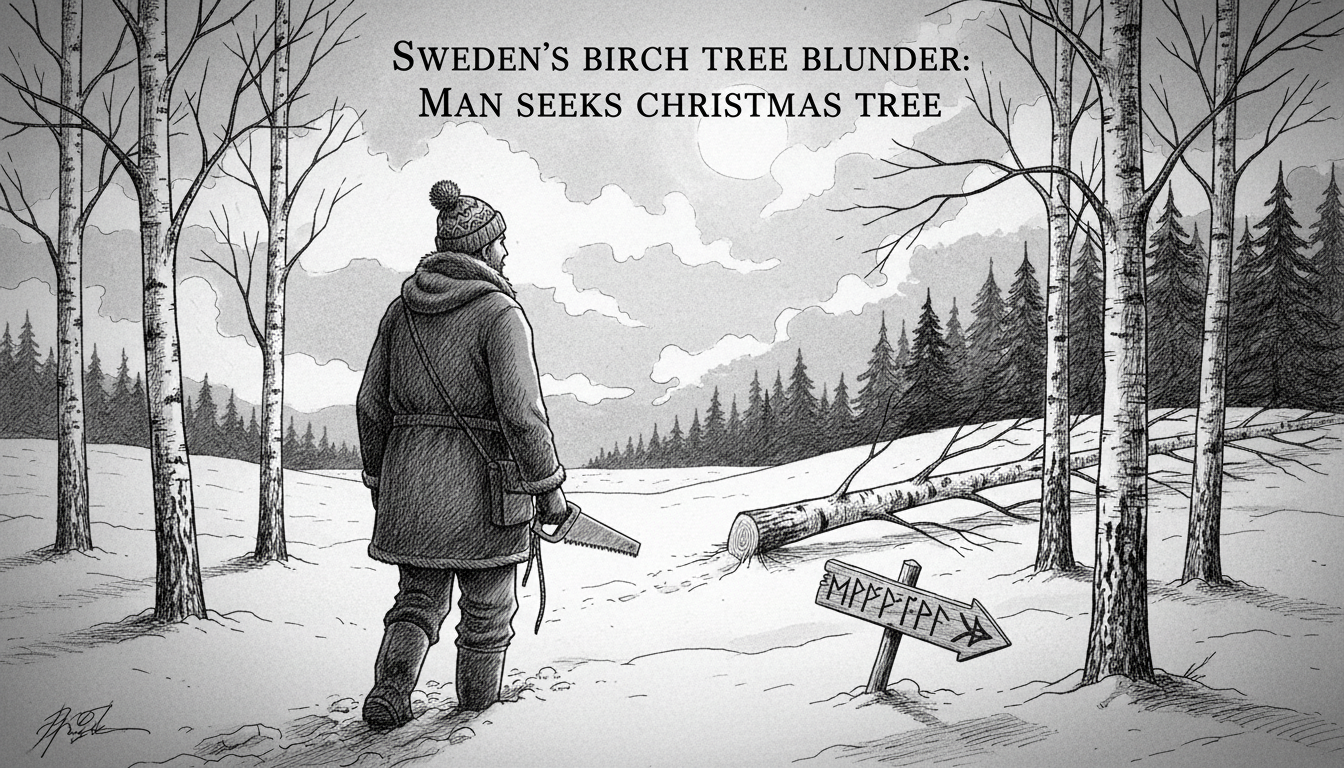
Sweden's quiet pre-Christmas calm was broken by an unusual police report in Falun. A man was spotted in the dead of night, axe in hand, attempting to cut down a tree on municipal land. When confronted, he offered a simple, festive explanation. He was just looking for a Christmas tree. The only problem? The tree he chose was a birch.
This isn't a tale of high-stakes crime. But it's a story that resonates deeply in a country where nature access is a sacred right and Christmas traditions are held dear. The incident, occurring just weeks before the holiday, opens a small, curious window into Swedish society, the pressures of tradition, and the sometimes-blurry lines between public commons and private need.
A Festive Misidentification in Falun
The call came into police just after midnight. Residents reported a man actively cutting down a tree. By the time officers arrived at the scene, the man had vanished. Left behind was a clear case of what Swedish law calls åverkan – damage to property. A birch tree, standing on land owned by the Falun municipality, was gone.
"The man was on a hunt for a Christmas tree," a police spokesperson confirmed, recounting the explanation given by the individual before he left. The choice of tree is what makes the story stick. In Sweden, the Christmas tree, or julgran, is almost exclusively a fir or a spruce. Their iconic shape and scent define the holiday. A birch, with its pale bark and delicate leaves, is a symbol of summer, not winter festivity.
"It's a classic case of mistaken identity, but for a tree," says Lars Bengtsson, a cultural historian focusing on Nordic traditions. "The birch is our national tree, it's everywhere. But to a desperate eye in the dark, perhaps any tall, slender tree looked the part. It speaks to a certain... determined improvisation."
The Legal Landscape of a Stolen Tree
While the image of a tree thief might seem humorous, the legal framework in Sweden is clear. Cutting down a tree on public land without permission is illegal. The value of the tree determines whether the act is classified as theft (stöld) or the lesser charge of property damage (åverkan).
For a single birch of modest size, the case almost certainly falls into the latter category. The penalty for åverkan can be a fine. The exact amount is often calculated based on the tree's value and the cost of restoration. In practical terms, the municipality must now assess the damage. They may choose to plant a new sapling in the birch's place.
"This is not a major crime wave," states Anna Karlsson, a legal expert. "But we see a small, predictable increase in such reports every December. It's often about convenience, or a lack of planning. People want a tree, they see one, and they make a poor decision. The law treats it seriously because it's about protecting shared resources."
The Christmas Tree: A Pressure Point in Swedish Culture
To understand the impulse, one must understand the weight of the julgran in Swedish culture. The tree is the non-negotiable centerpiece of Christmas, or Jul. Its decoration on December 23rd, dagen före julafton, is a televised national event. Families across the country gather to hang stars, flags, and lights.
This creates a silent pressure. To not have a tree is, for many, to not properly celebrate. While most Swedes buy their trees from reputable lots, garden centers, or Ikea—which sells over a million trees annually—the ideal of fetching your own tree from the forest persists. It's a romantic notion tied to self-reliance and a connection to nature, or allemansrätten (the right of public access).
But allemansrätten has limits. You may pick berries and mushrooms. You may not cut down living trees. The man in Falun, it seems, conflated these freedoms.
"There's a dissonance here," Bengtsson explains. "We have this incredibly strong cultural script for how Christmas must look. The tree is essential. When that script meets last-minute panic or economic strain, some people rationalize bending the rules. They think, 'It's just one tree in a vast forest.' But of course, if everyone thought that, we'd have no forest left."
Sustainable Solutions and Local Traditions
The incident highlights sustainable alternatives. Many Swedish municipalities and forestry boards offer permits to cut your own tree in designated areas for a small fee. It’s a system that balances tradition with conservation. In Stockholm, places like Rosersbergs Herrgård or specific plots in Nacka Nature Reserve allow this practice, turning it into a family outing.
Furthermore, the trend of renting potted Christmas trees is growing in cities like Gothenburg and Malmö. You care for the tree over the holidays, and it's returned to the nursery to continue growing. It’s a model that appeals to the environmentally conscious Swede.
The Falun case also serves as a reminder of local identity. Dalarna, the region where Falun is located, is often considered the heartland of Swedish folk traditions. Here, Christmas customs are particularly strong. The pressure to participate correctly might feel more intense.
A Story That Captures a Mood
This isn't just a crime brief. It's a human-interest snapshot. We see a person, likely unprepared for the holiday rush, taking a drastic shortcut. His error in tree selection adds a layer of poignant comedy. It suggests haste, perhaps a lack of familiarity, or simply a dark night.
For the people of Falun, it's a talking point. A small vandalism of their shared green space. For the police, it's a routine report in the holiday season. For cultural observers, it's a tiny case study in how cultural expectations can occasionally override social and legal norms.
Will the man be found? Police have not indicated a active search. The value of the birch is low. The greater cost is symbolic. As Sweden moves deeper into December, with its Lucia processions and glögg gatherings, the story of the misplaced birch stands as a gentle, odd reminder. It reminds us that the pursuit of holiday perfection can sometimes lead us astray, even into a snowy copse with an axe, confusing a summer symbol for a winter one. The quest for Christmas cheer, it seems, requires not just spirit, but also the ability to correctly identify a fir tree.
Will this incident lead to a crackdown on tree theft? Unlikely. But it might prompt a few more families in Falun to plan ahead, to buy their tree from a lot, or to secure a proper permit. And next time, they'll know to look for needles, not leaves.