
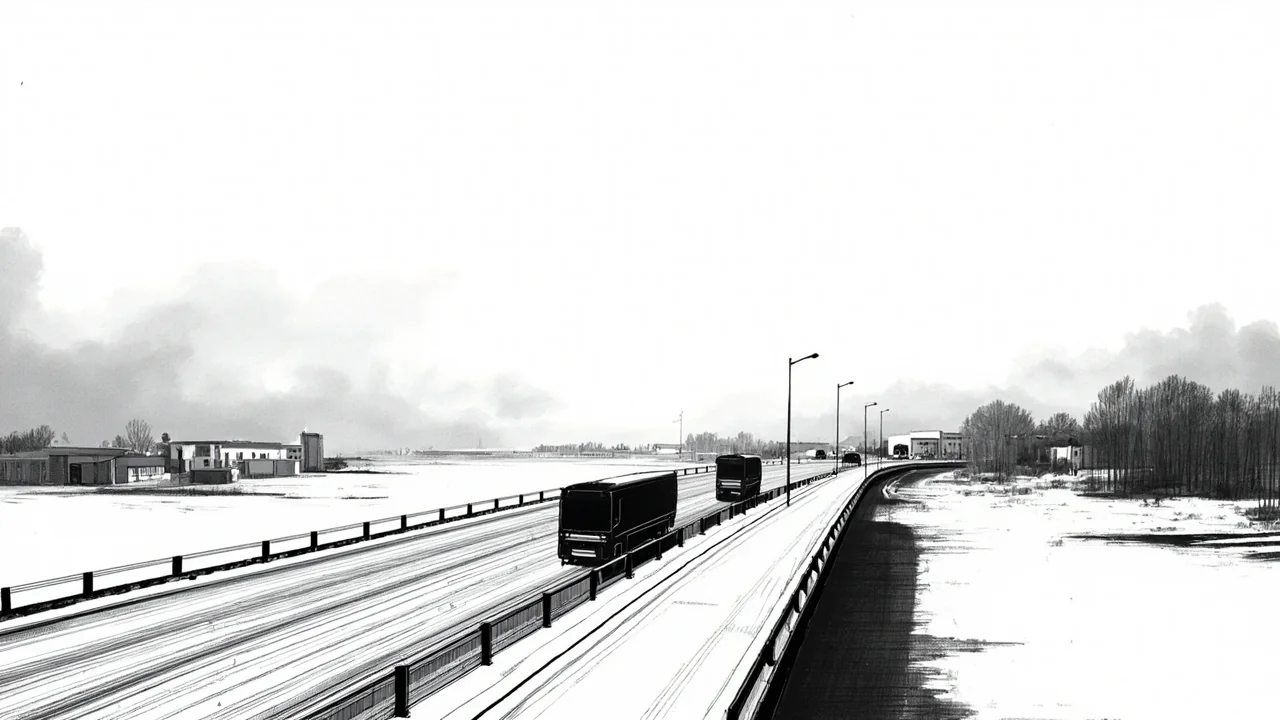
Sweden's Hisingsbron bridge in Gothenburg froze open on a cold Sunday morning, halting traffic for hours. The malfunction, attributed by officials to the extreme cold, was resolved by 9 AM, but the incident reveals a deeper tension in Swedish society. It's a story about infrastructure, winter's relentless grip, and the daily challenges in a nation built on reliability.
For commuters and residents on the island of Hisingen, the bridge is a lifeline. When it stuck in the raised position, it didn't just stop cars and trams. It severed a critical connection. "You plan your Sunday around certainty," said Elias, a student trying to get to work in the city center. "The bridge is supposed to work. It's like a public promise. When it breaks, everything feels a bit more fragile." This sentiment echoes across a country where societal trust in systems is famously high. A frozen bridge is more than an inconvenience; it's a small crack in that foundation.
The Cold Hard Facts of Swedish Winters
Västtrafik's disruption service confirmed the cause: the cold. While brief, the incident highlights a recurring seasonal battle. Swedish infrastructure, though robust, faces immense pressure from winter conditions. From frozen railway points in Stockholm to icy runways at Arlanda, the climate constantly tests engineering and preparedness. Gothenburg, with its maritime location, faces a particular mix of dampness and freezing temperatures that can be brutal on moving parts. The bridge, a major bascule bridge, has complex mechanics vulnerable to ice and contraction. "We maintain these structures to the highest standards," a city infrastructure manager explained. "But sometimes, nature wins a round. The priority is swift, safe resolution." That resolution came within a few hours, but for a Sunday morning, it felt like an eternity to those waiting.
A City Divided, A Community Forged
Events like these create unexpected community moments. At the bridge approaches, strangers shared frustrations and information. Some turned back home. Others sought alternative routes via the older Älvsborgsbron, causing congestion elsewhere. In typical Swedish fashion, the response was orderly but tinged with irritation. Social media lit up with photos of the raised bridge against the grey winter sky, a symbol of stalled plans. This human element is key. Swedish society is built on the smooth flow of people and goods. Disruptions force improvisation and reveal our dependencies. For the 130,000 residents of Hisingen, the bridge is not just concrete and steel. It's their connection to jobs, families, and the cultural pulse of central Gothenburg.
Beyond the Mechanics: Trust in the System
The story of the frozen bridge touches a core Swedish value: tillit, or trust. Swedes trust that trains will run on time, that systems will function, and that public services will deliver. This high-trust model is efficient but can be brittle. When a central piece of infrastructure fails, even temporarily, it prompts quiet questioning. Is maintenance funding sufficient? Are we prepared for more extreme weather? These questions linger after the bridge is lowered. "We invest heavily," a regional politician noted in a statement. "But climate change presents new challenges. Our winters are becoming more volatile, with rapid shifts between freeze and thaw. This stresses materials in ways we're still learning to manage." The incident becomes a case study in adapting a well-built society to a less predictable world.
The Rhythm of a Swedish Sunday
Consider the context. A Sunday morning in Sweden is a particular time. It's quiet. Many are enjoying a slow start, a family breakfast, or a fika. The disruption broke that calm rhythm. It affected those heading to work in healthcare or hospitality, people visiting family, or travelers catching early connections. The cultural impact of such an event is subtle but real. It reinforces a collective understanding of winter as a managing partner in Swedish life. We design for it, dress for it, and generally master it. But sometimes, it reminds us who's really in charge. The bridge freeze is a modern echo of older struggles against the elements, now playing out in an urban landscape.
Looking Ahead: Resilience in the Freeze
So, what does this mean for the future? The Gothenburg region is growing. Reliable infrastructure is non-negotiable. This event will likely lead to internal reviews and checks on other movable bridges along the Göta älv river. It also feeds into the national conversation about climate adaptation. Swedish cities need infrastructure that can withstand not just deep cold, but also the increasing instances of freeze-thaw cycles. The solution isn't just technical; it's about communication and contingency planning. How quickly can information reach the public? What are the best alternative routes? The response to these questions defines the quality of public service.
In the end, the Hisingsbron bridge was repaired quickly. Traffic resumed. The Sunday continued. But the image of that frozen, raised bridge stays with us. It's a reminder that in Sweden, a society often seen as a model of efficiency, the ancient force of winter still holds a card. It tests our engineering, our patience, and our trust. As we move through February, the coldest month, every Swede knows there will be more tests. The true measure of society isn't that things never break, but how we respond when they do. Will we learn, adapt, and maintain that hard-won trust, or will we simply shrug and blame the cold? The answer will shape Swedish resilience for winters to come.