
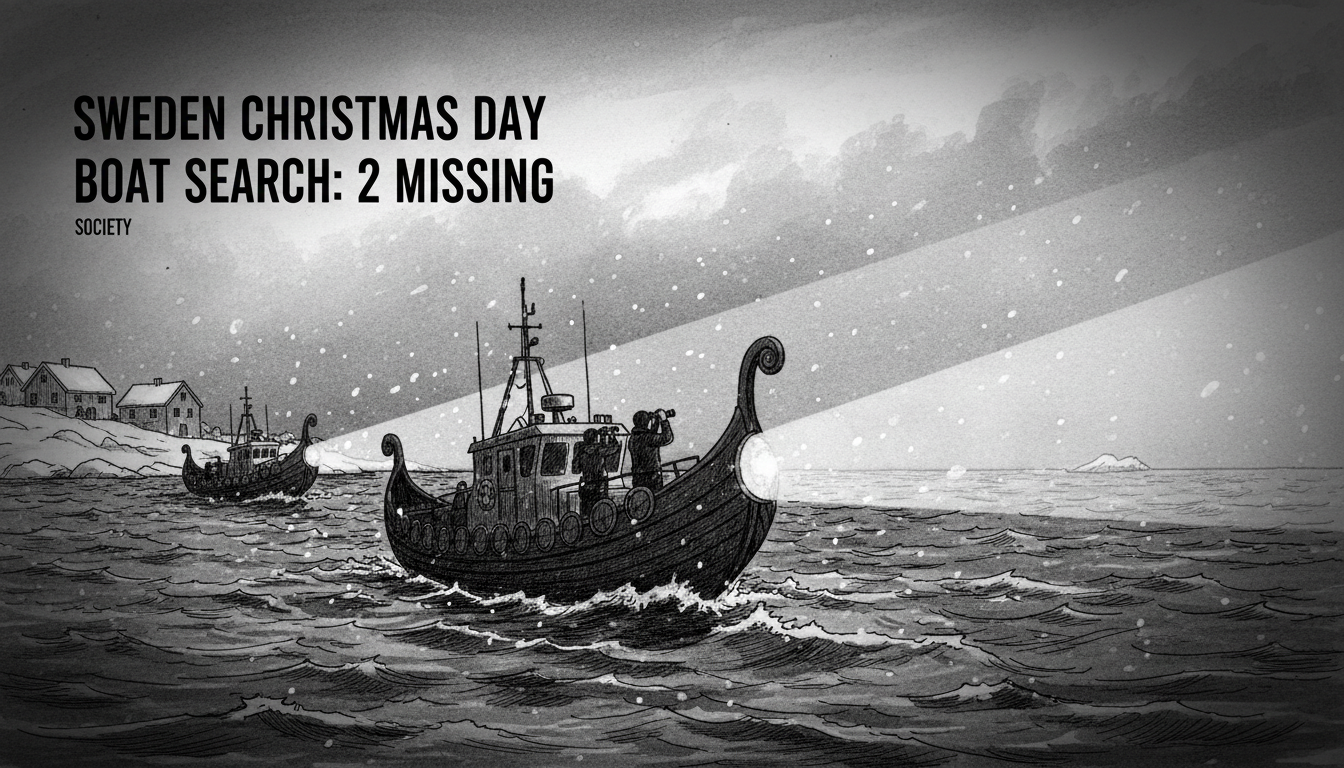
Sweden's maritime rescue services launched a major search on Christmas Day for a missing boat with two people aboard in the Oxelösund archipelago. The alarm sounded just before 9 PM on December 25th, with initial reports suggesting a person had fallen into the water. Police later confirmed the operation focused on locating an entire vessel that had vanished.
A rescue helicopter scrambled from Visby on the island of Gotland. Two Coast Guard ships joined the effort, alongside volunteer lifeboats from the Sea Rescue Society stationed in Trosa and Arkösund. The Swedish Maritime Administration's rescue coordination centre directed the complex operation from a pilot boat on the dark, winter waters.
For families across Södermanland County, the festive glow of Christmas lights was overshadowed by the urgent flashes of search beams scanning the coastline. The incident cuts to the heart of Sweden's relationship with its coastline—a source of beauty, recreation, and sometimes, profound danger.
A Coordinated Response in Winter Darkness
The swift deployment of assets highlights Sweden's well-rehearsed search and rescue protocol. Operations like this involve multiple agencies working in concert. The Swedish Maritime Administration (Sjöfartsverket) provides overall coordination. The Coast Guard (Kustbevakningen) offers its vessels and surveillance capabilities. The non-profit Sea Rescue Society (Sjöräddningssällskapet) mobilizes its network of volunteer crews, who often live in the coastal communities they serve.
By 10 PM, the local fire service confirmed they were not involved on site, indicating the operation remained primarily a maritime and aerial search. The work continued past 10:30 PM, with teams battling the December cold and limited visibility. Winter water temperatures in the Baltic Sea at this time of year are lethally cold, significantly narrowing the survival window for anyone in the water.
“Time is the critical factor in any cold-water incident,” says maritime safety expert Erik Lundgren, who has studied Baltic Sea rescue operations. “The coordination between state resources and volunteer organizations is crucial, especially in an archipelago environment where local knowledge of currents and hidden skerries can make all the difference.”
The Challenges of the Archipelago
Oxelösund’s archipelago presents unique search challenges. The area is characterized by a maze of islands, islets, and narrow passages between the mainland and the open Baltic Sea. Strong currents can move a disabled vessel or a person quickly. The rocky coastline and dense clusters of islands can also break up radar returns and hinder visibility, even for helicopters with searchlights.
This landscape is a popular summer destination for boaters from Stockholm and beyond, drawn to its classic red wooden cottages and sheltered anchorages. In winter, it is quieter, but not empty. Local fishermen, year-round residents, and those traveling between islands still use these waters. An incident on Christmas Day suggests the individuals involved were likely locals or visiting family, making the search deeply personal for the small community.
“Everyone on the coast knows someone who volunteers with the Sea Rescue Society,” says Anna Forsberg, a journalist based in nearby Nyköping. “When the pagers go off, especially on a holiday, a ripple of concern goes through the whole town. People check in on each other. They follow the news updates closely. It’s a reminder of how vulnerable we are to the sea, even with all our modern technology.”
Sweden's Lifeline Volunteers
The inclusion of Sea Rescue Society boats from Trosa and Arkösund underscores a fundamental pillar of Swedish maritime safety. The Society operates entirely on donations and volunteer crew time. Its members train rigorously to respond to emergencies exactly like this one, often leaving family dinners or warm beds to head out into harsh conditions.
This model reflects a broader Swedish societal trend of föreningsliv—association life—where civic duty is performed through organized volunteerism. From sports clubs to neighborhood watches, and indeed to sea rescue, Swedes often tackle communal challenges through collective, non-state action. The volunteers searching the Oxelösund waters are not paid professionals, but neighbors answering a call.
Their local knowledge is irreplaceable. They understand the specific quirks of their home waters: where a current might push a boat, which bays offer shelter, and which channels are deceptively treacherous. In a vast and complex archipelago, this granular insight can guide a helicopter or a Coast Guard cutter to the right search quadrant faster.
The Human Story Behind the Headline
While the official report states facts—a missing boat, two persons, a multi-agency search—the human reality is a story of interrupted Christmas celebrations. In homes around Oxelösund, families waiting for news faced an agonizing vigil. The holiday, typically defined by julbord feasts, Donald Duck cartoons, and gift-giving, was suddenly marked by anxiety and hope.
Swedish Christmas, or Jul, is the most important family holiday of the year. The disruption of its peace by an emergency feels particularly jarring. It transforms the cozy ideal of mysig—that untranslatable word meaning a sense of cozy contentment—into its opposite. The search lights on the water become a stark counterpoint to the warm candlelight in windows.
This incident, though specific in its details, touches on universal themes of community, vulnerability, and the power of nature. It raises quiet questions familiar to any coastal nation: Was the boat properly equipped for winter conditions? Did it suffer a sudden mechanical failure? Were the individuals experienced, or caught out by an unexpected change in weather?
What Happens Next in the Search
As the night progressed, the operation would have followed established search patterns, expanding grids based on drift calculations and last known position estimates. The coordination centre would continuously assess the situation, deciding whether to bring in additional resources or adjust the search area as new data or witness accounts emerged.
The coming hours and days would determine the outcome. A successful rescue would mean two people recovered, families reunited, and volunteers returning home with the profound satisfaction of a mission accomplished. A tragic conclusion would lead to a recovery operation, followed by investigations by police and maritime authorities to understand the cause.
Regardless of the result, the event leaves a mark. It reinforces the importance of safety equipment like life jackets, VHF radios, and emergency beacons. It highlights the bravery of rescue personnel, both professional and volunteer. And for the public, it serves as a somber reminder that Sweden's beautiful archipelagos demand respect, especially in the depth of winter.
The sea does not observe holidays. The response to this Christmas Day emergency shows that Sweden's guardians of the coast don't either. Their commitment, cutting through the winter dark, is a testament to a society that still looks out for its own, wave by challenging wave.