
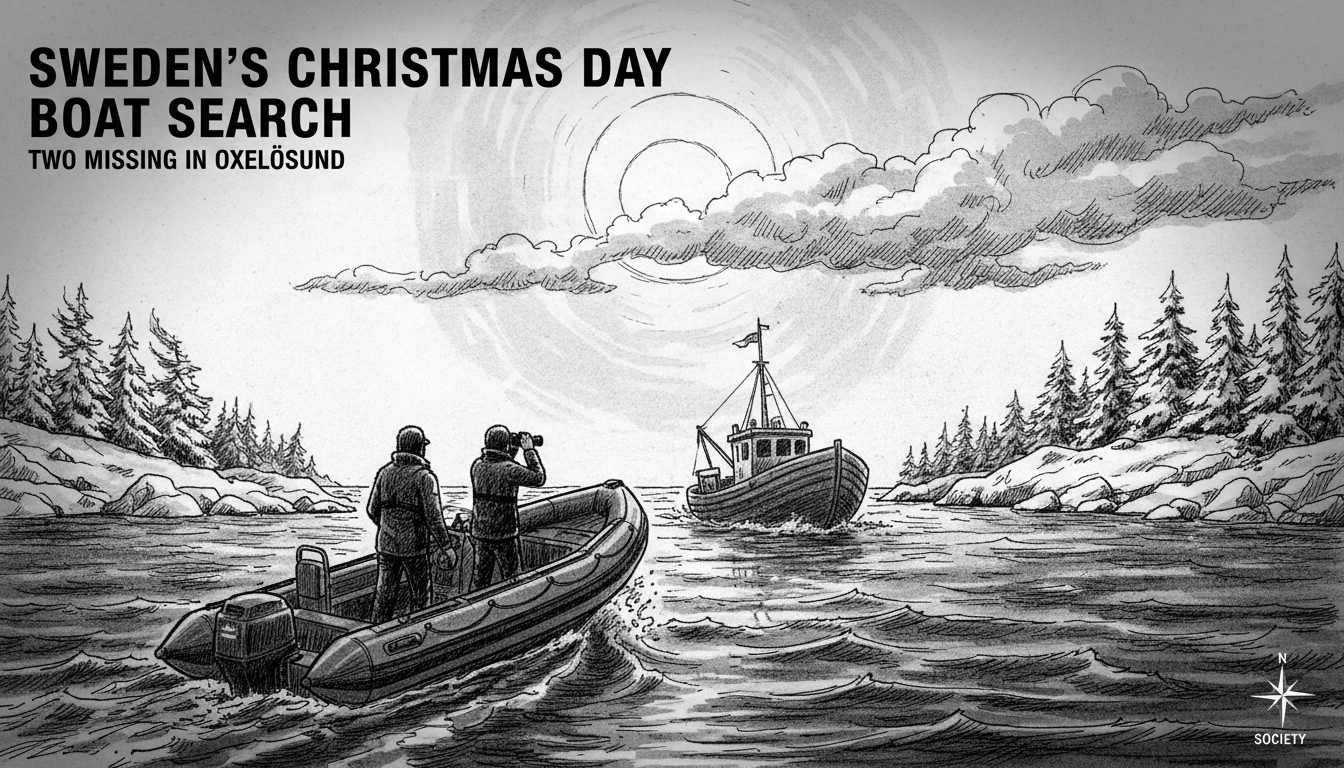
Swedish rescue services launched a major search operation on Christmas Day for a missing boat with two people on board near Oxelösund. The alarm came in just before 9 PM, with initial reports suggesting a person had fallen into the water. The Swedish Maritime Administration’s rescue coordination centre quickly mobilized a complex response in the dark, winter waters.
A rescue helicopter scrambled from Visby on Gotland island. Two Coast Guard vessels joined the effort. Volunteer crews from the Sea Rescue Society in Trosa and Arkösund readied their boats. The operation was coordinated from a pilot vessel on the scene. By 10 PM, the local rescue service confirmed they were not actively participating on site, but the search in the area continued past 10:30 PM.
For families across Södermanland, the news cut through the quiet jul celebrations. Christmas Day in Sweden is typically a time of closed curtains, candlelight, and the film Karl-Bertil Jonsson's Christmas Eve on television. The alert in Oxelösund shattered that calm. It replaced the scent of gingerbread and glögg with the imagined chill of the Baltic Sea in December.
A Coordinated Response in Winter Darkness
The Swedish system for maritime emergencies is a well-rehearsed collaboration. The Swedish Maritime Administration’s JRCC acts as the nerve centre. They dispatch resources from the Coast Guard, the Air Force’s helicopter wing, and the volunteer-based Sea Rescue Society. This network is crucial along Sweden’s vast, indented coastline.
Oxelösund presents specific challenges. The town is an industrial port, famous for its steelworks. The waters are busy with commercial traffic. In winter, conditions are harsh. Water temperatures hover near freezing. Darkness falls early. A sudden squall or mechanical failure can turn a routine trip into a crisis. “The margin for error is very small at this time of year,” says Lars Frisk, a retired maritime safety instructor from Stockholm. “Cold water shock is immediate. You have minutes, not hours, before hypothermia sets in. This makes the speed of the search absolutely critical.”
The Human Element Behind the Headlines
While authorities deal in coordinates and resources, the human reality is simpler, and starker. Two people were out on the water as most of the country sat down for a Christmas dinner of ham, herring, and Janssons frestelse. Were they locals returning from visiting family? Were they enthusiasts on a winter trip? The questions hung in the air, unanswered.
In coastal communities like Oxelösund, Trosa, or Arkösund, the sea is both livelihood and playground. Boating is deeply woven into Swedish summer culture, with thousands setting out for the archipelago. Winter boating is far less common, undertaken by experienced mariners or those with professional reasons. The incident serves as a grim reminder that the sea does not care for calendars.
“Every Swede who has been on a boat knows this fear, however faintly,” says Anette Lindström, a writer from the archipelago town of Vaxholm. “We have this love affair with the water, with our summer stugas by the sea. We forget how powerful it is. An event like this, on Christmas, makes everyone pause. You think: that could be someone’s father, someone’s partner.”
The Mechanics of a Search at Sea
The operation deployed assets for a layered search. The helicopter from Visby provides speed and a broad visual range, using searchlights to scan the water’s surface. The Coast Guard vessels offer stability, endurance, and sophisticated radar. The Sea Rescue Society’s smaller, agile boats from nearby stations can navigate shallower waters and get close to shorelines.
This multi-agency approach is standard but taxing. Volunteer crews from the Sea Rescue Society, like those from Trosa, drop everything to respond. They are doctors, teachers, and engineers who train for these moments. Leaving their own Christmas gatherings, they head out into the biting cold of the Baltic. Their participation underscores a fundamental Swedish principle: allmännytta, or public utility. The idea that society functions through collective contribution.
A Sobering Reminder on a Family Holiday
The timing of the incident resonates deeply. Christmas in Sweden is the most important family holiday. It is intensely private, focused on the home. News of a crisis at sea pierces that domestic bubble. It forces a collective reckoning with vulnerability. Social media in local groups shifted from holiday greetings to posts sharing the police announcement, with users urging anyone with information to come forward.
Maritime safety experts reiterate the basics, especially in winter. A working VHF radio, life jackets worn at all times, and a filed float plan telling someone on land your route and return time are non-negotiable. Checking weather forecasts is more critical than ever. The Baltic can be deceptively calm before a wind shift creates dangerous waves.
“We have excellent rescue services, but they are not a guarantee,” notes Frisk. “The first and most important link in the safety chain is the individual boater. Preparation is not just about equipment; it’s about respect for the environment. The sea is always the stronger party.”
Looking Ahead as the Search Continues
As night deepened over Oxelösund, the search patterns continued. The outcome remained unknown. These operations tell a story about modern Sweden: its technological capability, its volunteer ethos, and the ever-present natural forces that shape a coastal nation. The incident is a small, sharp tragedy set against the backdrop of a silent, snowy Christmas.
It also highlights a seasonal conflict. The Swedish desire to embrace nature friluftsliv often clashes with winter’s realities. The romantic image of a solitary boat on a still, frosty fjord is compelling. The reality of hypothermia and mechanical failure is less so. This event may prompt a broader conversation about winter boating safety and public awareness.
For now, the focus remains on the water. On two missing individuals and the families waiting for news. On the crews in helicopters and boats scanning the dark. The community holds its breath, hoping for a miracle on the second day of Christmas. The sea, however, keeps its own counsel.