
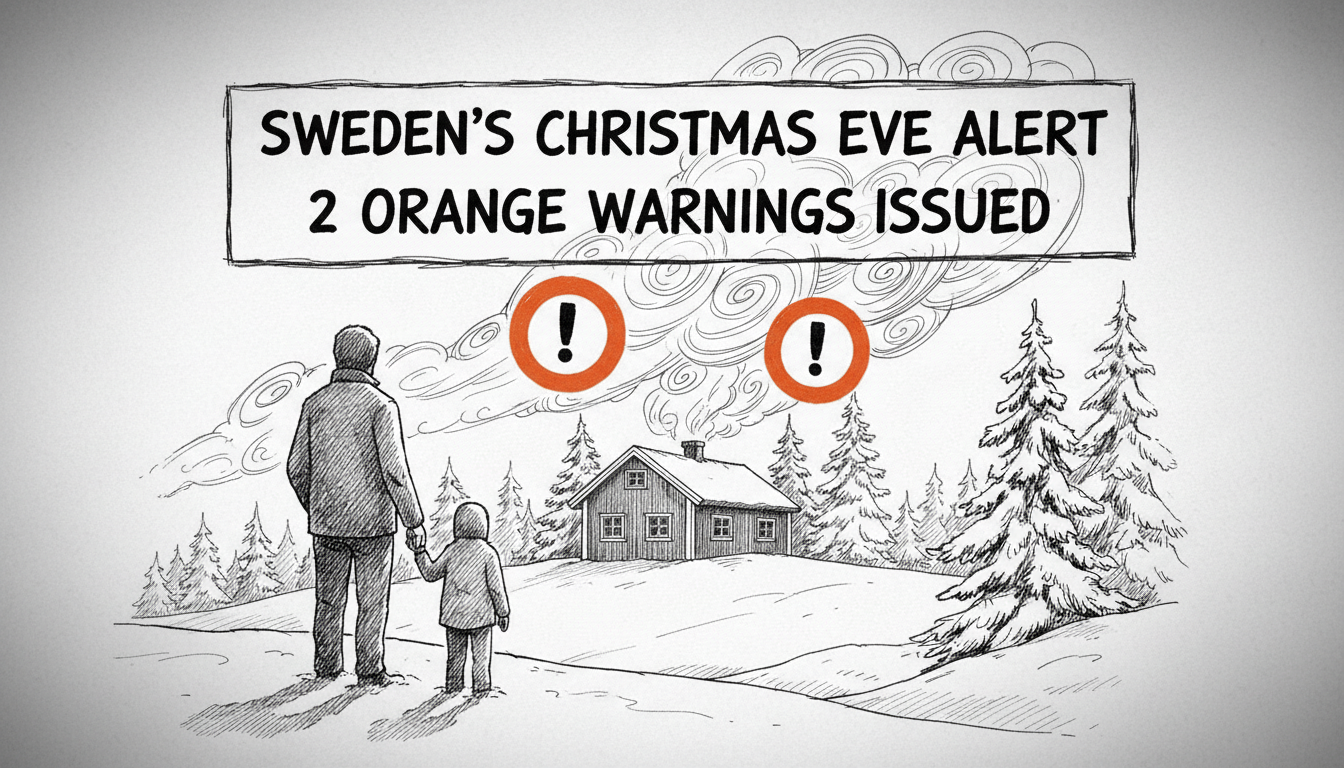
Sweden's Christmas Eve is facing a severe weather disruption, with the national meteorological agency issuing two critical orange warnings. The Swedish Meteorological and Hydrological Institute (SMHI) has activated its second-highest alert for heavy snow and powerful winds across mountain regions in the north. The warnings for Norrbotten and Västerbotten counties take effect on December 24th, threatening to transform a night of family gatherings into one of hazardous travel and potential isolation.
A Holiday Tradition Interrupted
For many Swedes, Christmas Eve, or Julafton, is the pinnacle of the holiday season. It's when families gather for the julbord feast, exchange gifts, and watch Donald Duck cartoons in a beloved national tradition. This year, the weather is set to gatecrash those plans for residents and travelers in the mountainous north. An orange warning from SMHI signifies a high risk of severe conditions that could cause significant danger to the public and considerable disruption to infrastructure. Meteorologists predict very strong winds will intensify throughout Christmas Eve evening, combining with heavy snowfall to create blizzard-like whiteouts and treacherous driving conditions on key mountain roads.
The Human Impact in the Mountains
The warnings specifically target kalfjället, the bare mountain region above the tree line. This area includes popular winter destinations and vital transport corridors. Small communities like Abisko, Björkliden, and Riksgränsen, which often see an influx of visitors hoping for a snowy Christmas, are now preparing for potentially being cut off. Local emergency services and the Swedish Transport Administration are on high alert. Road maintenance crews are preparing for round-the-clock work to keep Route E10 and other critical arteries open, but officials are urging people to reconsider non-essential travel. The warning creates a complex situation for the mountain resorts, balancing the safety of guests and staff with the logistical nightmare of disrupted supplies and possible power outages.
Understanding SMHI's Color-Coded System
To grasp the severity, one must understand Sweden's weather warning framework. SMHI uses a four-tier color system: yellow, orange, red, and in extreme cases, a red emergency warning. An orange warning is not issued lightly. It means the forecast weather has a high probability of causing real danger—such as roads becoming impassable, major transport delays, risk of wind damage to buildings, and a significant threat to anyone caught outside without shelter. It triggers coordinated action from municipalities, rescue services, and energy companies. This system, familiar to all Swedes who check weather apps or news broadcasts, provides a clear, immediate signal of the level of caution required.
The Cultural Contrast of a Stormy Christmas
There's a poignant irony to this storm. Swedish Christmas imagery is deeply connected to a specific, gentle kind of snow—the soft, picturesque blanket that covers the ground in a classic vintervidunder (winter wonderland). The reality of an orange warning is the antithesis of that cozy ideal. It represents the raw, powerful, and sometimes frightening force of Nordic nature. This storm underscores the respect Swedes have for their environment, a respect ingrained through generations of living in a climate that can turn harsh with little notice. The concept of lagom, meaning just the right amount, certainly doesn't apply to this forecast. It’s a reminder that the romanticized Scandinavian winter demands preparedness and vigilance.
Local Preparedness and National Response
In towns like Kiruna and Gällivare, the reaction is one of pragmatic adjustment. Grocery stores may see a last-minute rush for supplies, as families ensure they have enough food, candles, and fuel to wait out the storm. The Swedish Civil Contingencies Agency (MSB) often amplifies SMHI's warnings with specific public advice during such events. Their guidance typically includes charging electronic devices, securing outdoor furniture, checking on elderly neighbors, and having an emergency kit ready. For the Swedish state, ensuring the safety of citizens in these sparsely populated regions during a major holiday is a significant operational challenge, testing coordination between national agencies and local responders.
A Broader Pattern in a Changing Climate?
While a single winter storm cannot be directly attributed to climate change, meteorologists note an increasing frequency of intense, disruptive weather events. The conversation in Sweden often turns to whether these severe warnings are becoming more common. Researchers are studying shifts in polar vortex behavior and North Atlantic weather patterns that affect Scandinavian winters. This Christmas Eve storm contributes to that ongoing dialogue about resilience and adaptation. It raises questions about infrastructure durability, emergency response capabilities in remote areas, and how traditional ways of life in the north adapt to a potentially more volatile climate.
Looking Beyond Christmas Eve
The immediate concern is safety through the holiday. However, the effects will linger. Clean-up operations will extend into the days after Christmas, potentially impacting travel for those planning to return from holiday visits. The economic impact on tourism and local businesses, while secondary to safety, will be felt. This event serves as a stark annual reminder of nature's power to reshape human plans. It reinforces the Swedish societal value of collective responsibility—heeding official advice isn't just about personal safety; it's about not burdening rescue services needlessly during a crisis. As families across the affected counties adjust their candles and hopefully keep their power, this stormy Christmas Eve will become another chapter in the enduring story of Sweden's relationship with its formidable and beautiful winter landscape.