
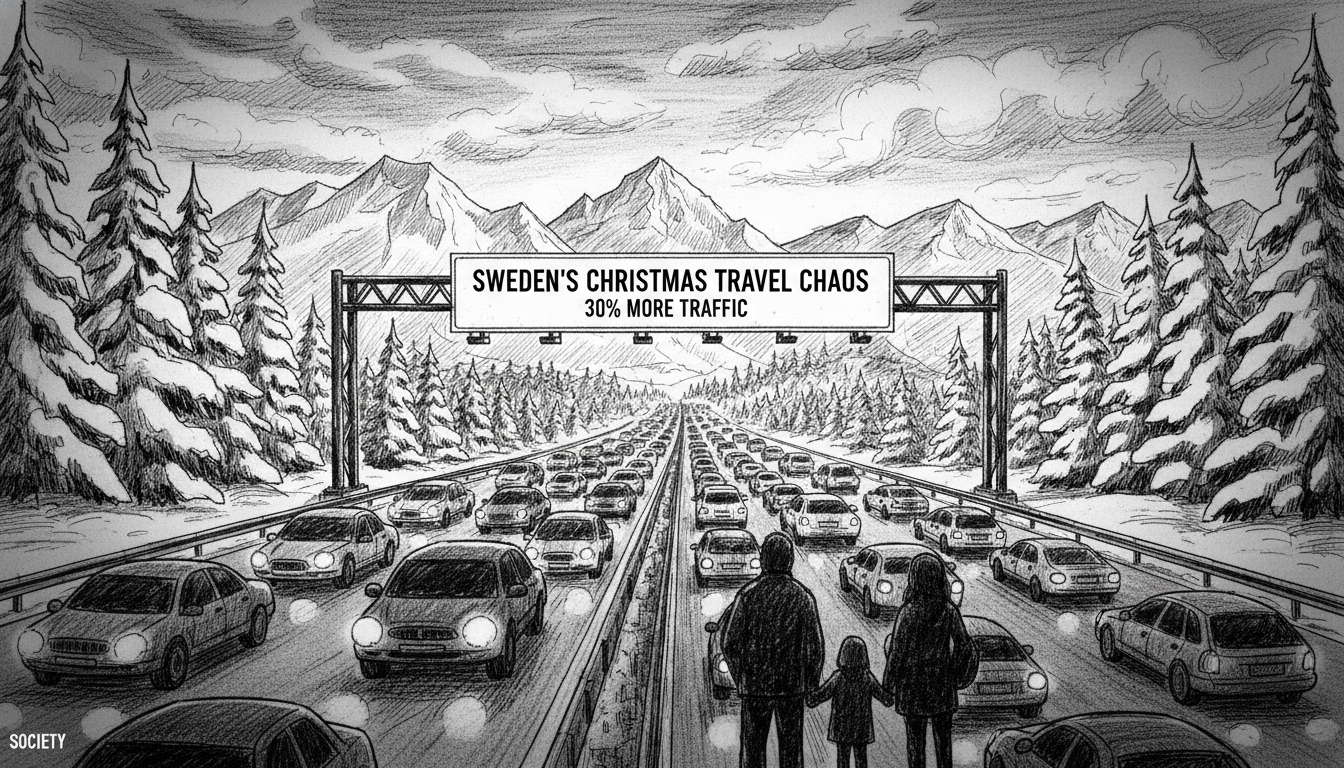
Sweden's Christmas travel rush is colliding with winter weather, creating a perfect storm of delays and disruptions across the country. As families scramble to reach their festive gatherings, ferry trips to Gotland are canceled, key train lines in Jämtland are halted, and major highways face congestion levels up to 30% higher than normal. For thousands, the annual julresan—the Christmas journey—has become a test of patience.
"We packed the car with presents and pepparkakor, but now we're just sitting here," says Erik Lundström, speaking from a standstill on the E4 north of Stockholm. His planned five-hour drive to Sundsvall is now looking like eight. "The kids are asking if Tomten will find us on the highway." His story is echoed at train stations and ferry terminals nationwide, where the Swedish desire to be home for Christmas meets the harsh reality of a Scandinavian winter.
The Perfect Storm on Roads and Rails
The core of the problem is a predictable yet challenging convergence. Christmas Eve, or Julafton, is the most important day in the Swedish festive calendar. Everyone aims to be settled by the afternoon for the traditional feast and the arrival of Jultomten. This creates an intense, concentrated travel period. The Swedish Transport Administration notes traffic volume on major routes like the E4 and E6 often surges by 20-30% in the days leading up to December 24th.
This year, weather has amplified the chaos. A band of heavy snow and strong winds swept across central and northern Sweden, impacting key travel corridors. The most significant rail disruption is on the line between Bräcke and Storlien, a critical link for trains running between Stockholm and the popular winter sports destination of Åre. This has left many travelers, including families heading to mountain cabins for the holiday, stranded or seeking complicated alternative routes.
"Planning is everything, but so is flexibility," advises traffic analyst Lena Pettersson. "We always see this peak. The difference this year is the weather system hitting exactly during the peak travel window. My advice is to check real-time updates constantly, pack extra food and warm blankets in the car, and consider traveling very early in the morning or later in the evening if possible."
Island Isolation: Gotland Ferries Disrupted
For Swedes with roots on the island of Gotland, the Christmas journey is a maritime ritual. The ferry operated by Destination Gotland is a lifeline. This weekend, that lifeline has been strained. The company has canceled two ferry trips and delayed another departure by a full 24 hours due to the adverse weather conditions in the Baltic Sea.
"It's a huge disappointment," says Karin Berg from Visby, who was expecting relatives from the mainland. "The ferry is our bridge. When it's canceled, it feels like the island is suddenly much farther away. We'll have to celebrate a day later, but we'll make it work." These disruptions highlight the vulnerability of island communities during holiday travel peaks and the profound cultural importance of physical reunion during jul.
Navigating the Rush: A Stockholm Perspective
In the capital, the exodus is palpable. Central Station is buzzing with a tense energy. Travelers clutch coffee cups and peer at departure boards, their suitcases packed with gifts. The long-distance train platforms are especially crowded. While the main southern and western lines are running, the disruption to the northwestern line toward Åre has caused a ripple effect, increasing demand on other services.
Across the city, in suburbs like Bromma and Enskede, families are conducting the final städning—the big pre-Christmas clean—before loading cars. The tradition of a spotless home for Christmas is now followed by a stressful drive. Social media is filled with real-time reports from major arteries like the Essingeleden motorway, showing telltale lines of red brake lights.
Air travel is not immune. While not mentioned in the initial alert, historical data shows approximately 15-20% of flights in Sweden experience delays during the Christmas period due to winter weather, de-icing procedures, and high passenger volume. Travelers flying out of Arlanda or Landvetter are advised to allow extra time.
The Culture of Julresan: More Than Just a Trip
To understand the scale of this annual movement, one must understand its cultural weight. The Christmas journey in Sweden is not a simple commute. It is a pilgrimage to one's hemort—one's home place. It is often a return to the towns and villages of childhood, to parents' homes, reinforcing family bonds that define the Swedish holiday. The pressure to arrive on time is immense, tied to deeply rooted traditions like watching the Disney Christmas special at 3 PM sharp on Julafton.
This mass migration is a testament to the Swedish concept of lagom—moderation—being temporarily set aside. The roads become un-lagom, packed and frantic. The quiet, snowy landscapes envisioned on Christmas cards are replaced by the gritty reality of slush, traffic jams, and delayed trains. Yet, the motivation is powerful: the promise of candlelight, julbord feasts, and togetherness.
Expert Advice for the Road Ahead
With several key travel days still ahead, experts emphasize preparation. "The right equipment is non-negotiable," says Pettersson. "Winter tires are legally required, but ensure they have adequate tread depth. Keep your fuel tank at least half-full. Have a winter emergency kit: a shovel, reflective vest, thermal blankets, and a power bank for your phone."
The Swedish Transport Administration's real-time traffic information service is the most critical tool. Travelers are urged to use its app or website for live updates on road conditions, incidents, and estimated travel times before and during their journey. For public transport, checking regional train and bus operator sites is essential, as disruptions can change rapidly.
A psychological tip from seasoned travelers? Embrace the fika. Turn a forced stop into a cozy break. "If you're stuck, find a gas station, get a coffee and a cinnamon bun, and call your family to say you're safe but delayed," suggests Pettersson. "It reduces everyone's stress and adds a bit of Swedish comfort to the wait."
Will Everyone Make it Home for Christmas?
As the weather slowly clears, transport authorities are working to restore services. The blocked rail line is a top priority for repair crews. Ferry operators are monitoring wind patterns. The great Swedish Christmas migration, though battered, is resilient. The shared goal—to gather around the tree, share a glögg, and sing Helige Nacht—provides a powerful incentive to persevere.
The disruptions serve as an annual reminder of the challenges of winter logistics in a long, sparsely populated country. They also highlight the incredible importance Swedes place on festive family unity. For every person like Erik, still inching north on the E4, there is a family waiting, checking the clock, and keeping the julskinka warm. The journey, however difficult, remains an integral part of the Swedish Christmas story. The real question now is how many will have tales of travel woe to share alongside their holiday greetings this year.