
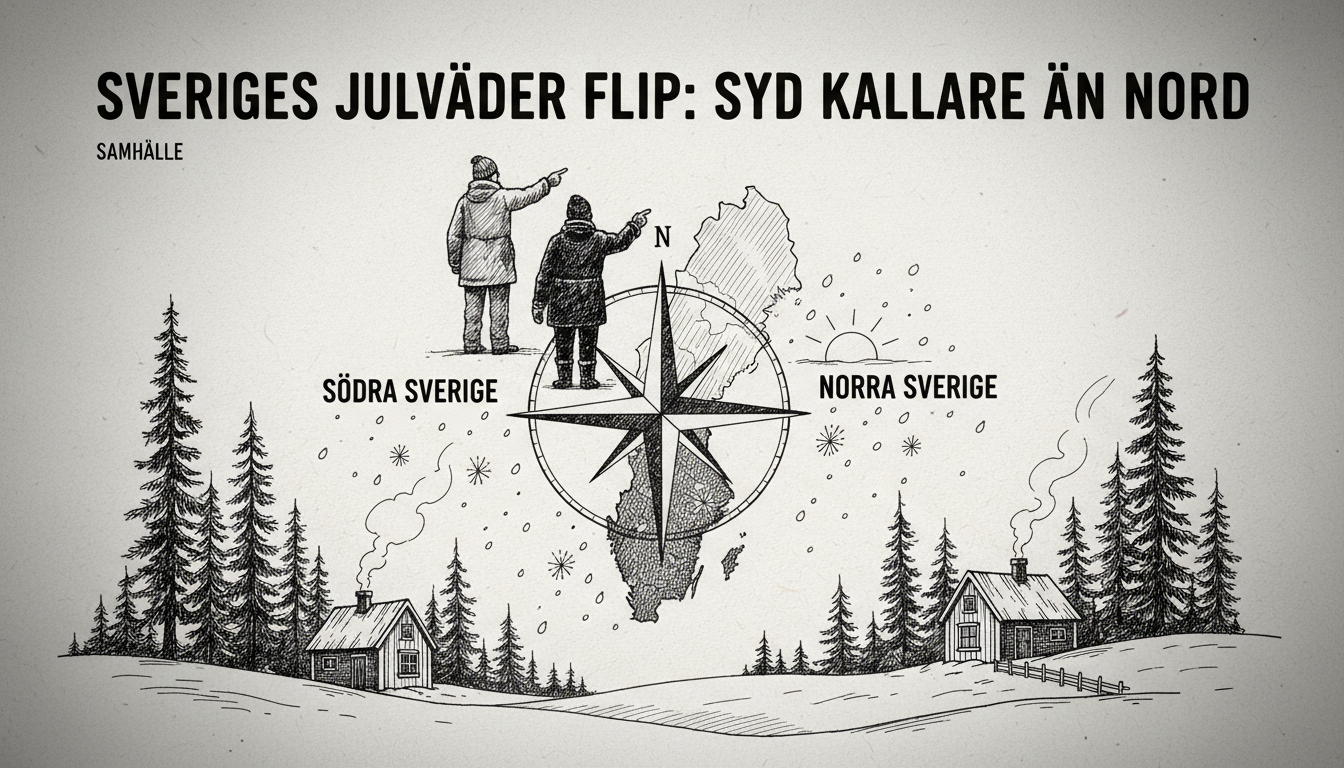
Sweden's Christmas weather is delivering a dramatic reversal of the nation's typical climate script. While the southern provinces shiver under a blanket of cold, high winds and heavy snow are lashing the northern mountains, prompting urgent safety warnings. The Swedish Meteorological and Hydrological Institute (SMHI) has issued a stark orange alert, advising against all non-essential travel in the fjäll regions of Norrbotten and Västerbotten from Christmas Eve afternoon through Christmas Day. This holiday forecast presents a clear paradox: the deep south is experiencing lower temperatures than parts of the far north, upending the usual Swedish winter narrative.
A Holiday Forecast Full of Surprises
For Swedes, a white Christmas is often synonymous with the north. The image of a cozy stuga in Lapland, surrounded by deep snow, is a national icon. This year, that picture comes with a dangerous asterisk. SMHI's orange warning—the second-highest level—covers strong winds in the mountains and a combination of wind and snowfall in northern Norrbotten. "Avoid unnecessary trips into the mountains," the institute stated bluntly. In stark contrast, regions like Skåne and Småland in the south are facing a dry, biting cold without the festive snow, creating an unusual seasonal disconnect across the country's long latitude.
This weather pattern highlights Sweden's vast climatic diversity. Stretching over 1,500 kilometers from north to south, the country can host multiple weather realities simultaneously. The mountainous north, while often colder on average, is particularly vulnerable to rapid shifts. Atlantic low-pressure systems can funnel fierce winds through the valleys, creating whiteout conditions and extreme wind chill in a matter of hours. "The mountains demand respect, especially during the winter holidays," says Lars Öberg, a veteran mountain safety guide based in Abisko. "A calm morning can transform into a stormy afternoon. This warning is not for show; it's based on a forecast that shows real danger."
The Human Impact of a Mountain Warning
The timing of the warning, spanning the heart of the Christmas holiday, directly impacts family traditions and the vital winter tourism economy. For many Swedish families, a Christmas or post-Christmas ski trip or mountain hike is a cherished ritual. Hostels and mountain stations in areas like Sarek National Park or along the Kungsleden trail are typically bustling. This year, staff are preparing for cancellations and the possibility of stranded guests. "We're contacting everyone with bookings," says Anna-Karin Fors, who manages a mountain lodge in Vindelfjällen. "We're emphasizing that safety comes first. It's disappointing, but we have to listen to SMHI. The wind they're predicting can make movement outside impossible."
Local rescue services are also on high alert. The Swedish Sea Rescue Society (SSRS) and mountain rescue teams know that warnings don't always deter everyone. Some adventurers may underestimate the conditions or feel pressured by non-refundable plans. "Our message is simple: postpone your tour," urges a statement from the Norrbotten Mountain Rescue group. "If you absolutely must travel, you need to be an expert with the right equipment and a detailed plan shared with others. But the best plan is to wait for better weather." The economic ripple effect is significant. Restaurants, equipment rental shops, and guides in mountain towns like Kiruna and Jokkmokk face lost revenue during what should be a peak season.
Understanding Sweden's Weather Extremes
Why does this happen? Sweden's weather is a constant tug-of-war between different air masses. The current situation sees cold, dense continental air settled over the south and Baltic, leading to clear, frosty conditions. Meanwhile, a powerful low-pressure system from the Atlantic is driving milder but violently windy and wet weather into the northern mountains. This can create a perverse situation where it feels colder in the south due to still, damp air, while the north battles elements that are dynamically more hazardous. "Temperature is just one number," explains meteorologist Elin Sjöström. "Wind speed and precipitation define the real risk. An orange warning for wind in the mountains means there is a high probability of disruption and a tangible threat to life and property for those exposed."
This event serves as a practical lesson in Swedish geography and preparedness. The concept of 'Allemansrätten'—the right of public access—grants incredible freedom to roam, but it comes with the responsibility of 'inte störa, inte förstöra' (do not disturb, do not destroy). That responsibility extends to personal safety. Experts consistently advise checking the SMHI app or website multiple times before and during any mountain trip, as forecasts can change rapidly. They also stress the importance of knowing how to interpret the color-coded warning system: yellow (be aware), orange (be prepared), and red (take immediate action).
A Cultural Moment in a Changing Climate
Beyond the immediate safety concerns, this unusual Christmas weather sparks a broader conversation. Swedes are deeply connected to their seasonal rhythms: berry picking in autumn, the first snow, the returning light after winter. When those patterns shift or present unexpected dangers, it resonates culturally. Social media is filled with images from across the nation—bare, frozen fields in Skåne contrasted with swirling snow squalls captured on webcams in Lappland. It's a live demonstration of the country's environmental diversity, but also a reminder of its vulnerabilities.
While a single weather event cannot be directly linked to climate change, scientists note that a warming Arctic can lead to more volatile jet stream patterns. This can cause weather systems to stall or take unusual tracks, potentially increasing the frequency of such paradoxical events. The conversation in Swedish homes this Christmas may not just be about the weather, but about what the weather represents. Are these sharp contrasts and intense warnings becoming more common? How does it affect the iconic Swedish relationship with nature and 'friluftsliv' (open-air life)?
Looking Beyond the Holiday Storm
As Christmas Day passes, the winds in the mountains are forecast to gradually ease. The cold snap in the south may persist, leaving a frosty but calm end to the holiday week. The lasting impact of this event, however, will be in the reinforced awareness of mountain safety and the striking memory of a topsy-turvy national Christmas. For the tourism industry, it's a case study in resilience and communication. For families, it's a story of adapted plans—perhaps swapping a planned ski trip for a winter walk in a southern forest or embracing the 'mysig' coziness of home a little longer.
This dramatic holiday forecast ultimately underscores a fundamental truth about Sweden. Its beauty and its challenge are two sides of the same coin. The same vast, untamed landscapes that inspire awe and adventure require caution and respect. As the orange warning lights flash on the SMHI map this Christmas, the message is clear: nature writes its own script, and even the most familiar stories can take an unexpected turn. The question for Swedes is not just how they weather this storm, but how they prepare for the next chapter in an increasingly unpredictable climate narrative.