
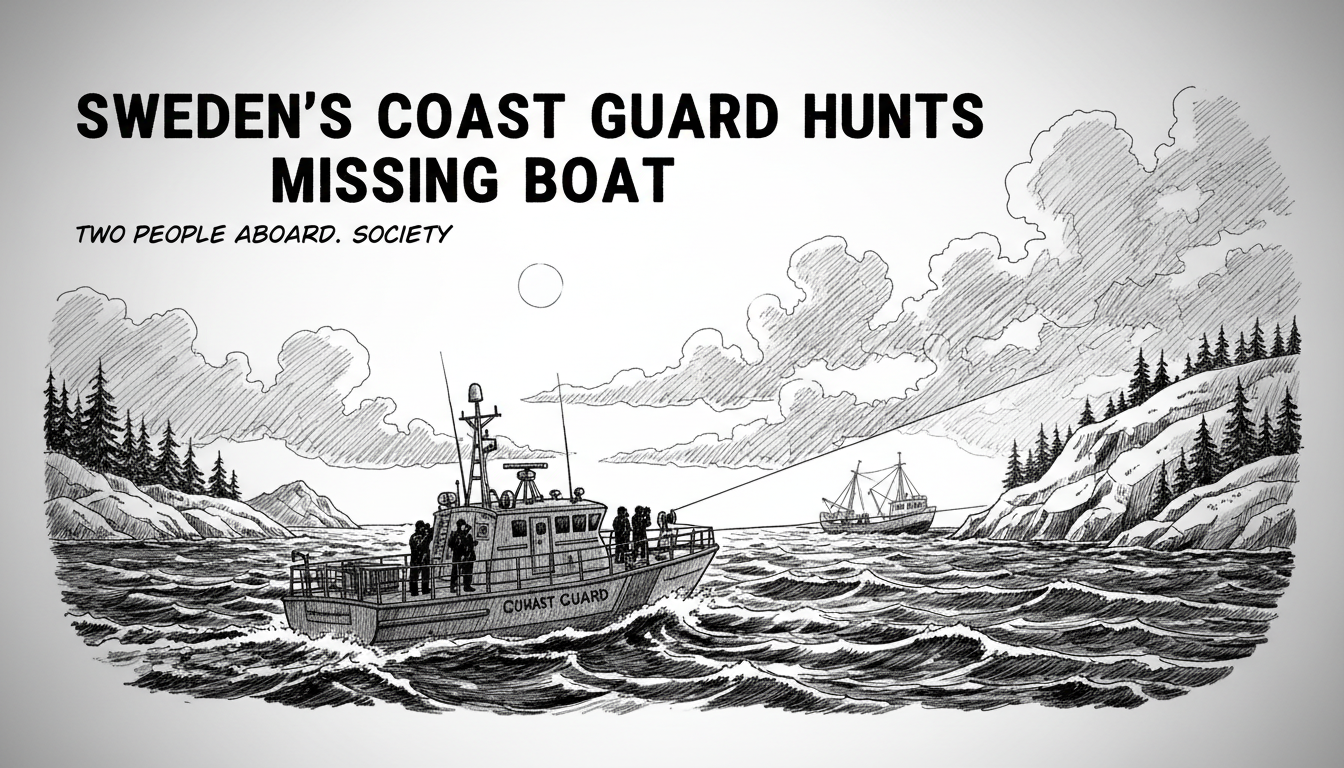
Sweden's coastal emergency services launched a major search for a missing boat with two people near Oxelösund on Christmas Day. The alarm sounded just before 9 PM, with initial reports suggesting a person had fallen into the water. Police later confirmed the search centered on a vessel that had vanished with two individuals aboard. Under the coordination of the Swedish Maritime Administration's rescue centre, a multi-agency effort swept the dark waters of the archipelago.
A Christmas Night Search in the Archipelago
The call to SOS Alarm triggered an immediate response across Sweden's maritime safety network. A rescue helicopter scrambled from Visby on the island of Gotland, over 150 kilometers away. Two Coast Guard vessels joined the operation, alongside volunteer lifeboats from the Swedish Sea Rescue Society stations in Trosa and Arkösund. A pilot boat served as the on-scene command post, directing the search in the chilly December night. By 10 PM, the local rescue service confirmed they were not on site, but the specialized maritime teams continued their work past 10:30. The search area focused on the coastal waters and islands around Oxelösund, a key port town in Södermanland County known for its steel industry and busy harbor.
For locals, the news cast a pall over the holiday. The Swedish Christmas, or jul, is a time of cozy mys and family gatherings, often extending over several days. The idea of a maritime emergency breaking that peace is deeply unsettling. “You hear the helicopters and you know something is wrong,” says Erik Lundström, a resident of nearby Nyköping. “The archipelago is beautiful but it can be unforgiving, especially in winter. Everyone’s thoughts are with those families tonight.”
The Machinery of Swedish Maritime Rescue
This incident highlights Sweden's extensive, integrated system for saving lives at sea. The Swedish Maritime Administration’s Joint Rescue Coordination Centre (JRCC) acts as the national nerve center. It mobilizes assets from the state-funded Coast Guard and the helicopter service, but also relies heavily on the Swedish Sea Rescue Society (Sjöräddningssällskapet). This organization, founded in 1907, operates primarily with volunteers and donor-funded boats. Its bright orange vessels are a common sight along Sweden's 3,218 kilometers of coastline and across its vast archipelago.
“The strength lies in the collaboration,” explains maritime safety analyst, Professor Lars Fjelkestam. “The JRCC has the overall coordination and air assets. The Coast Guard has authority and larger ships. The Sea Rescue Society has unparalleled local knowledge and a fleet that can reach shallow, rocky areas faster than anyone. In a time-critical situation, this effective coordination is vital.” The water temperature in the Baltic Sea in late December, typically between 1 and 4 degrees Celsius, makes survival time exceedingly short, placing immense pressure on search teams to locate anyone in the water rapidly.
A Community Built by the Sea
Oxelösund’s identity is inextricably linked to the sea. Its deep-water port handles millions of tonnes of freight annually, mostly iron ore and steel products. The surrounding archipelago is a summer paradise for boaters and cabin owners, but in winter, it becomes a stark and challenging environment. Winds pick up, daylight is scarce, and the water is lethally cold. This duality is a fundamental part of Swedish coastal life—a deep appreciation for nature's beauty coupled with a profound respect for its dangers.
Safety culture is strong in Sweden. Mandatory life jackets for children on boats, widespread VHF radio use, and detailed weather planning are common practices. Yet, accidents can happen to anyone. The search underscores a silent contract among those who live by the water: when someone is in trouble, the community mobilizes. The volunteers from Trosa and Arkösund leaving their Christmas dinners to crew the lifeboats embody this principle.
What Makes a Search Like This So Difficult?
Searching for a missing boat at night in an archipelago presents unique hurdles. The area is a labyrinth of islands, islets, and narrow passages. A disabled vessel could be obscured behind any number of landforms. Thermal imaging from helicopters can help locate people in the water, but if the boat is intact and adrift, spotting it against dark water and darker land is a monumental task. The operation also depends on the last known position, which can be vague if communication was lost suddenly.
“Every minute counts, but so does the search pattern,” says Fjelkestam. “You are balancing the need for speed with the need for thorough coverage. The teams will use charts, radar, and local knowledge to prioritize search sectors. They will also be looking for any debris field, which would give them a critical clue.” The fact that multiple surface vessels were involved suggests a systematic, grid-based search was underway, scouring the possible routes the boat might have taken.
The Human Cost of a Silent Radio
Behind the coordinated deployment of helicopters and boats is a simple, human tragedy. Two people were expected somewhere, by someone, and did not arrive. The transition from a festive family holiday to a frantic vigil is devastating. Swedish society, while highly organized, is also tightly knit in smaller communities. News of the missing boat would have spread quickly through word of mouth, social media, and local networks, with many awaiting updates.
This incident is a somber reminder of the risks intertwined with Sweden's relationship with the water. The right of public access (Allemansrätten) encourages exploration, but it comes with personal responsibility. As the search continued into the night, the focus remained on hope and the relentless effort of the rescue teams. The coming hours would be crucial, determined by skill, technology, and the harsh conditions of the Baltic winter. The community waits, hoping for a resolution that brings two people safely home.