
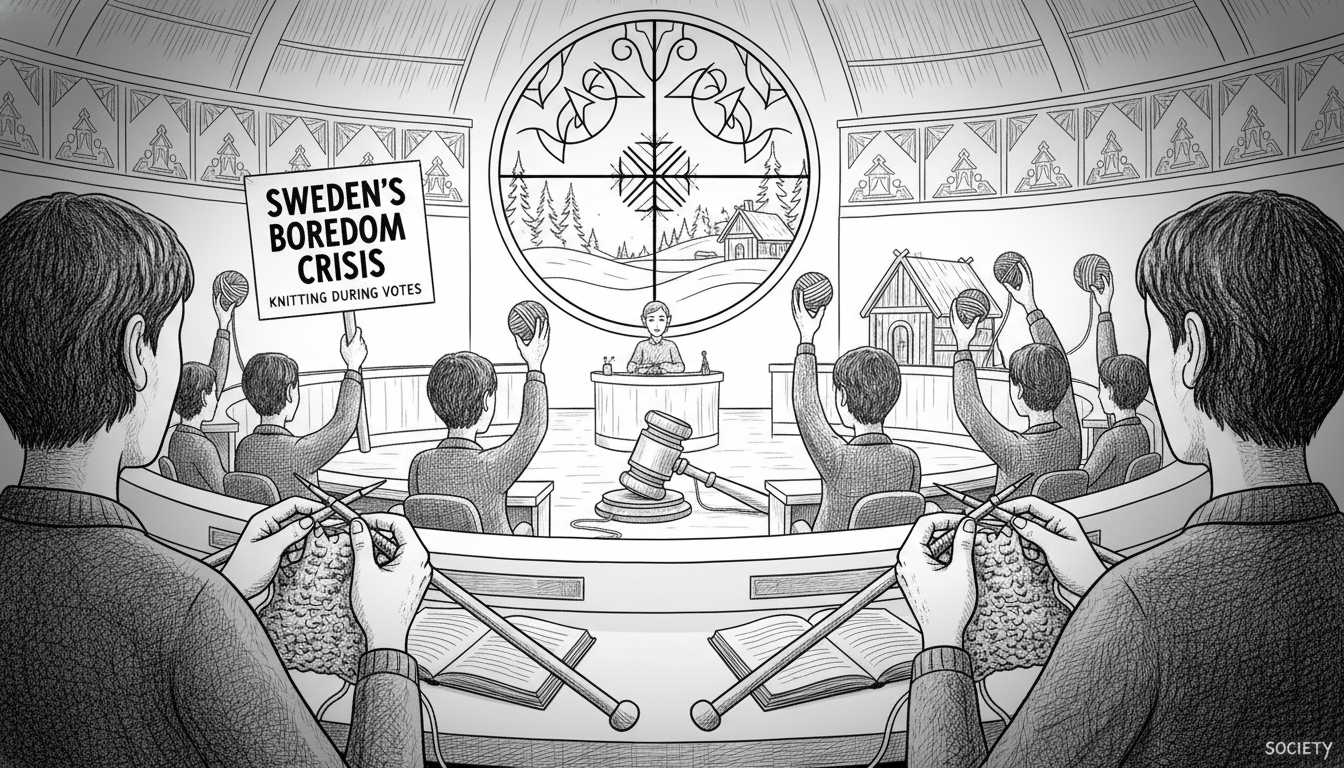
Swedish local government faces a credibility crisis as elected representatives knit, scroll phones, and play games during critical municipal votes. Göteborg city council members admit to playing bingo and solving puzzles while the city's most important decisions are made. This behavior raises fundamental questions about civic engagement and political accountability in Sweden's municipal halls.
A Council Chamber of Distractions
Jonas Attenius, a Social Democrat councilor in Göteborg, expressed dismay at his colleagues' conduct. "I might be old-fashioned, but I believe you should follow the debate when you're in the council," Attenius stated. His comments highlight a growing divide within Sweden's local political bodies. Council meetings in major cities like Göteborg often stretch for hours, covering complex budgets and urban policy. Some politicians defend their activities as necessary coping mechanisms for marathon sessions. Others view phone scrolling and knitting as clear signals of disengagement from democratic duty.
The Göteborg city council, known as kommunfullmäktige, is the municipality's highest decision-making authority. Its 81 elected members oversee a multi-billion kronor budget affecting 600,000 residents. Meetings are public by law, designed to ensure transparency in Sweden's decentralized governance model. Citizens attending these sessions now witness representatives focused on personal pastimes rather than policy debates. This visible detachment risks eroding public trust in the entire political process.
The Structural Roots of Disengagement
Political scientists point to systemic issues within Swedish local government that foster this environment. Municipal councils operate under a strict party-list system, where voting often follows pre-negotiated coalition agreements. Individual council members may feel their influence on final outcomes is minimal. Lengthy meetings filled with procedural formalities can exacerbate feelings of irrelevance. When major decisions are effectively settled in advance within party groups, the public council debate becomes theatrical.
"The behavior is symptomatic of a deeper problem in representative democracy," says Professor Lena Strömberg, a political scientist at Stockholm University. "When councilors perceive the real decision-making happens elsewhere, the public session loses its substantive purpose. It becomes a ritual rather than a deliberation." This disconnect is not unique to Göteborg. Similar reports have emerged from council chambers in Malmö, Uppsala, and smaller municipalities across Sweden. The multi-party system, while promoting broad representation, can lead to bloated agendas where every minor issue receives full parliamentary treatment.
Transparency Versus Performance
Sweden's commitment to governmental transparency complicates this issue. Because meetings are open, every moment of inattention is captured by the public and media. In other political systems, such behavior might occur in closed committees away from cameras. The Swedish model brings it into the light, creating a stark contrast between democratic ideals and practical reality. Citizens expect their elected officials to treat council time with seriousness, especially when discussing school funding, elderly care, and infrastructure projects.
The Social Democrats, historically dominant in Göteborg politics, now lead a complex coalition. Managing this coalition requires careful negotiation, often draining the political energy of council members. Some argue that the reported activities represent mental breaks during a grueling political workday. Critics counter that public servants should exhibit unwavering focus during votes on public resources. The debate touches on broader questions about professional conduct and the symbolic role of elected officials in a healthy democracy.
Consequences for Local Democracy
This trend risks creating a vicious cycle of disengagement. As councilors appear distracted, public interest in local politics may decline. Lower voter turnout in municipal elections then reduces the democratic mandate of the council itself. Important local issues, from climate adaptation to housing shortages, require focused debate and informed decision-making. When the decision-making forum is compromised, policy quality suffers. Citizens may rightly question whether their interests are being served during these distracted deliberations.
Göteborg's situation reflects a national challenge for Swedish politics. The Riksdag in Stockholm has also debated measures to improve debate quality and engagement. Solutions proposed there include stricter speaking times, digital voting tools, and streamlined agendas. Municipal councils, however, operate with fewer resources and greater procedural constraints. The core issue remains balancing human endurance with democratic rigor. No easy policy fix can instantly restore a culture of attentive participation if the underlying structure incentivizes disengagement.
Searching for Solutions in the System
Potential reforms require addressing both form and substance. Shorter, more focused meeting agendas could reduce fatigue. Investing in councilor training on effective participation might help. Some suggest revising procedures so that substantive debate happens when minds are fresh, with procedural votes handled separately. Technology presents another double-edged sword; while digital devices enable distraction, they could also be used for real-time research on debated topics. The fundamental solution may involve empowering individual council members with greater influence over earlier policy stages.
Swedish local government stands at a crossroads. The image of politicians playing bingo while setting tax rates is politically damaging. It undermines the social contract between representatives and the represented. Restoring seriousness to the council chamber is essential for the legitimacy of municipal governance. This requires effort from party leadership, council chairs, and individual politicians to reaffirm the purpose of public deliberation. The alternative is a continued erosion of confidence in the very institutions designed to serve Sweden's communities.
Will Sweden's municipalities reform their practices to ensure council time commands respect? The answer will determine whether local government can meet the complex challenges of the coming decade with full public trust.