
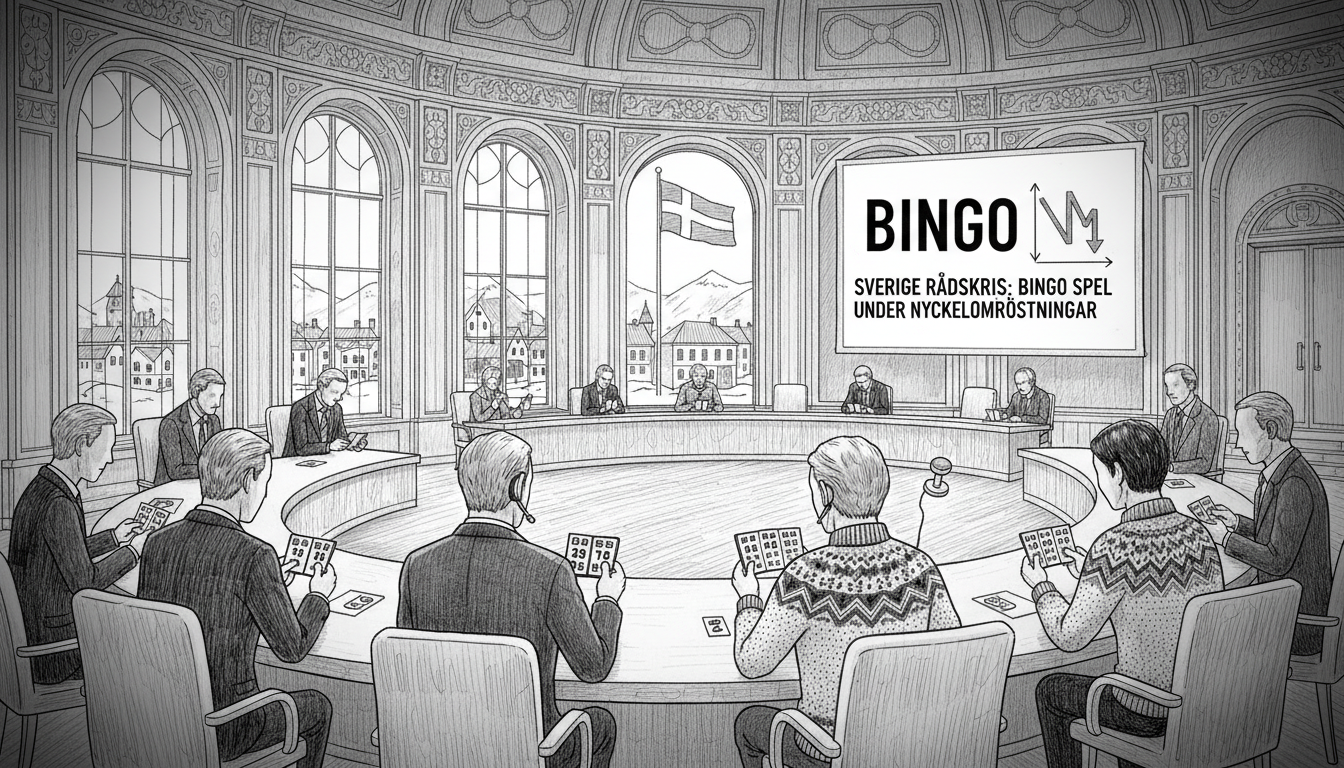
Swedish local government faces a transparency crisis as elected representatives play games during critical municipal decisions. Göteborg city council members have been observed playing bingo, knitting, and scrolling phones during full council meetings. This behavior raises serious questions about accountability in Sweden's famously open political system. The Social Democrats' Jonas Attenius expressed concern about the lack of engagement during debates. His comments highlight a growing disconnect between procedural transparency and substantive participation in Swedish politics.
A System Under Strain
Göteborg's kommunfullmäktige represents the highest decision-making authority in Sweden's second-largest city. Council meetings regularly address budgets exceeding billions of kronor and policies affecting 600,000 residents. These sessions are mandated by Swedish law to be open to the public, reinforcing principles of governmental transparency. The observed disengagement suggests the formal structure of accountability may be weakening. Lengthy agendas covering everything from preschool funding to major infrastructure can test any elected official's focus. However, the substitution of games for governance indicates a deeper systemic issue.
Political scientist Dr. Elin Mårtensson from Uppsala University analyzes this trend. "We have created a system where presence is documented but engagement is optional," Mårtensson states. "The Swedish model relies on informed deliberation. When council members treat the chamber as a social club, public trust erodes." Her research indicates meeting lengths have increased by 40% over two decades while decision complexity has grown. This creates an environment where multitasking becomes a coping mechanism for some elected officials. The consequence is a dilution of the rigorous debate Swedish local government was designed to foster.
The Transparency Paradox
Sweden's Offentlighetsprincipen (Principle of Public Access) guarantees citizens the right to attend council meetings. This cornerstone of democracy aims to prevent backroom deals and ensure officials remain accountable. The Göteborg observations reveal a paradox: transparency exists, but meaningful oversight may not. Citizens can physically observe their representatives, yet cannot guarantee those representatives are mentally present. This situation challenges the effectiveness of transparency as a standalone tool for accountability. It suggests that open doors must be paired with engaged participants to truly serve the public interest.
Council member Attenius articulated this concern clearly. "I might be old-fashioned, but I believe you should follow the debate when you are in the full council," he said. His statement reflects a traditional view of political duty now confronting modern distractions. The behavior is not isolated to one party or faction within the Göteborg council. Multiple sources describe a cross-party phenomenon where digital and analog distractions fill time during procedural debates. This points to a cultural shift within council chambers, where the act of voting has become separated from the process of deliberation.
Structural Challenges and Civic Perception
The operational reality of Swedish municipal government involves managing vast responsibilities with limited time. Göteborg's council handles matters from waste management and public transit to cultural institutions and school curricula. Meeting agendas are often packed with hundreds of pages of preparatory documents. Council members serve part-time in these roles while frequently maintaining other employment. This structure, designed for broad representation, can inadvertently promote superficial engagement. The pressure to be seen attending conflicts with the cognitive demand of deeply understanding each issue.
Public perception of this behavior risks further damaging political engagement. Voter turnout in Swedish local elections has seen gradual decline in many municipalities. Observing elected officials playing bingo during debates validates citizen cynicism about political efficacy. "Why should citizens care about council decisions if their representatives do not?" asks civic engagement researcher Professor Lars Bengtsson. His studies show a direct correlation between perceptions of politician dedication and voter motivation. The spectacle of inattention during governance could accelerate disengagement, creating a vicious cycle for local democracy.
Comparative Context and National Implications
While the Göteborg case has drawn attention, similar patterns exist in other Swedish municipalities. The structure of local government is standardized across the country, suggesting the issue may be widespread. Stockholm's city council has implemented stricter device usage policies during key votes after similar complaints. Malmö has experimented with shorter, more focused meeting formats to maintain concentration. These adaptations indicate recognition of the problem at a systemic level. The Swedish Association of Local Authorities and Regions (SALAR) has begun discussing guidelines for meeting conduct and efficiency.
The national Riksdag in Stockholm maintains more formal traditions, though digital distraction remains a challenge there too. The difference lies in scale and scrutiny; national politics receives more media coverage, potentially acting as a deterrent to overt disengagement. Local council meetings, while public, often occur with minimal press or public attendance unless a controversial issue is on the agenda. This creates environments where norms of professionalism can degrade without immediate consequence. The Göteborg situation serves as a warning signal for local democracies throughout Sweden and beyond.
Pathways to Reform and Renewed Engagement
Addressing this crisis requires reforms to both structure and culture within municipal governance. Potential solutions include revising meeting formats to separate deliberative sessions from procedural votes. Implementing technology for secure remote voting on non-controversial items could reduce unnecessary physical presence requirements. Training for council chairs on managing engaging debates is another practical step. Some political scientists advocate for professionalizing local council roles with modest salaries to reflect the time commitment required for proper preparation.
Ultimately, the solution must reconnect the act of decision-making with the responsibility of informed judgment. Sweden's local government system is admired globally for its accessibility and transparency. Preserving those strengths requires ensuring that transparency reveals genuine engagement, not just physical presence. The citizens of Göteborg, and all Swedish municipalities, deserve representatives who treat their duty with the seriousness it demands. The alternative is a hollow form of democracy where decisions are made without genuine debate, undermining the very system designed to give people a voice.
The coming municipal term will test whether Swedish local politics can restore the connection between presence and participation. Council members must choose whether their chambers will be arenas for debate or lounges for distraction. That choice will define the health of local democracy for years to come.