
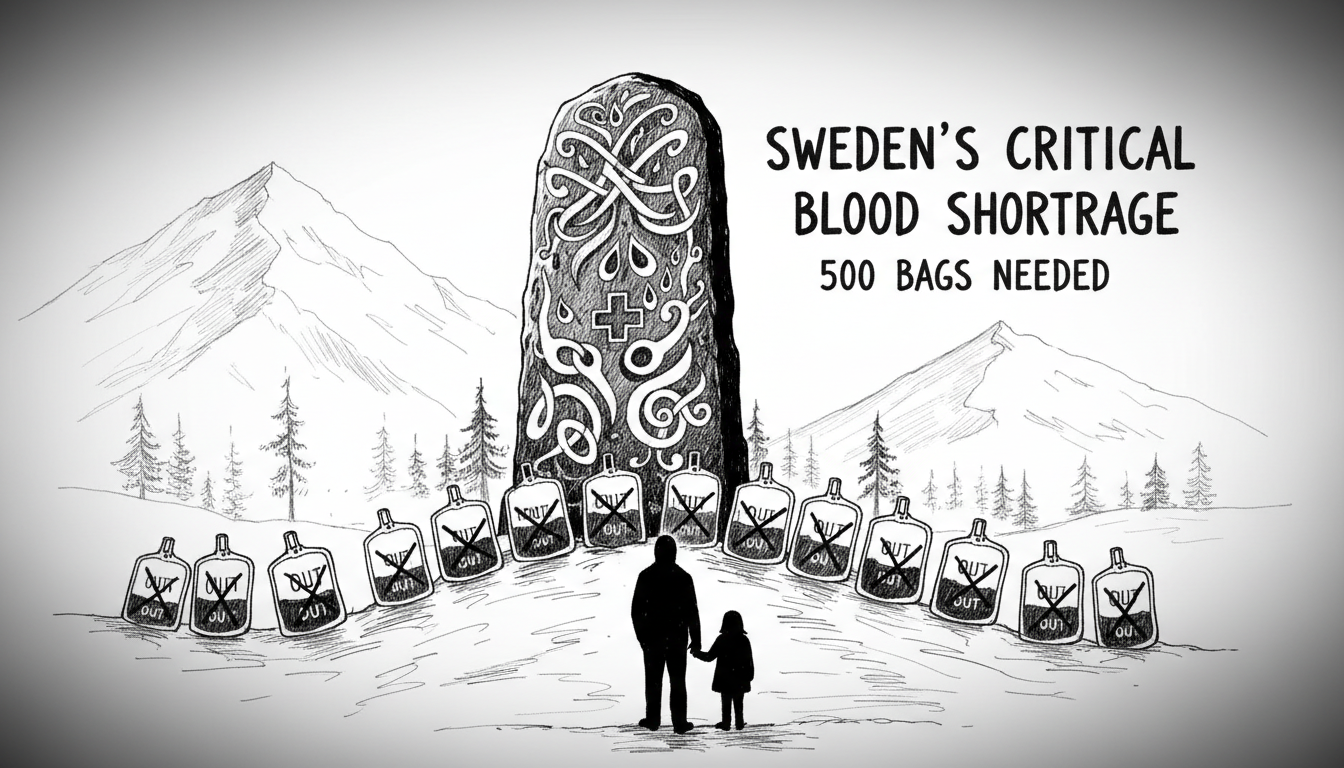
Sweden's healthcare system is facing a critical blood shortage as the Christmas holiday approaches. In the Västra Götaland region, blood banks are critically low, missing over 500 vital blood bags. Hospitals are issuing an urgent plea for donors to step forward before the festive break. The holiday season creates a perfect storm: regular donors travel or take time off, while medical emergencies and scheduled surgeries continue. Several public holidays also force donation centers to close, squeezing the window for collection. "The situation is serious and we need to act now," says Anna Wiberg, chief physician at Transfusion Medicine in the Västra Götaland Region. "We need blood donors' help to secure the blood supply for Christmas."
A Seasonal Challenge with Serious Consequences
This annual dip is a well-known phenomenon in Swedish healthcare. Nationally, blood donations typically fall by 10-15% during the holiday period. People are busy with family, travel, and celebrations. Their routines are disrupted. Yet the need for blood in hospitals does not take a holiday. A car accident on icy roads, a complex cancer surgery, or a childbirth complication – these emergencies demand immediate, life-saving transfusions. The shelf life of donated red blood cells is only 35 to 42 days, making it impossible to stockpile a year's supply. The system relies on a steady, consistent flow of donors. "It's a constant balancing act," explains a Stockholm-based transfusion nurse who asked not to be named. "We celebrate the holidays, but illness and injury do not. We need people to remember that giving blood is one of the most direct ways to save a life, perhaps for someone you'll never meet."
Who Can Donate and Where?
The call is not just for regular donors, but for new ones. In Sweden, generally healthy adults aged 18-65 can donate blood. The process takes about an hour, including registration, a health check, the donation itself, and a short rest with refreshments. In Västra Götaland, donation centers are located in Gothenburg, Borås, Skövde, and Trollhättan, among other cities. Many centers have extended hours in the lead-up to Christmas. The Swedish Blood Donor Association (Blodgivarna) also highlights the need for specific blood types, especially O-negative, the universal donor type used in emergencies when there's no time to test a patient's blood. A shortage here can have immediate, dire consequences in trauma care.
The Cultural Hurdle of Holiday Giving
There's a cultural dimension to this shortage. Swedes highly value their holiday leisure time, their semester. The period from Christmas Eve through New Year's is sacrosanct for family and rest. The concept of lagom – everything in moderation – can sometimes translate to a reluctance to disrupt one's planned downtime for an activity like blood donation. Furthermore, Sweden's strong tradition of state-provided welfare can, paradoxically, lead to a sense of detachment from the system's operational needs. People trust the system to work, but forget they are its essential component. "We see this every year," says Lars Bengtsson, a veteran donor with over 50 donations. "People think, 'Someone else will do it.' But if everyone thinks that, the shelves go empty. I book my donation slot in November, like a Christmas appointment with myself."
A System Under Persistent Pressure
The holiday crisis points to a broader, year-round vulnerability. Sweden, like many nations, relies on a small percentage of the population to donate regularly. Immigration from countries with different donation cultures or histories, and an aging population of dedicated donors, adds pressure. Public campaigns, often featuring calm, factual messaging, struggle to cut through the noise of daily life. Unlike a major disaster that triggers a surge of donors, this is a silent, creeping shortage. It doesn't make headlines until it becomes critical. Anna Wiberg's public warning is a deliberate attempt to break that cycle. It's a move from the typically understated Swedish official communication to a more direct appeal, underscoring the genuine urgency.
What Happens If the Bags Aren't Filled?
The implications are concrete and clinical. Elective surgeries – hip replacements, cataract operations – may be postponed. This creates longer waiting lists and patient discomfort. More critically, hospitals may have to implement strict blood management protocols for complex surgeries, potentially increasing risk. While urgent and life-saving treatments are always prioritized, a thin margin of error means less flexibility for unexpected complications during procedures. In a worst-case scenario, doctors could face the harrowing decision of allocating a limited resource. This is the reality the healthcare sector is desperately trying to avoid.
A Call to Action Beyond the Holidays
The solution requires both immediate action and long-term thinking. The immediate need is for people in Västra Götaland, and across Sweden, to check donation center schedules and book an appointment before December 24th. But the lesson for the new year is the need to build a more resilient donor base. This could involve integrating donation information into civic registration, offering more flexible mobile donation units at workplaces and universities, and creating stronger donor recognition programs. Some suggest a more community-based approach, framing donation as a local civic duty, akin to participating in a föreningsliv (association life).
As Swedes prepare for their julfrid (Christmas peace), the healthcare sector is working against the clock. The gift of blood is anonymous, but its impact is profoundly personal. It represents a direct chain of human connection: from a donor in a quiet clinic chair to a patient in a bright hospital room, whose holiday season will now look very different. Filling those 500 bags is not just a logistical task; it's a test of collective responsibility. Will the tradition of holiday rest override the imperative to give? The answer will be measured in bags on a shelf, and in the quiet moments of medical care that depend on them.