
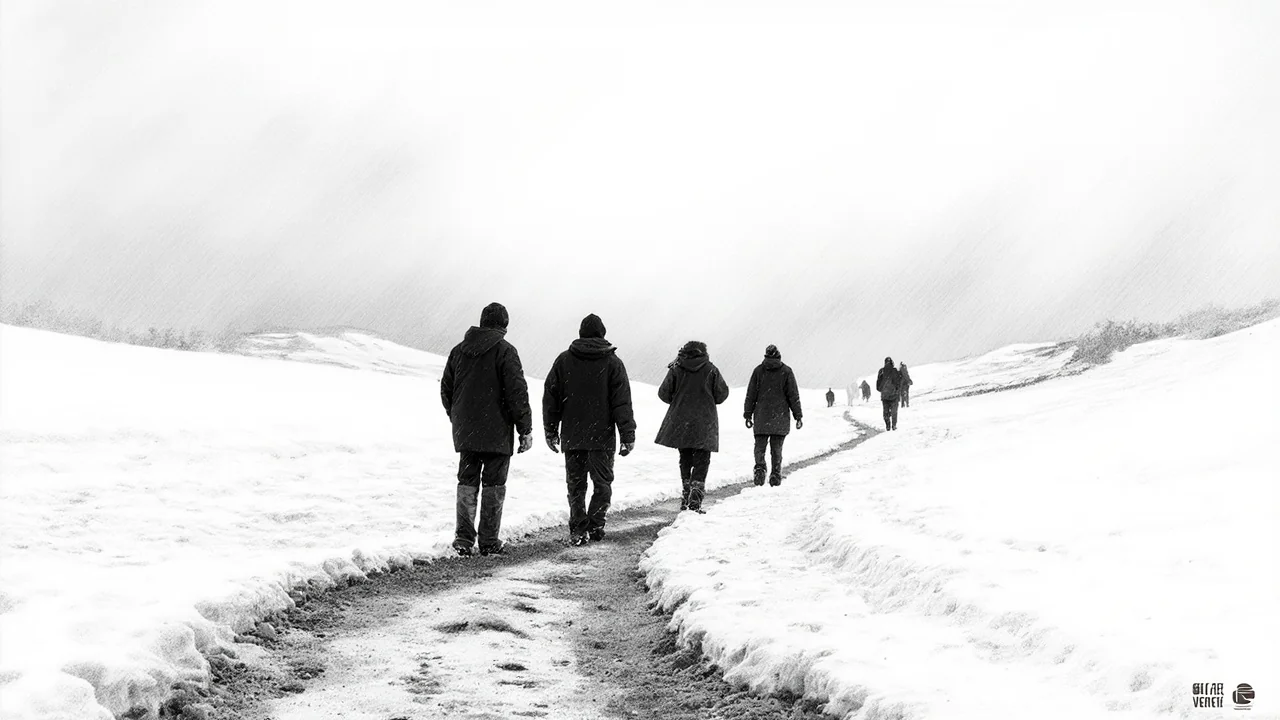
Sweden's recent snowfall has created a beautiful but deadly illusion across its frozen lakes. Ice volunteer Charlie Malmgren delivers a stark warning: there are currently no safe ice surfaces around Gothenburg. The picturesque snow cover is acting as a dangerous insulator, halting proper ice formation and leaving deceptively thin, unstable sheets over open water.
"Last week the ice started to form, but then the snow came," Malmgren explains. "The ice never had a chance to become solid, strong, and approved. Instead, it became deadly ice, everywhere. There isn't a single ice sheet that holds."
This warning comes just as perfect winter weather arrives. Sunshine and cold temperatures forecast for the weekend create an irresistible temptation for skating, skiing, or ice fishing. Malmgren stresses that all these activities carry extreme risk right now. The snow might lure children who don't understand the danger.
The Insulating Blanket of Snow
Many assume prolonged sub-zero temperatures guarantee thick, safe ice. This is a common and dangerous misconception. The recent snowfall acts like a thermal blanket, Malmgren says. It prevents the cold air from reaching the water beneath, effectively stopping the freezing process. What looks like a solid white surface is often just a weak layer covered in snow.
"The snow maybe tempts children who go out now and who don't understand what it's about," he notes, highlighting a key concern for parents and communities. The visual appeal of a snowy landscape overrides natural caution.
This phenomenon is particularly acute in coastal and western regions like Gothenburg, where heavy snow is less common. Residents may lack experience judging ice safety under these specific conditions. The novelty of the snow itself becomes part of the hazard.
A Universal Danger on the Ice
Malmgren is clear: no activity is safe. "Going out on a lake in and around Gothenburg is associated with mortal danger," he states. He specifically warns against skiing or skating on lakes this weekend, despite the ideal weather. Ice fishing is equally perilous.
The ice is generally only three to four centimeters thick—nowhere near the 10-centimeter minimum considered safe for a single person walking. It cannot support any weight reliably. A sudden crack or plunge into freezing water leads to cold shock and drowning within minutes.
This universal danger contradicts the instinct to think certain activities are safer. Skis distribute weight, but on ice this thin, distribution is irrelevant. A fishing hole weakens the immediate area, but the entire sheet is unstable.
Specific Threats and False Security
Some locations are perpetually hazardous. Malmgren points to Delsjön, Gothenburg's drinking water reservoir, as a place to always avoid. The city adjusts the water level there, causing unpredictable ice thickness. It might be thick in one spot and dangerously thin just meters away.
He also warns against a false sense of security from seeing others on the ice. "Just because you see someone out on the ice does not mean it is safe," Malmgren emphasizes. Often, experienced ice users take the greatest risks. Their presence, however, can lure out less experienced individuals who assume it must be safe.
This creates a chain reaction of danger. A seasoned ice fisherman might test a small area, but a family seeing him from shore might then venture onto a completely different and weaker section.
Cultural Context and Winter Traditions
This warning clashes with deep-seated Swedish winter culture. The image of skating on a frozen lake under a clear blue sky is a national ideal. It features in art, literature, and family memories. The concept of 'fika' on ice, with a thermos of coffee, is a cherished seasonal activity.
In Stockholm, areas like Lake Mälaren's inlets or the smaller lakes in Haga Park would typically see skaters after a cold spell. The community aspect is strong. This cultural pull makes warnings harder to heed. People want to participate in the seasonal rhythm.
Local municipalities often mark safe ice areas with flags and regular thickness checks. The absence of these flags right now is a critical signal. No official ice is declared safe. The system relies on volunteers like Malmgren and public trust in their assessments.
The Long Wait for Safe Ice
When will the ice be safe? Malmgren offers no quick timeline. "It will take time before you can go out on them," he says. The snow must either melt away or be compacted down so it no longer insulates. Then, sustained deep cold is needed to build thick, solid ice from the bottom up.
This process could take weeks, depending on future weather. A warm spell could melt everything, resetting the process entirely. The uncertainty is part of the frustration for winter sports enthusiasts.
His final message is unambiguous: "Do not go out. Stay on land." It's a direct appeal to override tradition with caution.
Analysis: Risk Perception in the Nordic Winter
This situation highlights a constant challenge in Sweden: balancing the love for outdoor winter life with objective risk. Swedes are generally adept at assessing natural dangers, from forest terrain to summer water quality. Ice, however, presents a unique challenge because its danger is hidden.
The snow cover transforms the visual landscape, masking the water's true nature. It creates a uniform, inviting plane. The human brain is poor at judging the thickness of ice, especially from a distance or through snow.
Public education campaigns, like those run by the Swedish Sea Rescue Society (SSRS), consistently stress that ice strength varies wildly. It depends on water currents, underwater springs, salt content, and snow cover—factors invisible from the surface. This latest warning from an on-the-ground volunteer adds a crucial, real-time layer to that general advice.
Looking Ahead: A Season of Patience
The coming weeks will test public patience. Social media will likely fill with images from inland areas or northern Sweden, where colder temperatures and different snow conditions may create safer ice earlier. This can fuel impatience in southern regions.
The key takeaway is hyper-local awareness. Conditions on Lake Vänern differ from a small forest pond near Gothenburg. Both are currently unsafe, but they will become safe at different times. The rule remains: never assume. Always check official local sources or, better yet, wait for clear, official approval.
For now, the Swedish winter landscape offers its beauty for viewing, not for traversing. The promise of skating and skiing will have to wait, preserving the season's joy for a safer day. The cultural tradition is strong, but it depends on the foundation of a solid, frozen surface that simply isn't there yet. The snow, for all its beauty, has written a warning across the lakes that everyone must read.