
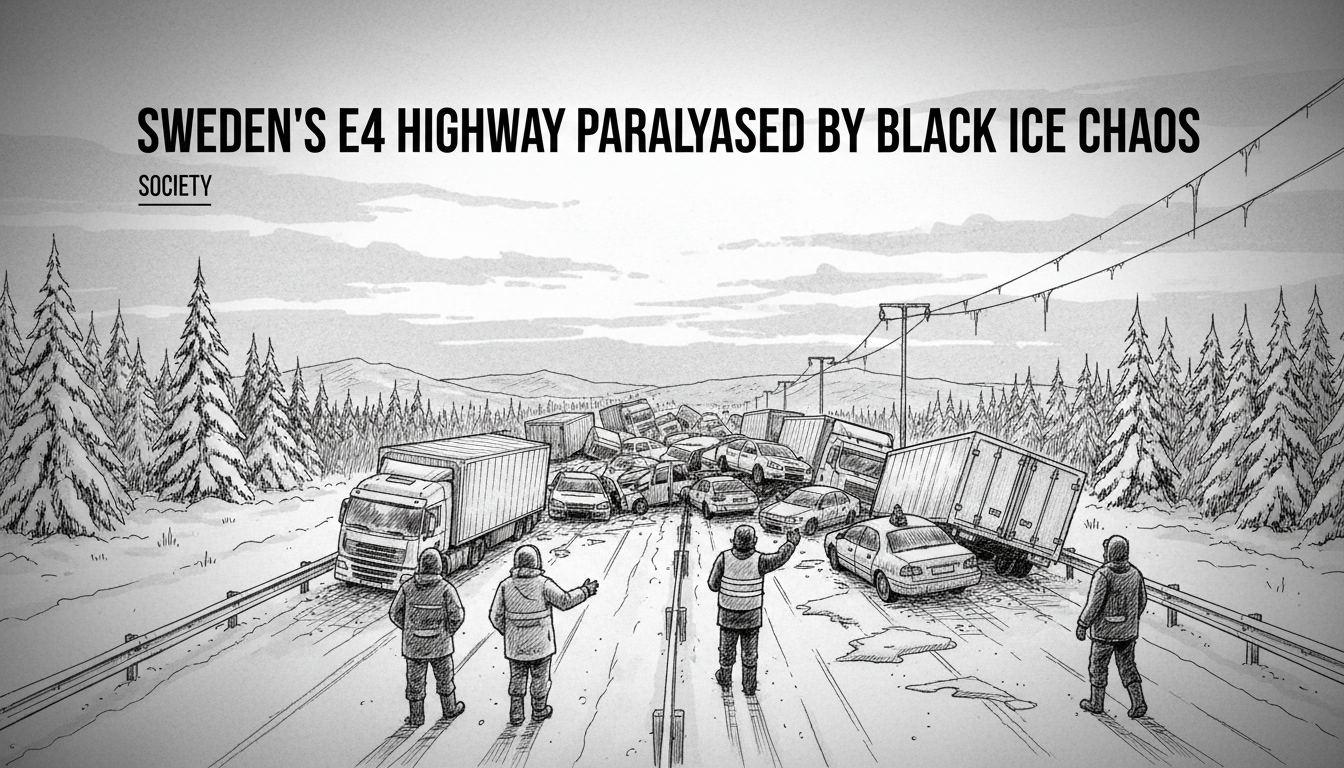
Sweden road conditions turned treacherous on the E4 highway near Luleå last night. A severe case of black ice, or 'ishalka', brought traffic to a complete standstill for hours. Even police cars became trapped in the kilometres-long queues, highlighting a winter vulnerability on a critical national artery.
For seven hours, hundreds of motorists inched forward or simply sat still. The stretch between Luleå and Kalix, a vital link in the north, transformed into a frozen parking lot. The incident exposes the relentless challenge of maintaining mobility in Sweden's harsh northern winters, where nature can still outpace preparedness.
A Night Stranded on Sweden's Main Artery
The E4 is Sweden's backbone. It runs 1,590 kilometres from Helsingborg in the south to Haparanda at the Finnish border. In the north, it is a lifeline. Last night, that lifeline froze solid. Black ice is a driver's worst nightmare. It forms a thin, transparent layer on the asphalt, nearly invisible until your tires lose all grip.
"You just stop moving," said Erik Lundström, a truck driver who was caught in the chaos. "One minute you're fine, the next you're sliding. Then everyone slides. Then nobody moves." His delivery from Luleå to Piteå, normally a short trip, took over ten hours. He had food and water, but the frustration was palpable. Stories like his echoed across social media as people shared their experiences from the frozen road.
When the Helpers Need Help
The most telling detail of the event was that police officers also got stuck. It underscores the indiscriminate nature of such winter hazards. No amount of authority or flashing blue lights can melt black ice. A police spokesperson confirmed their vehicles were immobilised within the larger traffic jam, unable to reach the front of the queue or assist in clearing lanes.
This reality forced a reliance on remote coordination. The Swedish Transport Administration, Trafikverket, worked with available roadside assistance units who could navigate the icy conditions with specialised equipment. The scene was one of collective vulnerability, a rare moment where everyone on the road, from commuters to law enforcement, was equally at the mercy of the weather.
The Science and Strategy of Fighting Ice
Why does this happen on modern, maintained highways? Experts point to a perfect storm of conditions. "Black ice often forms when moisture from precipitation or melting snow refreezes overnight," explains road safety analyst, Dr. Anya Pettersson. "It can happen rapidly, especially on bridges and shaded stretches of road, catching both drivers and maintenance crews off guard."
Trafikverket has a fleet of plows and salting trucks. Their strategy involves anti-icing, where brine is applied to roads before a freeze to prevent ice from bonding to the pavement. But the vastness of the network, particularly in the sparsely populated north, means response times can vary. Forecasting is crucial, but microclimates along the coast near Luleå can create localised, unpredictable ice patches.
A Cultural Reckoning with Winter Driving
This event sparks a broader conversation about winter readiness in Swedish culture. Sweden mandates winter tires from December 1 to March 31. Most drivers use studded tires for superior ice grip. Yet, as this incident shows, even the right equipment has its limits when ice is severe.
The Swedish approach to winter driving emphasises personal responsibility. Driver's education heavily features skid training and winter conditions. The mantra 'fart anpassad efter förhållandena' – speed adapted to the conditions – is drilled into every learner. Last night was a stark, real-world test of that principle. It wasn't about speed, but about the complete loss of control that can happen regardless.
The Economic and Human Ripple Effect
The standstill had immediate consequences beyond stranded drivers. The E4 is a major freight corridor. Delays disrupt supply chains for everything from groceries to industrial parts in a region heavily dependent on road transport. For individuals, it meant missed appointments, worried families, and a long, cold, stressful night.
Local communities along the highway often become informal crisis centres during such events. Service stations provide warmth, and locals sometimes offer help. This informal network is part of the northern Swedish mindset, a recognition that winter sometimes wins and community support is essential.
Looking Ahead: Can Technology Provide Answers?
Road authorities are increasingly looking to technology. Smart road sensors that detect surface temperature and moisture can provide real-time alerts. Connected vehicles that share road condition data with each other and infrastructure are on the horizon. For now, the primary tools remain weather forecasts, salt, and sand.
Dr. Pettersson argues for a layered approach. "We need the technology, but we also need drivers to trust the warnings and adjust plans. The most advanced system fails if a driver thinks they can beat the storm. Last night was a powerful reminder that winter demands respect."
As the sun rose over Norrbotten County, the ice slowly melted and traffic resumed. The cars and trucks moved on, carrying the memory of a night spent standing still. The clean-up was quick, but the questions linger. In a country famed for mastering its environment, last night's paralysis on the E4 serves as an annual humbling. It asks every Swede, and the systems built to support them, if they are truly prepared for winter's next, inevitable, silent attack. Will the lessons of this standstill lead to new strategies, or is this simply the price of living and moving in one of the world's most beautiful, yet demanding, winter landscapes?