
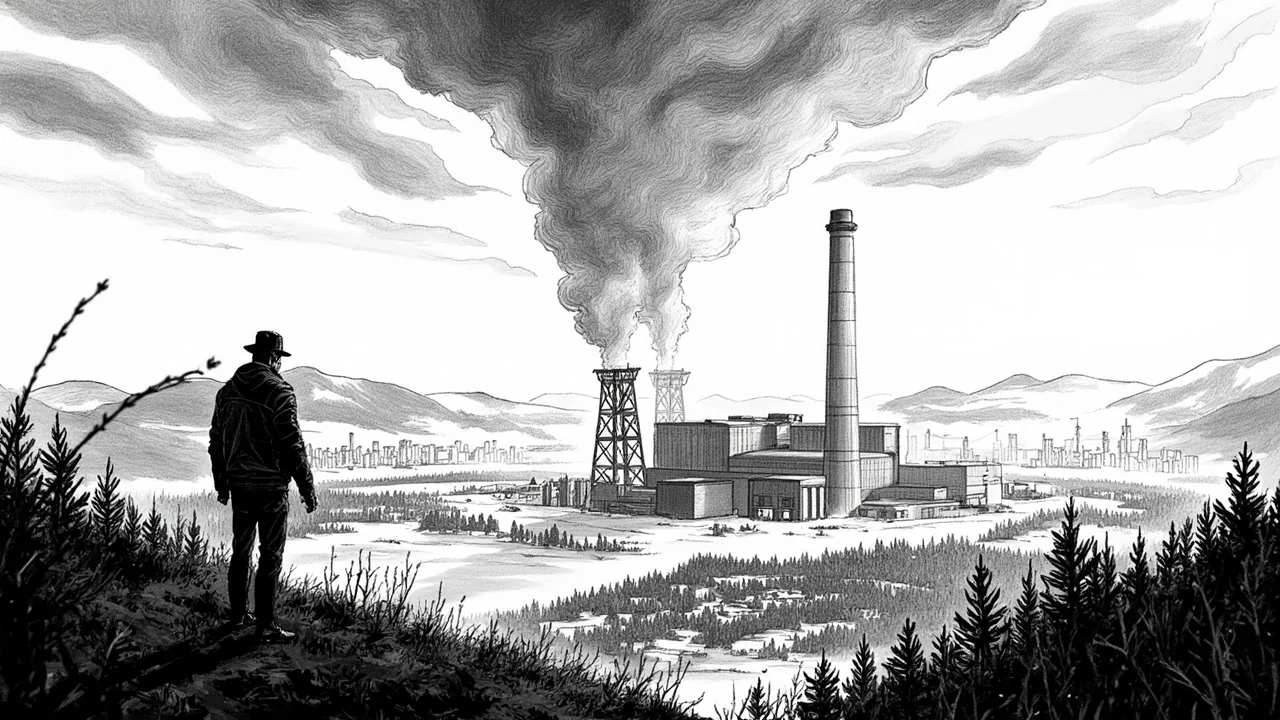
Sweden's strategic electricity reserve for winter 2024 faces a critical shortfall of 450 megawatts. Svenska kraftnät, the national grid operator, has concluded a procurement process securing only 350 MW of backup power. This amount represents less than half of the 800 MW initially assessed as necessary for reliable winter operations. The gap exposes a significant vulnerability in the nation's energy security framework.
Energy Minister Ebba Busch (Christian Democrats) has defended the procurement outcome. She cited budget constraints and market conditions as primary limiting factors. The government allocated 500 million SEK for the reserve, a sum officials now acknowledge was insufficient. This financial cap directly resulted in the procurement of only 350 MW of capacity.
"The government and Svenska kraftnät have mismanaged this process," said Fredrik Olovsson, the Social Democratic Party's energy policy spokesperson. His criticism centers on the disconnect between identified need and allocated resources. The Riksdag approved the reserve funding as part of a broader energy security bill last spring.
A Calculated Risk for Winter Stability
The strategic reserve is designed for extreme scenarios. It activates during severe weather combined with simultaneous system failures. Such conditions could include prolonged cold snaps with low wind and nuclear reactor outages. The 800 MW requirement was calculated by Svenska kraftnät's analysts modeling worst-case winter demand.
Securing only 350 MW means Sweden accepts a higher risk level. Grid operators must now rely more heavily on emergency imports from neighboring countries. Finland, Norway, and Denmark have their own winter capacity challenges. This interdependence creates a regional risk if a cold high-pressure system blankets the entire Nordic region.
The procurement process, run from Svenska kraftnät's headquarters in Solna, targeted fast-response gas turbines and industrial backup generators. These units are typically older and more polluting than the main grid's power sources. Their use is strictly limited to a few critical hours per year to prevent widespread blackouts.
Political Fallout in Rosenbad and the Riksdag
The shortfall has ignited a political dispute in Stockholm. Opposition parties accuse the government of compromising national security for budgetary reasons. The debate echoes previous discussions on defense spending and healthcare resilience. Energy policy has become a central pillar of Sweden's national security doctrine.
Minister Busch, speaking from the Ministry of Climate and Enterprise at Rosenbad, argued the reserve is one layer in a multi-faceted strategy. She pointed to ongoing investments in grid expansion and renewable energy as longer-term solutions. "The strategic reserve is an emergency brake, not the engine," she stated during a recent press conference.
Critics counter that an emergency brake is useless if it fails to stop the car. The Riksdag's Committee on Industry and Trade will review the procurement outcome in a hearing next month. Committee Chairperson Lars Hjälmered (Moderate Party) has requested a full breakdown of the cost-per-megawatt calculations.
Historical Context of Swedish Energy Planning
This crisis follows a pattern of strained electricity margins in southern Sweden. The closure of the Ringhals 1 and 2 nuclear reactors removed over 1,700 MW of baseload power from the system. While wind power expansion has been rapid, its intermittent nature creates volatility. The government's policy aims for a 100% fossil-free electricity production system.
Strategic reserves are not new in Europe. Germany maintains a similar scheme, and the UK operates a Capacity Market. Sweden's model, established by legislation in 2022, is younger and less tested. The first procurement in 2023 secured approximately 400 MW, setting a precedent for this year's lower-than-needed result.
The underlying issue is a classic economic problem: how to pay for insurance that may never be used. Power producers demand payment for keeping rarely-used capacity on standby. The government's budget allocation reflected a political calculation about acceptable risk and fiscal responsibility.
Systemic Vulnerabilities and Future Implications
The 450 MW gap is not just a number; it represents a tangible reduction in safety margin. Analysts compare it to removing a crucial backup system. In grid management terms, it increases the statistical probability of load shedding during extreme events. Such events, while rare, carry catastrophic economic and social costs.
Svenska kraftnät's control room in Solna now faces a more complex winter balancing act. Grid controllers will need to monitor weather forecasts and plant availability with heightened vigilance. The margin for error in their real-time decisions has narrowed considerably due to the procurement shortfall.
This situation may accelerate discussions on market design reforms. Some experts advocate for a Nordic-wide capacity mechanism to share costs and resources. Others propose mandatory reliability obligations for large power producers. The government's upcoming energy policy bill, due in 2025, will likely address these structural questions.
The Path Forward: Short-Term Patches and Long-Term Solutions
For the coming winter, options are limited. Svenska kraftnät can attempt to secure additional voluntary agreements with large industries. These firms would agree to power down in exchange for compensation. This demand-side response is effective but depends on industrial cooperation during a crisis.
Long-term solutions require political consensus and significant investment. Connecting the northern and southern Swedish electricity grids remains a priority but faces environmental permitting hurdles. Expanding nuclear power through small modular reactors is a government goal with a 2030s timeframe. Accelerating permit processes for onshore wind farms is another contested policy avenue.
The reserve shortfall ultimately questions the pace of the energy transition. Can Sweden simultaneously phase out fossil fuels, retire old nuclear, and maintain impeccable reliability? The 450 MW gap suggests the current plan may be overly optimistic. Voters will judge this balance in future elections.
Sweden's electricity reserve crisis serves as a cautionary tale for nations pursuing ambitious climate goals. It highlights the intricate balance between market mechanisms, state planning, and physical reality. The coming winter will test the resilience of both the Swedish grid and the political strategy that shaped it. Will the 350 MW prove enough, or will this shortfall become a case study in energy policy miscalculation?