
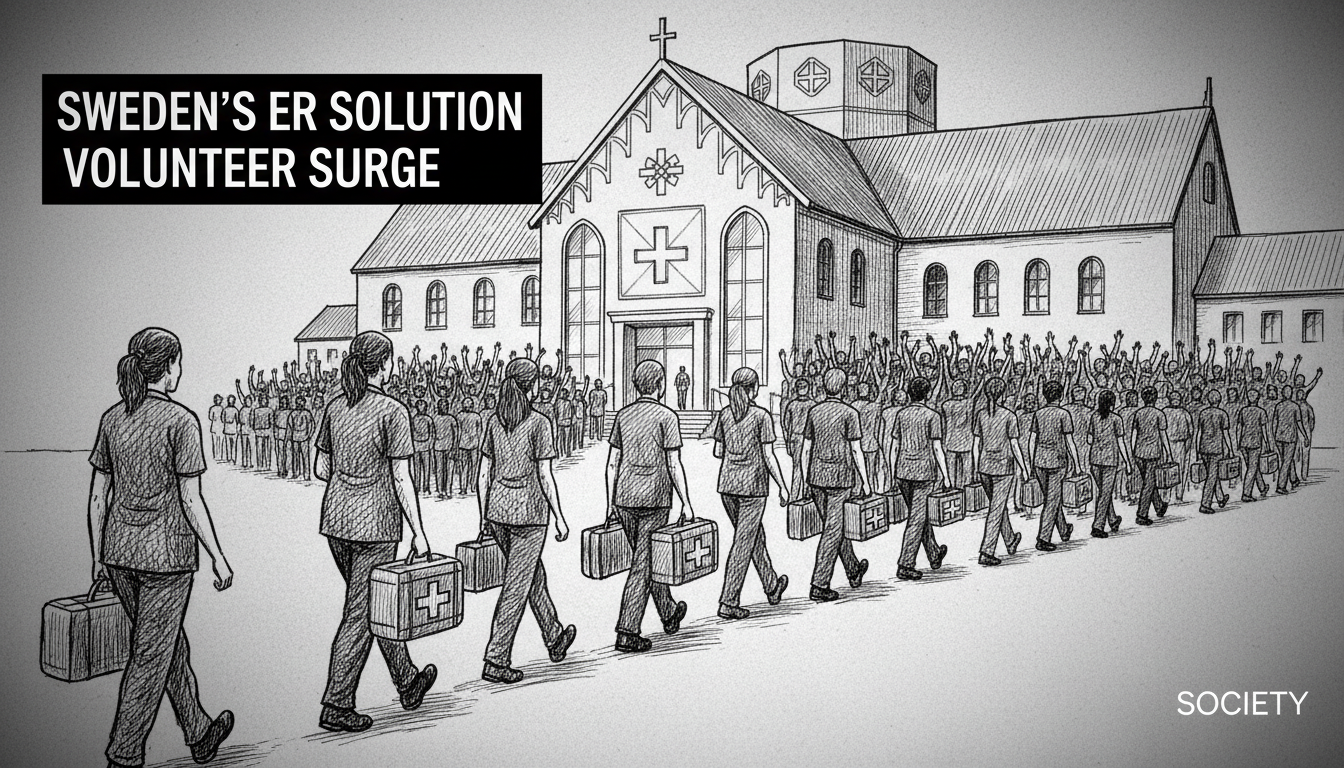
Sweden’s average emergency room wait time stretched to several hours in 2022. In the stark, fluorescent-lit waiting rooms of Sahlgrenska University Hospital, one of the nation’s largest medical centers, that statistic translates into human experience: anxiety, discomfort, and lonely hours. The hospital’s new strategy to soften this reality doesn’t involve more doctors or billion-kronor investments. It centers on a blanket, a coffee, and a human conversation, delivered by a growing army of volunteers.
Angela Eriksson understands this simple power. She’s among those who believe a friendly face can be as crucial as medicine during a crisis. “You are appreciated, and it means a great deal for patients, relatives, and staff,” Eriksson says. Her sentiment captures the heart of Sahlgrenska’s plan to significantly expand its collaboration with volunteer organizations. This push aims to embed more non-medical support directly into the bustling emergency departments of Gothenburg.
The Waiting Room Reality
For international observers, Sweden’s universal, tax-funded healthcare system often symbolizes Nordic efficiency. Yet inside its hospitals, a familiar pressure builds. An aging population and rising demands strain resources. Emergency rooms, or akutmottagningar, act as the frontline. They are where worried parents bring feverish children, where the elderly fall, and where acute pain sends people in the dead of night. The result is often overcrowding and long waits for non-critical patients.
At Sahlgrenska, serving Sweden’s second city, this pressure is acute. The wait isn't just a number on a board. It’s the stiff chair, the quiet worry, the feeling of being lost in a system. This is where the volunteer role begins. They offer the small comforts that a stretched-thin medical team simply cannot prioritize: fetching a warm drink, finding an extra pillow, or explaining the unclear process to a confused relative.
More Than Just Coffee
Volunteerism in Swedish hospitals is not a novel concept. Organizations like the Swedish Red Cross and local church groups have long provided companionship in wards. However, Sahlgrenska’s initiative represents a strategic escalation, a formalized effort to integrate this support directly into the high-pressure emergency zone. The goal is to improve the overall environment, making a difficult wait more humane.
Studies, including a 2020 review, suggest such programs can tangibly improve patient satisfaction and lower stress for clinical staff. When a volunteer calmly guides a visitor to the right corridor, a nurse gains five more minutes with a patient. When someone offers a blanket and chat to an elderly man, his anxiety—which can exacerbate health issues—may ease. It’s a practical, human layer atop the clinical machinery.
A Systemic Band-Aid or Vital Support?
Healthcare analysts observe this trend with mixed perspectives. Many acknowledge the immediate benefits volunteers bring. They provide a valuable service that addresses the 'soft' but critical aspects of care. In a culture that values egalitarianism and community, it also resonates with a Swedish ethos of collective responsibility.
Yet, experts sound a note of caution. Volunteers, however dedicated, are not a substitute for adequate professional staffing, long-term funding, or systemic reform. Some critics argue this is a stopgap solution, a way to manage symptoms of an overburdened system without curing the disease. “It’s a compassionate response to a real problem,” says one Stockholm-based health policy analyst, who requested anonymity. “But we must be careful not to normalize the idea that goodwill alone can fix resource shortages. The state’s responsibility for core healthcare provision remains absolute.”
The Swedish Context of Care
This initiative unfolds against a distinctive Swedish backdrop. The famed fika—a coffee break fostering connection—finds a new purpose in a hospital waiting room. The national principle of dugnad, community self-reliance, echoes in the volunteer spirit. For newcomers to Sweden, encountering this volunteer network can be a surprising introduction to a layer of Swedish society that operates on trust and a shared social contract.
The program also highlights a quiet evolution in Swedish healthcare. As the state navigates fiscal constraints, the system increasingly partners with civic society. This isn’t privatization, but a collaboration seeking to fill gaps with human warmth. In neighborhoods around Sahlgrenska, from Majorna to Linné, volunteer recruitment drives may become more common, tying the hospital's needs closer to the community it serves.
Looking Ahead
Can a blanket and a chat solve Sweden’s healthcare challenges? Absolutely not. The need for more nurses, doctors, and sustainable funding is undeniable. Yet, Sahlgrenska’s bet on volunteers recognizes that care is holistic. Healing involves dignity and kindness, not just diagnosis and medication.
As Sweden continues to grapple with the pressures on its cherished welfare model, this experiment will be watched closely. Does integrating volunteers into emergency rooms create a more resilient, compassionate system? Or does it risk masking deeper issues that require political courage and investment? For now, in the waiting rooms of Gothenburg, the focus is on the immediate human need. And for a patient facing a long, frightening wait, the value of a simple act of kindness is beyond measure.