
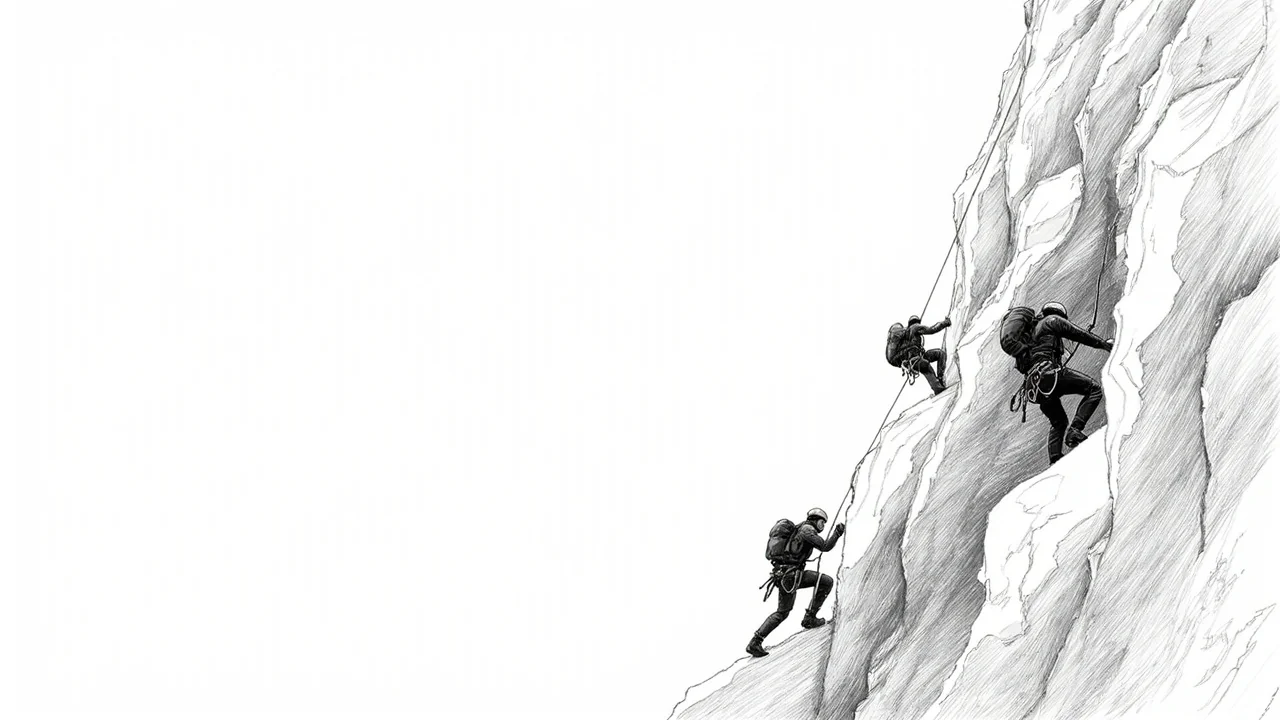
Sweden's recent deep freeze has transformed urban landscapes and natural rock faces into temporary climbing gyms for a dedicated community. On Sunday, ice climbing enthusiasts ascended the frozen waterfalls of Utbybergen, west of Gothenburg, in a rare meteorological alignment. “It's not often you can climb ice around here, so we all call each other: Do you know where there's good ice?” said Karin Eknor, a climbing instructor, describing the spontaneous mobilization required for the fleeting sport.
This niche pursuit exists at the mercy of a specific and increasingly volatile climate recipe. It requires a sustained period of sub-zero temperatures following wet weather, allowing water to seep into rock crevices and freeze into climbable formations. The activity highlights a unique intersection of outdoor culture, climate patterns, and the Swedish public's right to access nature, known as Allemansrätten.
The Precise Science of a Fleeting Season
Ice climbing in southern and central Sweden is an opportunistic hobby, fundamentally different from its perennial counterpart in the northern Arctic regions. Climbers monitor weather forecasts obsessively, looking for a sequence of rain or thaw followed by a sharp, sustained temperature drop. This process creates ‘förfrysningsis’ (freeze-thaw ice), which bonds to the rock and forms the pillars and curtains climbers seek.
“The window is incredibly narrow,” explains Lars Strömberg, a veteran climber and geologist. “You need the water to be present in the rock, then a freeze lasting several days. A sudden warm spell, or even strong sunshine, can make it unstable or disappear entirely in hours.” This transient nature creates a frantic, communal scramble. News of prime ice conditions spreads through closed social media groups and phone trees, with climbers often driving for hours after work or at dawn to capitalize on a perfect formation.
Allemansrätten and the Unwritten Rules of Access
The Swedish principle of public access to private land provides the legal foundation for this activity. However, ice climbers operate under a strict, self-imposed ethical code to maintain access and minimize environmental impact. Climbers avoid areas with sensitive bird nesting sites, even in winter. They are careful not to damage underlying rock with their specialized tools—ice axes and crampons with front-points.
“We are invisible guests,” notes Karin Eknor. “We leave no trace, take all our gear, and if a landowner ever has concerns, we listen and adjust. It’s about respect.” This conscientious approach is critical for a sport that, to the uninitiated, might seem destructive. The community polices itself, knowing that one incident could lead to localized bans, a scenario seen with some bouldering areas in the past.
A Community Forged in the Cold
The logistical challenges and ephemeral nature of the season forge a tight-knit community. Unlike summer rock climbing, which can be a solitary or small-group activity, prime ice conditions become a communal event. Veteran climbers mentor newcomers on safe techniques for assessing ice quality—tapping to listen for hollow sounds, checking for running water behind the curtain.
Gear is specialized and expensive, creating another barrier to entry that is often lowered by community spirit. “It’s common for people to lend out spare axes or screws to someone trying it for the first time,” says Mikael Pettersson, who runs a climbing equipment shop in Stockholm. “The season is so short that people want others to experience it. There’s a shared urgency.” This camaraderie extends to safety; climbers always operate in pairs or groups, using ropes and anchors to protect against a section of ice breaking away.
Climate Change and an Uncertain Future
For all its current excitement, the community views the future with cautious uncertainty. Climate scientists project warmer, wetter winters for southern Sweden, with fewer prolonged cold spells. The very conditions that create förfrysningsis may become less frequent, shortening an already brief season.
“We’re already seeing more variability,” observes Lars Strömberg. “You get a perfect freeze for two days, then it rains and washes it all away. The patterns are less predictable.” This makes long-term planning for trips or courses nearly impossible, pushing the activity further into the realm of spontaneous reaction. Some climbers speculate that the prime zones may gradually shift northward over decades, following the reliable cold.
The Economic and Cultural Ripple Effects
The ice climbing phenomenon, while small, generates subtle economic and cultural ripples. Outdoor retailers see a predictable, if compressed, spike in sales of cold-weather technical gear, ice tools, and boots every time a cold snap is forecast. Mountain guiding services offer introductory ice courses, but their schedules remain tentative, dependent on nature's cooperation.
Culturally, it reinforces a deeply Swedish narrative of engaging with nature in all seasons. It represents a specialized, technical extension of the common winter activities of skiing and skating. Images of brightly colored climbers ascending shimmering blue ice walls in otherwise dormant winter landscapes circulate on social media, showcasing a dramatic and lesser-known facet of Scandinavian outdoor life.
Balancing Passion with Preservation
The sport's growth, albeit slow due to its inherent barriers, brings questions of sustainability. Popular crags like those in Utbybergen or in the Stockholm archipelago might see more climbers during a good freeze. The community remains vigilant about potential wear on the rock and vegetation at the top of climbs, where anchors are set.
There is an ongoing dialogue about using permanent bolts for protection, a practice common in rock climbing but more controversial in the ice context due to the temporary nature of the medium. The prevailing ethic favors removable gear, leaving the summer rock untouched for traditional climbers. This careful stewardship is the community's best argument for its continued place on the landscape.
A Testament to Human Adaptability
Ultimately, Swedish ice climbing is a story of human adaptability and seizing the moment. It is a hobby that cannot be scheduled on a calendar, demanded by consumers, or guaranteed by any institution. It exists purely through a confluence of natural conditions and human enthusiasm. Climbers develop a profound patience and a heightened appreciation for the rare, perfect day.
As this winter’s cold spell eventually relents, the tools will be cleaned and stored, and the community will return to monitoring forecasts. They will wait for the next call to action, the next message in the group chat signaling that the frozen walls have, once again, beckoned. In an era of climate uncertainty and scheduled lives, this raw, immediate connection to a fleeting natural phenomenon may be the sport’s most compelling allure. Will the deep freezes that create these crystalline playgrounds become cherished relics of winters past, or will they remain a unpredictable, exhilarating gift from the Swedish cold?