
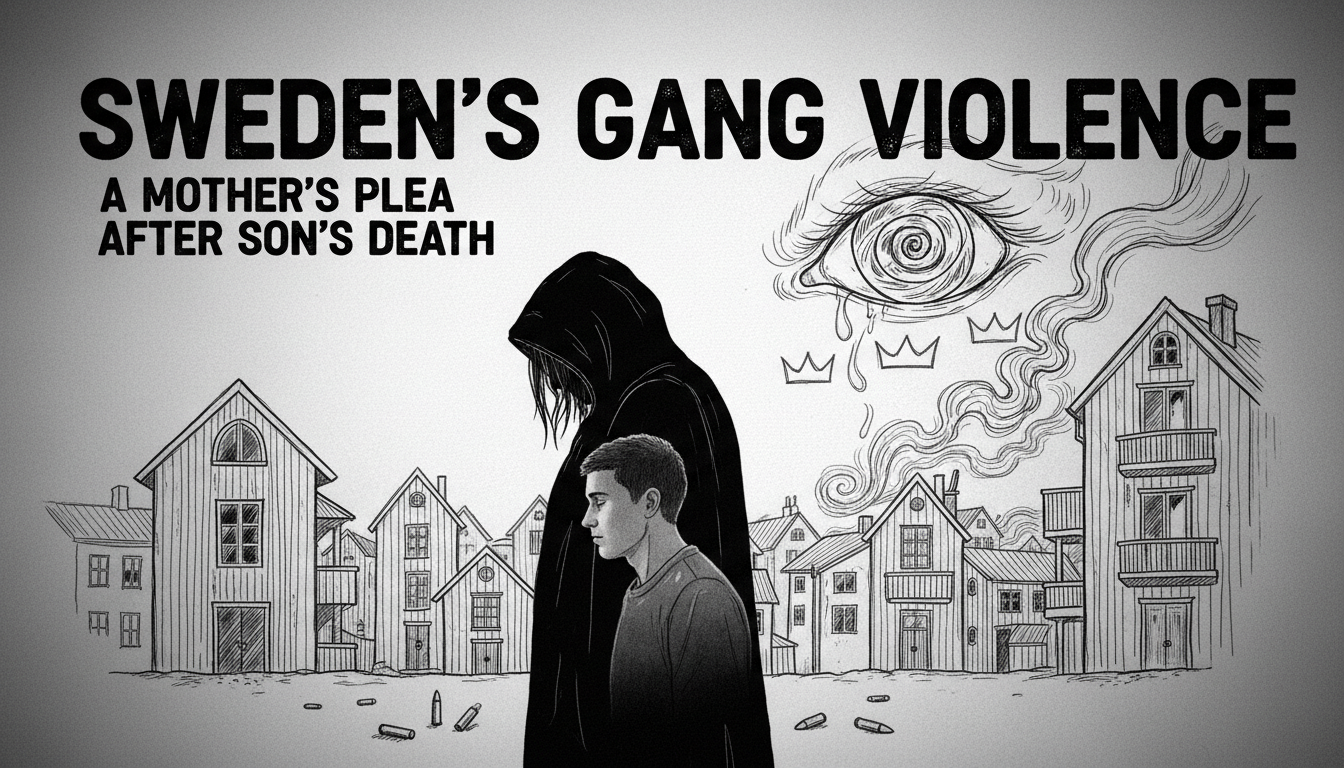
Sweden gang violence claimed another young life when 16-year-old Rio Berg was shot and killed. His mother, Anneli Berg, now faces a painful court verdict against four youths, with the motive for the shooting that took her son still unclear. "The adult world has failed," she says, voicing a grief shared by a growing number of families in a nation grappling with a deadly trend in youth crime.
Anneli Berg sits in a Stockholm district court, just meters from the teenagers accused of ending her son's life. The wood-paneled room feels cold, impersonal. She listens to legal arguments about intent and circumstances, but her mind drifts to Rio's laughter in their apartment in Husby, a Stockholm suburb. "It is something I never thought I would have to experience," she says quietly. Her son was not the intended target of the shooting that cut his life short, a chilling detail that offers no comfort. It underscores the random terror now haunting some Swedish neighborhoods.
A Life Interrupted
Rio was a typical teenager. He loved music and hanging out with friends. His family describes a young man with his whole future ahead of him. The shooting that killed him is part of a grim national statistic. According to the Swedish National Council for Crime Prevention, lethal firearm violence has risen significantly in Sweden since the 2000s. This trend goes against patterns seen in most other European countries. Young people are disproportionately represented, both as perpetrators and victims. For Anneli, these are not just numbers. They are a map of broken lives and a system she feels has betrayed its citizens. "It is a betrayal by society," she states, her words heavy with loss.
The Search for Answers in a Courtroom
This week, a verdict is expected for four youths connected to Rio's death. Yet, the courtroom procedure provides little closure. The fundamental question of why the shots were fired remains unanswered. This ambiguity is a common, frustrating feature in many gang-related shootings. The violence is often tied to conflicts over status, territory, or drugs within criminal networks. These networks are increasingly recruiting school-age youth, a problem noted by police and social workers across Stockholm, Gothenburg, and Malmö. The lack of a clear motive for Rio's death amplifies his mother's anguish. Justice, in this case, feels incomplete.
A Society Examining Its Conscience
Anneli Berg's accusation – "The adult world has failed" – echoes in community centers and political debates. Experts point to a combination of factors behind the rise in youth-involved gang violence. Social exclusion, lack of opportunity in segregated suburbs, and challenges with integration create fertile ground for criminal recruitment. The availability of illegal firearms remains a critical issue. "We are seeing a perfect storm," says a sociologist who studies urban youth trends, requesting anonymity due to ongoing research. "Law enforcement is crucial, but it's like mopping the floor while the tap is still running. We need parallel, massive investment in prevention, youth outreach, and social inclusion." The government has launched various initiatives, but residents in affected areas often say the response is too slow and too fragmented to match the scale of the problem.
Beyond the Headlines: A Cultural Shift
The impact of this violence ripples through Swedish culture. Traditional open and safe public spaces are now viewed with caution in certain areas. Summer festivals and local park events sometimes see heightened security. The sense of trygghet – a Swedish term encompassing safety, security, and trust – is eroding for some communities. This loss is felt acutely in places like Rinkeby, Tensta, and Bergsjön, neighborhoods often spotlighted in news reports about shootings. The reality, however, is more complex. These are also vibrant communities where most people live peaceful lives, yet they bear the heaviest burden of the violence.
A Mother's Unending Campaign
For Anneli Berg, life is now divided into before and after. Her personal grief has transformed into a public plea. She speaks not just to mourn Rio, but to demand change. She worries about other sons and daughters. Her story puts a human face on the policy discussions about gang crime. While politicians debate sentencing laws and police tactics, she represents the raw, enduring cost. Her experience in that courtroom—sitting near those accused—is a trauma layered upon trauma. It is a process few can imagine, yet one that has become reality for too many.
What Comes Next for Sweden?
The verdict in Rio's case will close one legal chapter. But the larger story continues. Sweden stands at a difficult crossroads, trying to balance its open society with the need to protect its citizens. The solutions are recognized as needing both a strong police presence and deep social investment. Schools, sports programs, and job opportunities are repeatedly cited as vital tools for prevention. As the nation moves forward, the memory of Rio Berg and the pain of his mother serve as a stark reminder of what is at stake. Can Sweden stem the tide of youth gun violence and restore the sense of security that has long been a cornerstone of its society? The answer will define the country's future for a generation.