
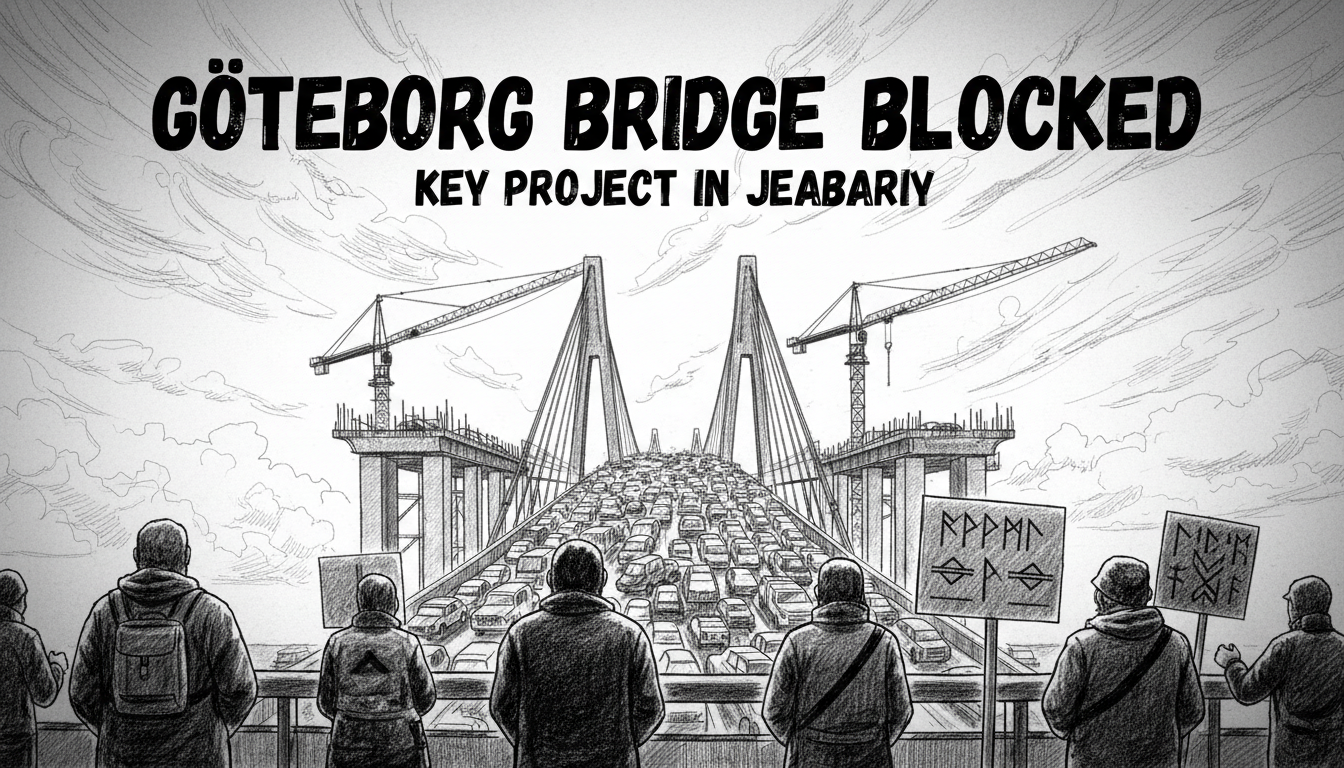
Sweden's planned pedestrian and bicycle bridge over the Göta älv river in Gothenburg faces potential cancellation after a critical rejection from the national maritime authority. The Swedish Maritime Administration, Sjöfartsverket, has deemed the current design unacceptable, creating a major roadblock for the city's connectivity project. Without the agency's crucial approval, the entire initiative could be scrapped, leaving cyclists and pedestrians waiting. "If we don't find something that we assess the Maritime Administration is comfortable with, it will be difficult," said city planning director Henrik Kant, highlighting the project's precarious state.
This clash is not just about a single bridge. It represents a classic Swedish conflict, one playing out in cities across the Nordics. On one side stands urban development, green mobility, and the vision of a livable city. On the other, the unyielding demands of maritime safety, industry, and national infrastructure. The Göta älv is not a gentle stream; it is a vital artery for freight and passenger ships serving Sweden's industrial west coast. Every new structure that touches its waters must navigate a complex web of regulations and practical concerns.
A River of Competing Interests
The Göta älv defines Gothenburg. It carved the city's identity as a maritime powerhouse. For centuries, its waters have carried everything from raw materials to finished Volvos out to the North Sea. Today, it remains a bustling working river. This reality creates an inherent tension with the city's modern ambitions. Gothenburg, like Stockholm and Malmö, is aggressively promoting cycling and walking to reduce car dependency. Building safe, direct routes across its major waterways is essential for this vision.
"We are caught between our local goals and national priorities," explains urban planner Eva Strand, who has worked on several Gothenburg infrastructure projects. "The city wants to build for its residents—for health, for climate, for daily life. Sjöfartsverket's mandate is to protect the safety and efficiency of maritime traffic for the entire country. Their concerns are legitimate, but the process often feels like a dialogue of the deaf." The specific technical objections from Sjöfartsverket have not been fully detailed publicly but typically involve a bridge's height, the placement of its supports, or its potential to disrupt navigation channels, especially for larger vessels.
The Human Cost of Delay
For residents in neighborhoods like Lindholmen on the north bank, a direct link to the city center is more than a convenience. It's a game-changer. The area is a hub for tech companies and Chalmers University of Technology. Thousands of students and workers currently rely on ferries or long detours over car-centric bridges. A dedicated cycling and walking bridge would cut commute times dramatically and make active transportation the obvious choice.
"You see the other side, it's so close, but getting there on a bike feels like an expedition," says Mikael Forsberg, a software developer who lives in Majorna and cycles to Lindholmen. "We talk about the 'two-minute city' and sustainable living, but then we can't build a simple bridge. It's frustrating. It makes you feel like the city's green promises are just words." His sentiment echoes in local online forums and community meetings, where the bridge has become a symbol of bureaucratic inertia.
A Pattern of Infrastructure Struggles
This is not Gothenburg's first bridge controversy. The city has a history of protracted debates over river crossings, from the iconic Älvsborg Bridge to more recent discussions about new road tunnels. Each project becomes a battleground for environmentalists, industry groups, neighborhood associations, and various government agencies. The process reflects the Swedish model of consensus-building, which can be thorough to the point of paralysis.
"The Swedish planning system is designed to be meticulous and inclusive, which is good," says Professor Lars Göran Sjöberg, a specialist in transport infrastructure at the University of Gothenburg. "But it can also lead to a situation where any single agency, like Sjöfartsverket, holds a de facto veto power. There's a lack of a higher arbitration mechanism to weigh local benefits against national interests when they conflict so directly." He points out that the economic impact of delaying or cancelling such projects is rarely calculated in the same precise way as maritime risks. Lost time for commuters, health benefits from increased cycling, and reduced carbon emissions are harder to quantify than the clearance height for a ship's mast.
What Comes Next for the Bridge?
The project is now in a dangerous limbo. City planners, led by Henrik Kant, must go back to the drawing board. They will need to engage in intense technical discussions with maritime engineers to find a design compromise. This could mean altering the bridge's arc, changing its support structure, or even reconsidering its location. Each change adds cost and time, potentially jeopardizing the project's funding and political support.
Some observers wonder if alternative technologies, like a pedestrian tunnel, were ever seriously considered, though such options are often far more expensive. The city's commitment to a bridge suggests it is seen as a more desirable urban feature, a visible landmark that connects communities both physically and symbolically. A tunnel, while solving the maritime issue, lacks the same civic presence.
The Bigger Picture for Swedish Cities
The fate of this Gothenburg bridge is a case study for all of Sweden. As cities densify and aim for climate neutrality, they will need to retrofit infrastructure into existing landscapes. These landscapes include protected national interests, whether they are shipping lanes, railway corridors, or military zones. The conflict in Gothenburg asks a difficult question: in the 21st century, how do we rebalance the needs of international commerce with the urgent, local needs of sustainable urban life?
For now, the waters of the Göta älv flow unimpeded by a new bridge. Freighters continue their passage. Cyclists on the riverbanks look across and take the long way around. The outcome of this standoff will signal whether Swedish cities have the power to reshape their own futures, or if the pathways of the past will continue to dictate the routes available to their citizens. The bridge is more than steel and concrete; it's a test of political will and a vision of what kind of city Gothenburg wants to be.