
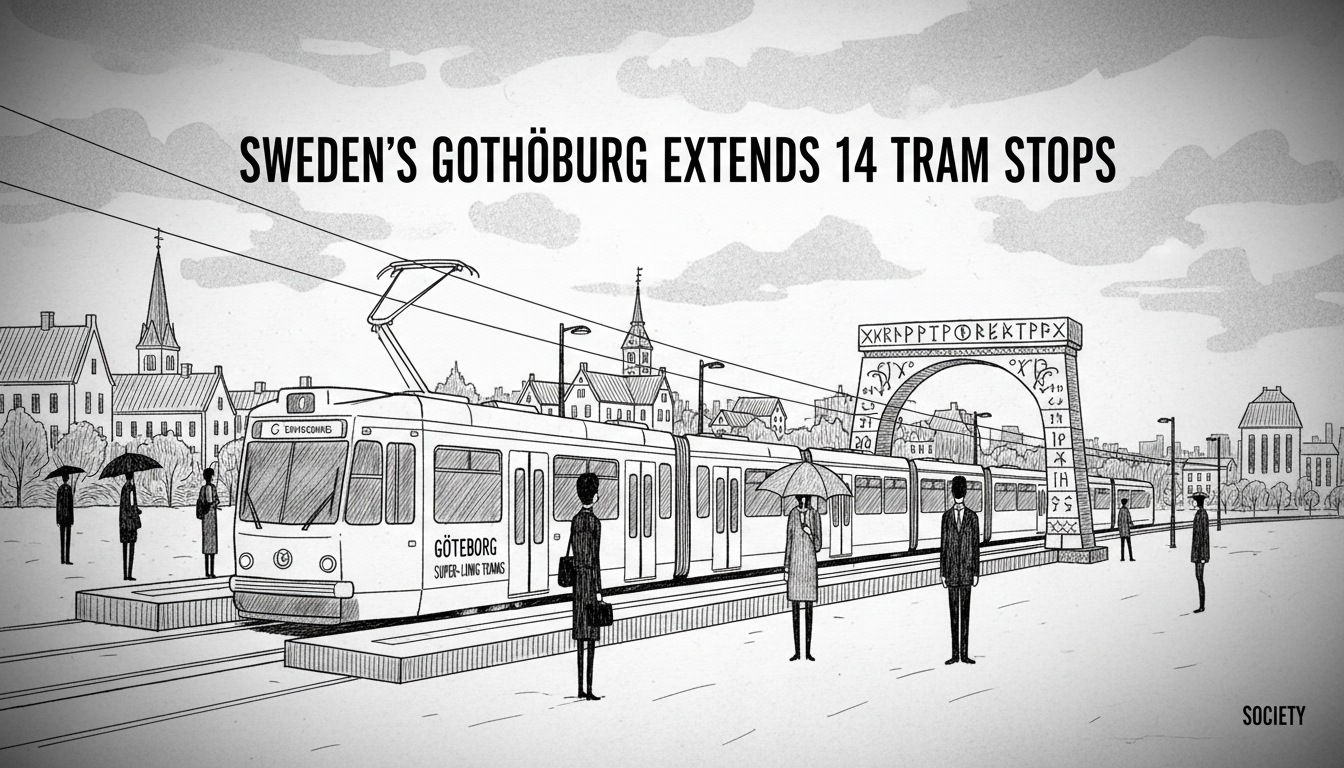
Gothenburg's public transport system is undergoing a major upgrade to accommodate new, extra-long trams. The city will extend 14 tram stops across three lines, a move officials say will make the network more attractive and efficient for Sweden's second-largest city.
"This is a way to strengthen the attractiveness of public transport," said municipal councilor Karin Pleijel from the Green Party, who announced the decision. The project represents a significant investment in the city's iconic blue and white trams, a system that first started running electric vehicles in 1902.
A Network Stretching to Meet Demand
Gothenburg's tram network is a vital artery. Its 12 lines stretch across approximately 160 kilometers of track, making it one of Scandinavia's largest. For many residents, the rhythmic clang of the tram is the soundtrack of daily life. This expansion is a direct response to growing passenger numbers and the city's ambitious climate goals.
"Increasing capacity on busy lines is essential," explains transport analyst Erik Lundström, who has studied Nordic urban transit for over a decade. "Longer trams mean you can move more people without laying new tracks or increasing traffic frequency. It's a smart, cost-effective upgrade for a mature system."
The three lines receiving the extended stops have not been officially specified, but they are likely among the city's busiest corridors. These could include lines serving major hubs like Centralstationen, Chalmers, or the sprawling university hospital area. The work involves physically lengthening the platforms to safely handle the new, articulated trams.
The Human Impact on Daily Commutes
For daily riders, the change promises less crowded journeys and shorter wait times. Imagine the morning rush on a line from the suburban calm of Mölndal into the bustling city center. Packed trams can mean waiting for the next one, or worse, being left on the platform as a full tram passes by.
"I take the tram every day from Linnéstan to my office in Majorna," says Sofia Berg, a graphic designer. "Some mornings, it's so crowded you can barely breathe. If this means more space and a more reliable service, I'm all for it. It makes choosing the tram over my car much easier."
This sentiment is exactly what city planners want to hear. Gothenburg, like many Swedish cities, is actively promoting a shift away from private car use. Improving the passenger experience is a key tactic in that strategy. A comfortable, efficient tram ride is a powerful alternative to sitting in traffic on the city's congested ring roads.
Balancing Progress with Practical Challenges
The project is not without its hurdles. Construction on 14 separate tram stops will inevitably cause disruption. Temporary stops, altered schedules, and construction noise will affect neighborhoods for months. The city will need to carefully manage these phases to maintain public goodwill.
Accessibility is another critical concern. The extended platforms must be fully accessible, with level boarding for wheelchairs and strollers. This is a non-negotiable standard in modern Swedish public transport. The design must also ensure safety, with clear sightlines and adequate shelter from Gothenburg's famously rainy weather.
"The challenge is to deliver this upgrade without degrading the current service," notes Lundström. "Clear communication with passengers during the construction phase is crucial. People will tolerate inconvenience if they understand the long-term benefit."
A Tradition of Trams Looking to the Future
This investment continues a long tradition. Gothenburg has consistently bet on its trams while other European cities ripped up their tracks in the mid-20th century. That foresight means the city now has a ready-made backbone for sustainable transit. The network weaves through districts like Haga, with its cobblestone streets, and the modern high-rises of Lindholmen, connecting the city's past and future.
The new trams themselves are part of a broader renewal. They are expected to be modern, energy-efficient models, likely with improved passenger information systems and climate control. They represent the next chapter for a system that is both a practical utility and a cultural symbol.
The Road Ahead for Sustainable Transit
This stop-extension project is one piece of a larger puzzle. Gothenburg is also investing in new tunnels, like the planned "Götatunneln," to separate trams from street traffic and create express routes. The goal is a faster, more reliable network that can compete with the convenience of a car.
The environmental argument is strong. Every packed tram takes dozens of cars off the road, reducing emissions and improving air quality in the city center. For a city governed by a coalition where the Green Party holds significant influence, such projects are a political priority as well as a practical one.
As the platforms are lengthened and the new trams roll out, the success of the project will be measured in passenger numbers. Will the improved experience draw more people onto the system? For residents like Sofia Berg, the answer seems clear. "It's about making the right choice the easy choice," she says, waiting for her tram. "When the service is good, you don't miss the car at all."
The clang of the tram bell in Gothenburg is about to get a little more frequent, and the rides a little more spacious, as the city stretches its tracks to meet the demands of tomorrow.