
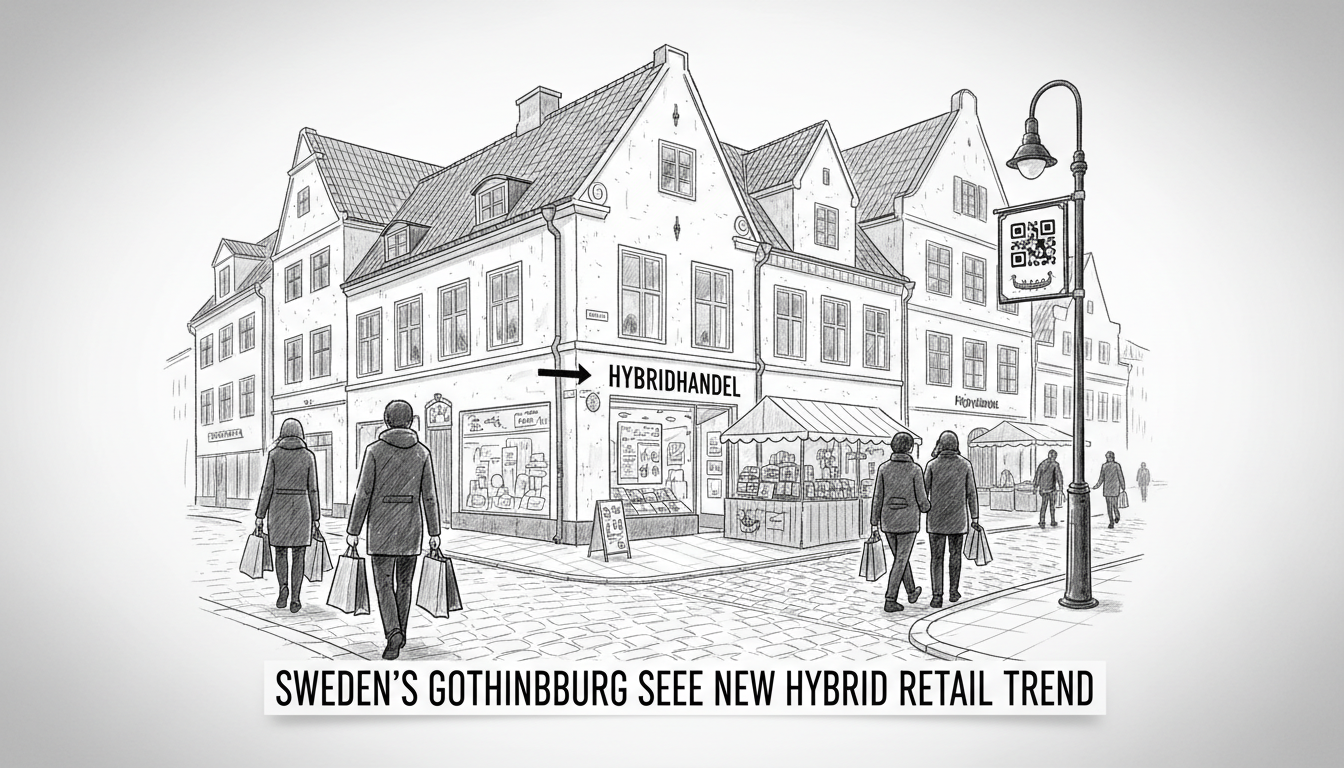
Gothenburg's popular Vallgatan shopping street now hosts a new hybrid retail concept merging fashion and food. Restaurateur Anton Korsåsen has opened a 'mackbar' offering sandwiches and alcohol directly connected to a well-known clothing boutique, signaling a shift in urban retail strategy. This development reflects broader trends in Sweden's second city as businesses adapt to changing consumer habits and urban density pressures.
A New Model for Urban Retail
The opening represents a strategic move to maximize foot traffic and customer dwell time in a prime central location. By integrating a fast-casual food and drink outlet within a clothing store, the model creates a multifaceted destination. Anton Korsåsen confirmed the mackbar will provide both quick carbohydrates and alcoholic beverages, catering to shoppers and city visitors alike. This fusion challenges traditional retail boundaries that have long separated shopping and dining into distinct zones.
Vallgatan has historically been a corridor for fashion-focused retail, making this incursion by a food service operator notable. The street's evolution mirrors changes in central Gothenburg, where commercial rents and competition drive innovation. Retail analysts observe that standalone stores now struggle to attract sufficient customer visits. Combining experiences under one roof offers a potential solution, creating reasons for extended visits beyond a single purchase transaction.
The Economics of Experience
Experts point to a calculated economic rationale behind these hybrid spaces. "The goal is to increase the average transaction value and frequency of visits," explains retail strategist Lena Forsberg. "A customer who comes for a jacket might stay for a beer and a sandwich, turning a five-minute visit into a fifty-minute experience. Conversely, someone popping in for a quick lunch might notice and purchase a new item of clothing." This cross-pollination of customer bases can provide a buffer against the volatility of seasonal shopping trends.
For the restaurant operator, securing a location in connection with a high-foot-traffic retailer reduces marketing costs and guarantees a base level of customers. The clothing store benefits from the added allure of its premises, potentially drawing in customers who prioritize convenience and experience. In dense urban areas like central Gothenburg, where square meterage is at a premium, such symbiotic partnerships make efficient use of space. This model has seen success in other global cities and is now gaining traction in the Nordic region.
Gothenburg's Evolving Cityscape
This opening is part of a wider transformation of Gothenburg's city center post-pandemic. As remote work altered daily footfall patterns, businesses have sought new formulas to attract people. The food and beverage sector has been particularly agile, with concepts ranging from high-end dining to fast-casual grab-and-go spots expanding. Vallgatan, with its blend of historic architecture and modern commerce, serves as a microcosm of this adaptation.
The 'mackbar' concept itself is a distinctly Swedish iteration of casual dining, often emphasizing quality ingredients in a simple, efficient format. Adding alcohol service broadens its appeal from a daytime lunch spot to an after-work or evening venue. This flexibility is crucial for viability, allowing the business to capture revenue across different dayparts. It reflects a consumer demand for informal, high-quality options that fit seamlessly into a busy urban lifestyle.
Challenges and Regulatory Considerations
Integrating food service with retail is not without its complexities. Swedish regulations governing the serving of alcohol (Alkohollagen) are strict, requiring appropriate licensing from the regional administrative board. The physical design must also comply with health and safety codes for food preparation, which can differ significantly from retail standards. Ventilation, waste management, and kitchen infrastructure require careful planning, especially in a space not originally designed as a restaurant.
Furthermore, the brand alignment between the clothing store and the mackbar must be coherent. A mismatch in customer demographics or brand values could undermine the synergy. The success of this Vallgatan venture will depend on whether the clothing store's clientele overlaps with the target market for the food and drink offering. Early indications suggest the operators are targeting a broad, style-conscious urban professional demographic common in the area.
The Future of Swedish High Streets
The Vallgatan mackbar may signal the beginning of a broader trend across Swedish city centers. As e-commerce continues to capture market share in pure retail, physical stores must offer something digital platforms cannot: tangible experience and immediate consumption. Hybrid models that blend product sales with food, drink, or entertainment provide a compelling reason for customers to leave their homes.
This trend could influence commercial real estate development, with future projects potentially designed from the ground up to facilitate such integrations. Landlords may increasingly seek mixed-use tenants for ground-floor spaces, moving away from traditional single-purpose leases. For consumers, the result is a more dynamic and varied urban environment where a single trip can accomplish shopping, dining, and socializing.
Gothenburg, with its strong culture of both design and food, is a natural testing ground for this evolution. The city's residents are known for embracing quality and convenience, values that this new mackbar directly serves. If successful, similar concepts will likely appear in Stockholm's Östermalm, Malmö's Davidshall, and other affluent urban districts. The challenge for pioneers like Anton Korsåsen will be to maintain quality and authenticity as the concept scales.
Ultimately, the new venue on Vallgatan is more than just a new place to eat. It is a case study in urban adaptation, a response to economic pressures, and an experiment in modern consumer behavior. Its performance will be closely watched by retailers and restaurateurs across Sweden, all searching for the formula that ensures relevance in an ever-changing cityscape. The coming months will reveal whether this blend of fashion and food is a fleeting novelty or the new blueprint for surviving—and thriving—on Sweden's high streets.