
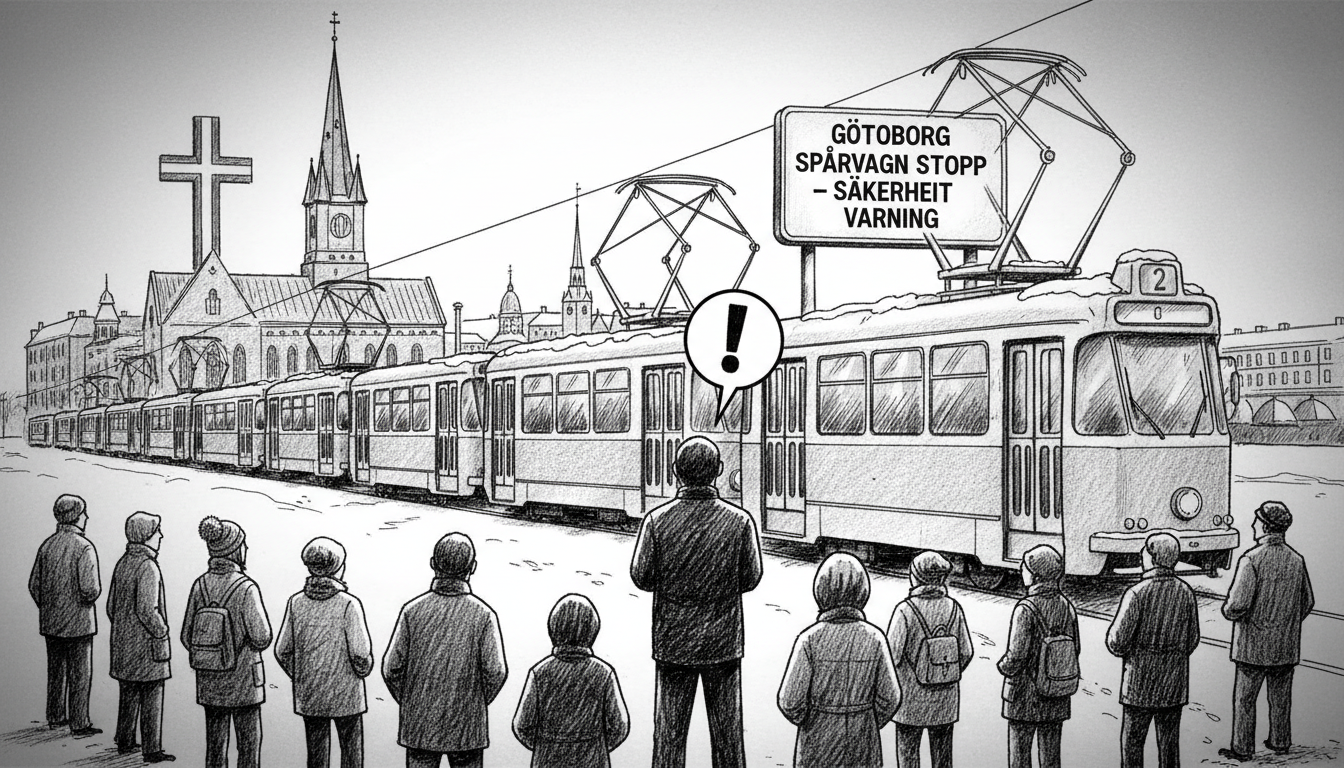
Sweden's public transport authority Västtrafik has halted most of its newly renovated M31 trams in Gothenburg after drivers raised serious safety concerns. Only three of eight refurbished trams are currently in service, following criticism focused on braking systems and doors. This unexpected pause in a major renovation project highlights the critical role of frontline workers in Sweden's famed public transport system.
"It needs to feel good for the drivers and passengers, of course," said Sara Ihrlund at Västtrafik, acknowledging the drivers' feedback. Her statement underscores a Swedish workplace principle: employee safety and input are paramount. The halted trams, originally built in the 1980s and 1990s, were undergoing a life-extension program meant to keep them running for years on Gothenburg's extensive 160-kilometer network, one of the largest in Scandinavia.
A Clash Between Old and New
The situation presents a classic challenge in Swedish engineering and urban planning. Integrating new technology into old, reliable systems is a point of national pride, but it can lead to unforeseen issues. The M31 trams are workhorses of the city, familiar rattling blue and white carriages that have navigated the cobblestone streets of Haga and the broad avenues of Kungsportsavenyn for decades. Their renovation was a practical move, aligning with Sweden's sustainability goals of maximizing existing resources.
Yet, the drivers—the people who know these vehicles intimately—reported that something didn't feel right. In a culture that highly values consensus and safety (think 'lagom' and the concept of 'trygghet'), their warnings couldn't be ignored. "Expertise in public transport isn't just in the engineering office; it's in the driver's cab," says Lars Bengtsson, a Stockholm-based transport analyst. "This stoppage, while inconvenient, is a textbook example of a safety-first culture in action. It's better to pause and fix than to proceed and risk an incident."
The Human Element in a Digital Age
This story is less about mechanical failure and more about human-centric design, a cornerstone of Swedish society. Gothenburg's tram drivers are not just operators; they are the public face of the city's mobility. They interact with thousands of passengers daily, from students heading to Chalmers University to families going to Liseberg amusement park. Their confidence in the vehicle is essential for smooth operation and public trust.
When a driver feels a brake response is unfamiliar or a door mechanism seems unreliable, it creates a ripple effect. Passenger safety, schedule reliability, and even the driver's own workplace satisfaction are at stake. Västtrafik's decision to "pull the handbrake," as the Swedish phrase goes, respects that human element. It reflects the 'förankring' process—ensuring broad buy-in before full implementation—common in Swedish projects.
The Ripple Effect on a Tram-City
Gothenburg is a city shaped by its trams. The first electric trams appeared in 1902, and the network is the backbone of city life. Delays or reduced service impact commerce, education, and social connectivity. The temporary sidelining of these trams puts pressure on the rest of the fleet and could affect service frequency on key lines. For residents, reliable 'spårvagn' service is a non-negotiable part of the social contract with the city.
The renovation program itself is crucial. With growing populations and climate targets, efficient, electrified public transport is Sweden's future. Extending the life of existing trams through renovation is both economically and environmentally sound. This hiccup, therefore, isn't a condemnation of the program but a stress test of its execution. The question now is how quickly and effectively engineers can work with drivers to diagnose and rectify the issues, turning their criticism into constructive solutions.
A Look at the Bigger Picture
This incident in Gothenburg offers a microcosm of broader Swedish society trends. It touches on immigration, as the public transport sector relies heavily on a diverse workforce whose voices are being heard. It relates to Swedish lifestyle, where efficient, safe, and dependable public transit is a key component of daily 'vardagsliv'. It also reflects a societal trend towards circular economy—renovating and reusing rather than discarding.
Comparatively, Sweden's approach to such problems often differs from more top-down models. The drivers' criticism was aired and acted upon publicly, a transparency that builds long-term trust. There's no attempt to downplay the issue. Instead, Västtrafik has openly stated the problem and its remedial action, a communication style Swedes generally expect from their public institutions.
What Happens Next?
The path forward involves collaboration. Technicians from the renovation contractor will need to work alongside Västtrafik's own engineers and, most importantly, the drivers who raised the alarm. Test runs, adjustments, and further feedback sessions will be necessary before the five sidelined trams can rejoin their three siblings in service. This process, while slowing the project timeline, is likely to result in a better, safer final product.
For passengers, the immediate effect may be minor inconvenience. But the long-term lesson is valuable. It reinforces that the system they rely on has multiple layers of safety checks, including the most important one: the person at the controls. As Gothenburg continues to grow and modernize, balancing new technology with proven human experience remains its central challenge. The iconic blue trams are more than vehicles; they are moving pieces of the city's heritage. Ensuring they run safely, with the confidence of both driver and passenger, is how that heritage is preserved for the future. Will this careful, pause-and-fix approach become the model for other cities facing similar modernization dilemmas?