
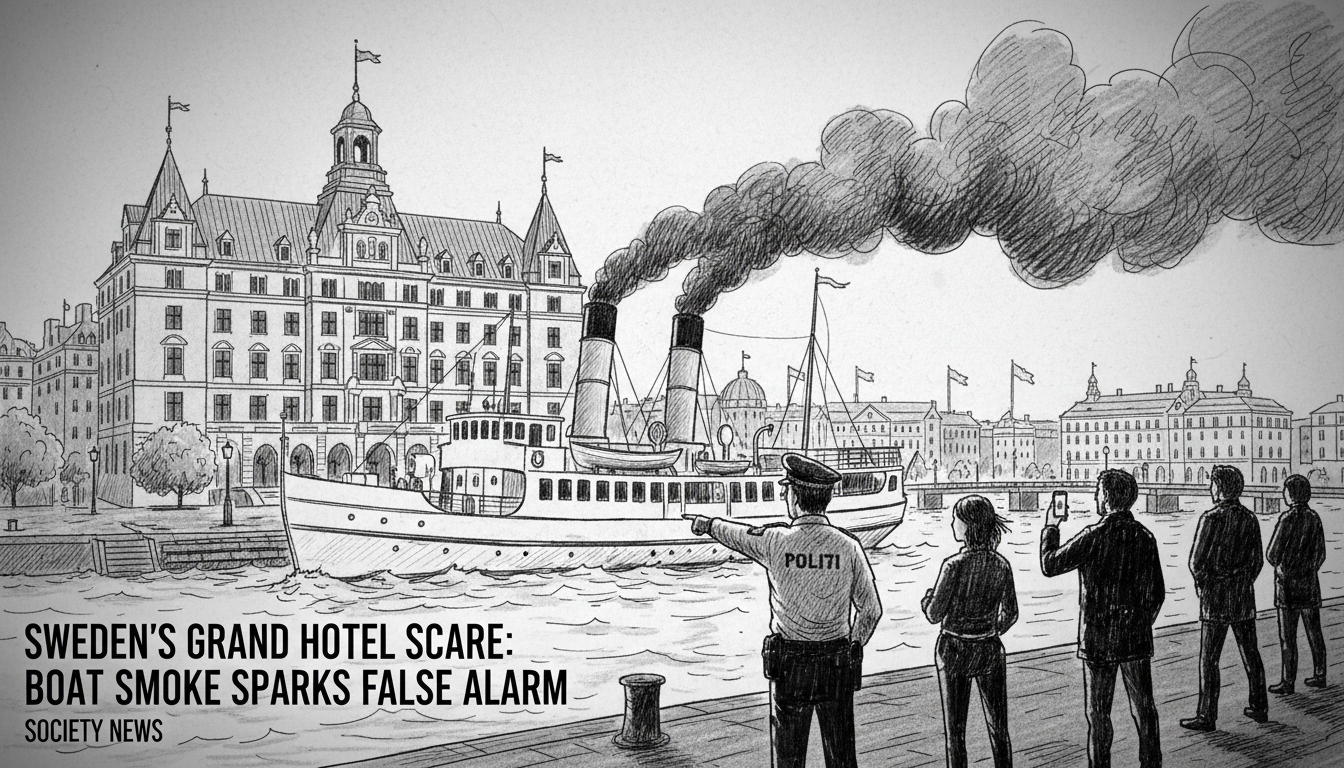
Sweden's iconic Grand Hotel in Stockholm triggered a major emergency response just before lunchtime when smoke was seen rising near the historic waterfront building. The Stockholm Fire Department rushed to the scene, only to discover the source was not a fire in the building at all. "It was smoke from the boats' chimneys that someone mistook for a fire," said dispatch operator Lena Hoffman. The incident highlights the delicate balance between caution and the reality of urban life in a city built on water.
For a moment, the elegant facade of the Grand Hotel, a fixture on Stockholm's Blasieholmen peninsula since 1874, was the focus of urgent sirens and flashing lights. The hotel, which hosts Nobel laureates and global dignitaries, represents the pinnacle of Swedish hospitality. Its location on the Strömmen channel, while picturesque, places it in the heart of a bustling maritime corridor. Tour boats, classic archipelago ferries, and water taxis constantly ply the waters beside its grand windows. Today, the normal exhaust from one of these vessels created a moment of unexpected drama.
A Swift Response on the Waterfront
The alarm brought a rapid deployment from the Stockholm Fire Department. They treat every call to a landmark of this stature with utmost seriousness. The potential for catastrophe in a large, historic building filled with people is a scenario they train for constantly. Upon arrival, crews quickly assessed the situation. They scanned the hotel's roofline and windows for signs of fire, their training kicking into gear. The investigation was swift. The smoke, drifting from the water, was traced to the smokestack of a passing vessel. The tension dissolved into a routine check and a logged false alarm. Such call-outs are part of the daily reality for urban fire services, where public vigilance is encouraged, even when it sometimes leads to false alerts.
The Cost of Caution in a Historic City
False alarms are a significant part of any major city's emergency response ledger. The Stockholm Fire Department responds to thousands of calls annually. A portion of these are inevitably false alarms triggered by everything from burnt toast to steam, or in this case, boat exhaust. Experts note that in dense, historic urban centers like inner-city Stockholm, environmental factors play a big role. "In a waterfront city, with old buildings and lots of activity, these things happen," says a fire safety consultant familiar with Stockholm's challenges. "The priority is always to respond. The cost of not responding to a real fire at a place like the Grand Hotel is unthinkable."
The Grand Hotel itself is no stranger to disruption, having operated through wars, economic shifts, and the constant flow of history. Founded by Frenchman Régis Cadier, it has grown from a single building to a complex that includes the famed Cadier Bar and the Royal Apartments. Its very identity is tied to its relationship with the water. The very view that guests pay a premium for—the royal palace, the passing boats—is what caused today's brief scare. It's an ironic twist for a building that has survived for 150 years.
Life on the Strömmen: Charm and Complexity
This incident offers a small window into the unique character of Stockholm. The city's beauty is inseparable from its waterways. The sight of smoke near a building, especially one as valuable and populated as the Grand Hotel, will always cause concern. Locals and visitors alike are conditioned to be watchful. Yet, the waterways are a working space. The boats are essential for transport, tourism, and commerce. Their emissions are a normal, if occasionally startling, part of the cityscape. Walking along Strandvägen or Nybrokajen, you can often smell the distinct scent of marine diesel in the air—a hallmark of a living archipelago capital.
For hotel staff and guests, the event was likely a brief interruption. Lunch service at the Veranda restaurant probably continued with only a murmured comment about the commotion outside. The real work was done by the emergency responders, who efficiently turned a potential crisis into a simple case of mistaken identity. Their professionalism ensures that when a real fire does occur, the system works without hesitation.
Balancing Vigilance and Normalcy
The takeaway from today's alarm at the Grand Hotel is not about a mistake, but about a system functioning as intended. A member of the public saw potential danger and reported it. The emergency services responded with speed and precision. The outcome was the best possible one: no fire, no injury, no damage. It serves as a reminder of the challenges of protecting a historic, water-bound city. The very features that define Stockholm's charm—its compact urban core, its historic wooden buildings, its intimate relationship with the sea—also complicate its safety landscape.
As the boats continue their endless loops past the Grand Hotel, the scene returns to normal. The incident will become a line in a logbook, a brief topic of conversation, and then fade. But it underscores a constant truth in city life. The peace and elegance of places like the Grand Hotel are underpinned by unseen systems of vigilance and rapid response. Today, those systems were tested by a puff of smoke from a boat's chimney. They passed quietly, allowing the city to return to its lunchtime rhythm, the brief alarm already forgotten by the flowing water.