
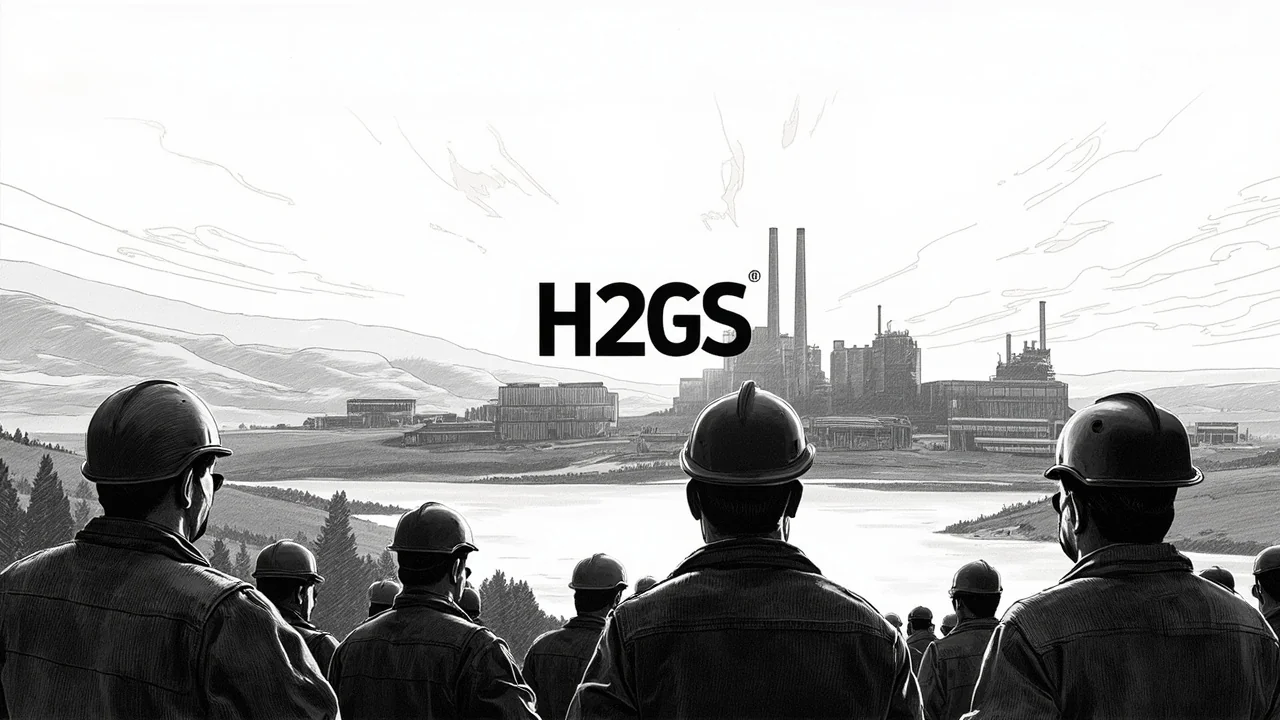
Sweden's ambitious green steel project in Boden, H2 Green Steel (H2GS), has been on the brink of collapse. The company's hunt for 10 billion kronor in fresh funding hit a critical point around the New Year. "It looked really dark," a person with insight into the situation said. Now, a potential lifeline has emerged. A new major owner could step in to rescue the flagship industrial venture, which aims to produce fossil-free steel using green hydrogen.
This story is about more than a company. It's about Sweden's national identity as an industrial innovator and climate leader. The project in Norrbotten represents a bold attempt to marry heavy industry with the green transition. Its potential failure or success sends ripples through communities in the North and the country's economic future. For the people of Boden, a town of about 17,000, it represents thousands of promised jobs and a renewed sense of purpose.
A Race Against Time in the Arctic North
The mood in Boden has been a rollercoaster. Initial excitement about the massive plant gave way to anxiety as financial deadlines loomed. The production start for the steel mill has already been pushed back. The current forecast points to late 2026 or early 2027. Each delay tests the patience of a region counting on an economic revival. "We've seen this before with big promises," a local café owner in Boden's town center might say. "But this one felt different. It felt like the future."
The financing puzzle has been complex. Last November, H2GS announced half the needed 10-billion-kronor sum was secured. Progress then stalled dramatically. The reported solution involves temporary loans. This bridge financing would buy time for a new anchor investor to come in with permanent equity capital. "It's about a time-limited period to clear the path for the new investor," a source explained. This financial maneuvering highlights the immense scale and risk of pioneering green technology.
The Stakes for Swedish Industry and Culture
Sweden's industrial culture is built on engineering prowess and natural resources. From the forests to the iron ore mines of the North, industry shapes the national psyche. The H2GS project sits at the intersection of this old identity and a new, climate-conscious one. Its struggle reflects the broader challenge of financing the green transition. Who pays for reshaping the foundations of our economy?
A successful green steel plant in Boden would be a powerful symbol. It would prove that heavy industry can decarbonize without disappearing. It would place Sweden, and the Nordic region, at the forefront of a global shift. Failure, however, would be a severe blow. It could dampen investor confidence in other large-scale green industrial projects across Scandinavia. The silence from H2GS, which declined to comment on the new reports, speaks volumes about the tense negotiations happening behind closed doors.
The Human Angle in Boden and Beyond
Beyond the billions and the technical specs, this is a human story. Young families in Stockholm and Gothenburg have considered moving North for these jobs. Technical universities have tailored programs to feed the project with engineers. The promise of the plant has already altered life trajectories. This uncertainty creates a personal limbo for many. The concept of 'folkhemmet' – the people's home – is tested when a collective future project wobbles.
Local politicians in Norrbotten have bet heavily on this future. Infrastructure planning, housing projects, and school resources are being aligned with the anticipated growth. A collapse would leave strategic plans in tatters and public finances strained. The emotional investment is as significant as the financial one. There's a pride in the North about hosting a project of national importance, a sentiment that turns to vulnerability when the news turns grim.
Analysis: A Test Case for the Green Transition
From an analytical perspective, H2GS is a critical test case. It demonstrates the 'valley of death' that many green tech ventures face: moving from pilot to profitable, large-scale production. The need for temporary loans suggests that while the long-term vision is solid, the short-term capital markets are jittery. This is typical for groundbreaking technology. Investors love the idea but get nervous writing the check.
The potential entry of a new major owner is crucial. It signals that a powerful player sees a viable path through the current turbulence. It could provide not just capital, but also industrial expertise and stability. The structure of the deal will be telling. Will it be a Swedish pension fund, an international energy giant, or a sovereign wealth fund? Each would bring a different influence on the company's direction and its connection to Swedish society.
Expert perspectives point to a challenging but not unique situation. "Large-scale industrial decarbonization is capital-intensive and fraught with risk," an industry analyst might note. "Sweden is trying to do something first, and that always comes with a premium. The question is whether the political and financial will can hold long enough for the technology to prove itself." The Nordic model, with its collaboration between public and private sectors, is being put to the test.
Looking Ahead: What Success Would Mean
If the new owner materializes and the Boden plant rises, the impact will extend far beyond the factory gates. It would validate a Swedish model of innovation: leveraging clean hydropower and wind, a strong engineering tradition, and a societal consensus on climate action. It would create a new export product – green steel – with a powerful story for global markets, particularly in the automotive and construction sectors.
Culturally, success would reinforce a narrative of Swedish optimism and capability. It would be a story told at Midsummer gatherings and in school textbooks. The plant could become a site of industrial tourism, much like the old mills once were, but for a new era. For Stockholm's political and financial elite, it would be a proof point in international climate negotiations. Sweden could credibly say it is not just talking, but building.
The coming weeks are decisive. The temporary loans must be arranged. The new owner must be finalized. The people of Boden will watch, hope, and wait. Their town's name, which means 'the ground' or 'the soil,' is fitting. This project is about grounding a sustainable future in the very earth of Sweden's industrial heartland. The dream of fossil-free steel from the Arctic is alive, but its fate now rests in the hands of financiers and a mysterious new owner. The question hanging over the snowy fields of Norrbotten is simple: Will Sweden build its future in green steel?