
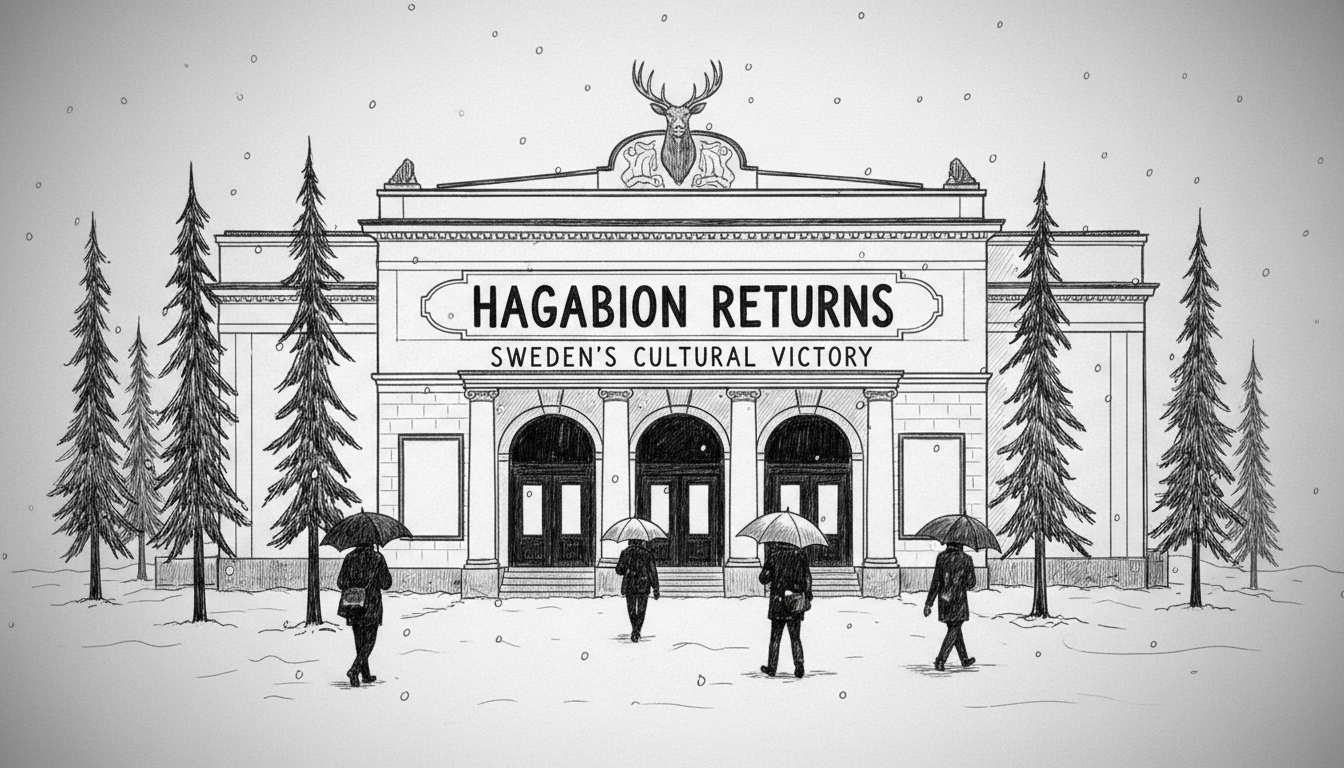
Sweden's beloved independent cinema, Hagabion, has received news that feels like an early Christmas gift. After a sudden evacuation with an uncertain future, the Gothenburg arthouse has been told it can move back into its historic home, Viktoriahuset, as early as this summer. For the team at Folkets Bio Göteborg, which runs the venue, and for the city's film lovers, this is a moment of pure relief and celebration. "It's a real Christmas present for Folkets Bio in Gothenburg," said a clearly delighted Gunnar Bergdahl, referencing the organization behind the cinema. This resolution highlights a crucial win for local cultural spaces in Swedish cities, where independent venues often struggle against rising costs and redevelopment pressures.
A Sudden Evacuation and a City's Concern
The story began with a brash and disruptive evacuation. Hagabion and its popular café were forced to leave Viktoriahuset, a building owned by the city's property company, Higab. The reason was necessary renovations, but the timeline for a return was murky. For months, the fate of the cinema hung in the balance. This created a palpable gap in Gothenburg's cultural fabric, particularly in the bustling Linnéstaden district where it resides. Patrons were left wondering if their go-to spot for Iranian documentaries, Swedish indie dramas, and classic film retrospectives was gone for good. The uncertainty is a familiar strain for many cultural institutions in Sweden, where the practical needs of building maintenance can sometimes clash with the intangible value of a community hub.
More Than Just Four Walls
To understand the celebration, you must understand what Hagabion represents. It is not merely a place where films are projected. It is a social anchor. On any given evening, you might find university students debating a French New Wave film in the café, retired locals attending a midday matinee, or filmmakers hosting Q&A sessions after a premiere. "These spaces are the living rooms of our city's cultural life," says Lena Pettersson, a cultural historian based in Gothenburg. "They foster chance encounters and shared experiences that algorithms on streaming platforms can never replicate. Losing Hagabion would have meant losing a specific type of civic glue." This function is critical in Swedish society, which values communal gathering points, or 'folkets hus' (people's houses), as essential for democracy and social cohesion.
The Balancing Act of Preservation and Progress
The situation at Viktoriahuset encapsulates a classic Swedish urban dilemma. On one side is Higab, tasked with managing the city's property portfolio responsibly. Renovations for safety, accessibility, and energy efficiency are not optional; they are mandated by law and public expectation. Sweden has strict building codes and ambitious environmental goals. On the other side are the tenants and the public, for whom a building is more than its bricks and mortar—it's a repository of memory and identity. "The challenge for city planners is to modernize without sanitizing," explains urbanist Markus Lindgren. "We need wheelchair ramps and efficient heating systems, but we also need to preserve the character that makes people want to visit these places in the first place. It's a delicate balance."
The positive outcome for Hagabion suggests a successful navigation of this balance. The decision to facilitate a summer return indicates that the cultural value of the cinema was weighed heavily in the planning process. It sets a hopeful precedent for other historic venues across Sweden facing similar pressures.
The Role of Independent Cinemas in the Streaming Age
Hagabion's story is also a testament to the resilience of arthouse cinema in Scandinavia. In an era dominated by global streaming giants, one might expect local film venues to be dying. Yet in cities like Gothenburg, Stockholm, and Malmö, they are thriving by offering what algorithms cannot: curation, community, and a tangible sense of place. "We come here for the selection you won't find elsewhere, and for the discussion afterwards," says Amir, a regular patron at Hagabion's café. "It's about the event, not just the content." This trend is reflected in national Swedish cinema attendance figures, which show a strong and loyal audience for non-mainstream films, particularly in urban centers.
These cinemas also play a vital role in Sweden's cultural ecosystem by showcasing domestic film. They provide a platform for new Swedish directors and documentary makers whose work might not fit the commercial mold of larger multiplexes. In doing so, they support the entire chain of Swedish film production, from film school graduates to established auteurs.
A Look Ahead: The Return to Viktoriahuset
With the return confirmed for summer, the focus now shifts to the future. The team at Folkets Bio will begin planning the move back into a presumably refreshed and updated Viktoriahuset. The hope among the community is that the essential, slightly worn-in charm of the cinema remains intact. Will the familiar squeak of the same cinema seat be there? Will the café still have that perfect corner table for people-watching on Linnégatan? The details matter.
The reopening will likely be a cultural event in itself. Expect a curated festival of homecoming films, special guest appearances, and a palpable sense of reunion in the lobby. It will be a celebration of a local institution that dodged a bullet, a reminder that civic engagement and vocal public support for cultural spaces can yield positive results.
A Victory with Wider Implications
The successful repatriation of Hagabion is more than a local news item. It is a case study for other Swedish cities grappling with how to support their cultural infrastructure. It demonstrates that with clear communication between property managers, tenants, and the public, solutions that serve both practical and cultural needs are possible. The key, as this story shows, is recognizing that a building like Viktoriahuset is a home first and a property asset second. Its value is measured in shared experiences, not just square meters. As Gothenburg's film lovers prepare to return to their beloved cinema seats this summer, the message is clear: in the fight to keep Swedish cities culturally vibrant and uniquely human, some battles are worth winning, one frame at a time.