
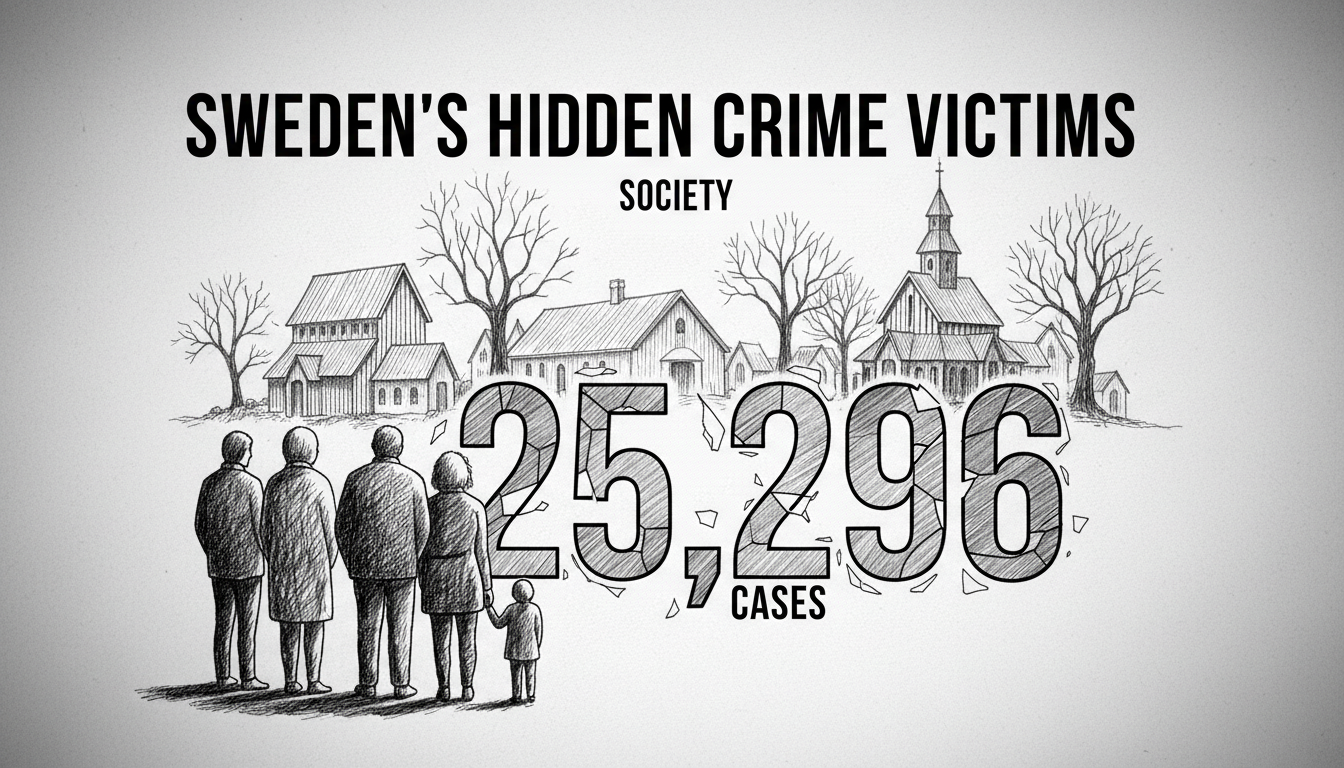
Sweden's 25,296 reported sexual offenses in 2024 reveal a harsh reality. Behind each case lies a group often forgotten: the families of the perpetrators. When Jenny's daughter disclosed abuse, a wave of shame and guilt overwhelmed her. Was her ex-husband, the father of her children, a sex offender? Jenny received support, but many relatives of offenders are left alone with their emotions. Primary care systems are failing them. 'It needs to be easier to get help,' she says.
This story echoes across Sweden, from Stockholm's suburbs to rural communities. In a society proud of its welfare state, a silent crisis persists. The focus has long been on victims' rights, with advanced support services. Yet the relatives of those who commit crimes are frequently overlooked. They grapple with isolation and mental health struggles, hidden in the shadows of Sweden's justice system.
The Unseen Aftermath
For families like Jenny's, the aftermath is a private hell. They face stigma from neighbors and friends. Social circles shrink overnight. In Swedish culture, where lagom—balance and moderation—is valued, such extremes of shame feel alien. Relatives describe feeling trapped between loyalty and horror. 'You love the person, but you hate the act,' one mother in Gothenburg shared. Her son was convicted of assault last year. She now avoids local festivals, fearing judgment.
This emotional turmoil is backed by research. Roberth Adebahr, a medical doctor and psychologist at Karolinska University Hospital, recently completed a dissertation at Umeå University. He documents significant suffering among relatives of sex offenders. Feelings of guilt and shame are palpable. Many experience anxiety, depression, and post-traumatic stress. Adebahr's work is among the first to spotlight this issue in Sweden. It calls for a shift in how we view crime's ripple effects.
By the Numbers: Sweden's Sexual Crime Landscape
The scale of the problem is stark. In 2024, Swedish police received 25,296 reports of sexual offenses. Of these, 9,633 were rapes. A troubling 30%—or 2,876 cases—involved child victims aged 15 or under. Each number represents a life shattered. But for every offender, there are parents, siblings, or children also caught in the fallout. They become secondary victims, navigating a world that offers little solace.
Sweden's crime statistics often highlight victim support advancements. Yet data on perpetrator families is scarce. This gap mirrors a societal blind spot. In cities like Malmö and Uppsala, support groups for these relatives are rare. Mental health services, while generally strong, lack specialization for their unique needs. The Swedish healthcare system, known for its accessibility, stumbles here. Patients report being turned away or offered generic counseling that doesn't address their specific trauma.
Expert Insights on Hidden Suffering
Roberth Adebahr emphasizes the psychological toll. 'These relatives face a double burden,' he explains. 'They mourn the person they thought they knew, while coping with societal condemnation.' His research involved interviews with dozens of families across Sweden. Common themes emerged: isolation, fear of gossip, and a desperate need for validation. One woman from a Stockholm neighborhood described how her community's fika—coffee breaks—became unbearable after her husband's conviction.
Criminology experts agree. The silence around perpetrator families can hinder recovery. Without support, they may internalize shame, leading to long-term mental health issues. In Sweden, where open dialogue about social issues is common, this topic remains taboo. It contrasts with the country's progressive stance on victim care. This paradox highlights an unmet need in Swedish society. Professionals in social work urge for more resources. They point to countries like Norway, where pilot programs for offender families have shown promise.
The Support Gap in Primary Care
Jenny's experience with primary care is typical. After her daughter's disclosure, she sought help from her local vårdcentral—health center. The response was inadequate. 'They didn't understand my position as a mother of both a victim and an offender's relative,' she recalls. Many report similar stories. General practitioners often lack training to address this complex grief. Sweden's healthcare regions, such as Region Stockholm, have guidelines for victim support. But protocols for perpetrator families are nonexistent.
This gap affects daily life. Families struggle during holidays like Midsummer or Lucia, when family gatherings emphasize togetherness. Some relocate to escape whispers. The Swedish principle of folkhemmet—the people's home—feels distant. Mental health services need adaptation. Experts suggest creating dedicated counseling lines or support groups. These could operate through organizations like Mind, a Swedish mental health charity. Early intervention is key. It can prevent cycles of trauma from affecting future generations.
Pathways to Healing and Change
Change is brewing, albeit slowly. Academics like Adebahr are pushing the issue into public discourse. Some non-profits in Sweden are beginning to offer niche services. For instance, a Stockholm-based initiative provides anonymous peer support for offender relatives. Participants meet in discreet locations, sharing stories over coffee. This model, inspired by Swedish tradition of study circles, fosters community. Yet funding remains limited, relying on donations rather than state support.
Policy shifts are needed. Sweden's government could integrate family support into existing crime victim agencies. Training for healthcare workers is crucial. Social services in municipalities like Gothenburg and Helsingborg could pilot programs. The goal is to normalize seeking help. As one father in Linköping put it, 'We didn't commit the crime, but we're serving a sentence of shame.' Breaking this cycle requires societal empathy. It means acknowledging that crime's impact extends beyond immediate victims.
A New Conversation for Sweden
The story of perpetrator families is ultimately about humanity. In a nation committed to equality and care, this blind spot challenges core values. Swedish society trends toward inclusivity, yet here, exclusion persists. As crime statistics rise, so does the number of hidden sufferers. The call for action is growing louder. It's time to ask: How can Sweden live up to its ideals for all citizens? The answer may lie in embracing complexity, offering compassion without conditions. For families like Jenny's, that change can't come soon enough. Their silence is a cry for help, echoing through the very fabric of Swedish life.