
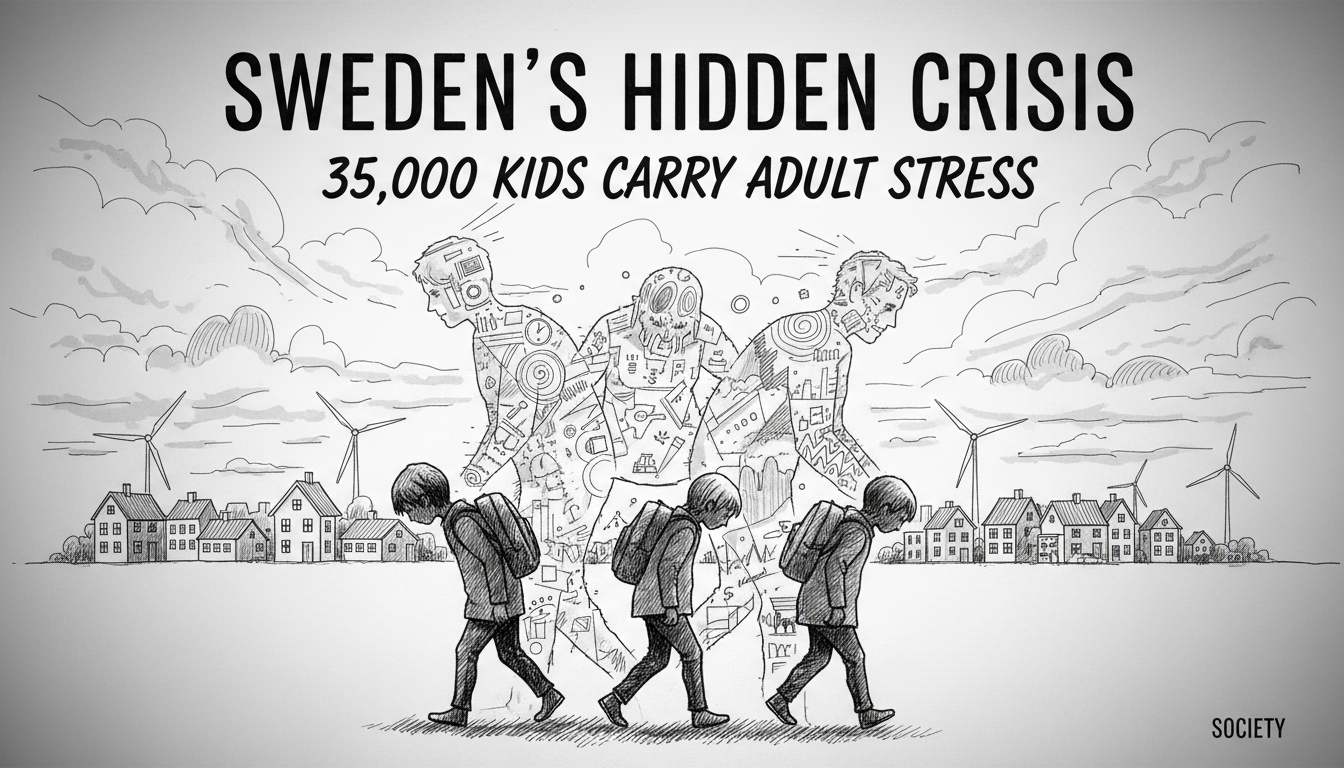
Sweden's child helpline receives approximately 35,000 calls and chats from children every year, a steady stream of distress that often surges during family holidays. For many young callers, Christmas and New Year are not seasons of joy but periods of heightened anxiety, conflict, and fear. "It can involve conflicts in the family, violence, or drinking. But it can also be about financial stress, because children take great responsibility for adults' feelings," says Jennifer Pettersson, a counselor at BRIS (Barnens Rätt i Samhället). Her statement reveals a painful paradox in a nation celebrated for its strong welfare state and progressive child rights laws.
The Weight of Adult Emotions
Pettersson's observation points to a psychological phenomenon experts call 'parentification.' This occurs when children, consciously or not, assume the role of managing a parent's emotional state or family stability. During stressful times like the holidays, when financial pressures, family gatherings, and expectations collide, this burden intensifies. Children become hyper-vigilant barometers of adult moods, trying to soothe tensions or avoid triggering conflicts. "They are often the silent witnesses, absorbing stress that isn't theirs to carry," explains child psychologist Dr. Elias Månsson. "A child might try to be extra quiet, extra good, or even try to mediate arguments. This role-reversal has significant costs." The long-term consequences can include chronic anxiety, depression, and difficulties forming healthy relationships in adulthood.
A Legal Framework Meets a Complex Reality
Sweden presents a stark contrast between policy and lived experience. In 2020, the country incorporated the UN Convention on the Rights of the Child directly into Swedish law, a move hailed as a global benchmark. The law mandates that all decisions affecting children must consider their best interests. Furthermore, children exposed to domestic violence are explicitly recognized as crime victims, obliging social services to intervene. Organizations like BRIS provide critical support through the national Child Helpline (116 111), a free and confidential service. Yet, the 35,000 annual contacts to BRIS underscore a persistent gap. The legal right to safety and the emotional reality of feeling responsible for adult well-being are two different challenges. The system is designed to catch falling children, but is less adept at preventing the emotional weight that bends them.
When Home Isn't a Haven: The Holiday Spike
Counselors report that calls often increase around Christmas and New Year. The cultural pressure for a 'perfect' holiday can exacerbate existing family dysfunctions. Financial strain from gift-giving, increased alcohol consumption, and the forced proximity of family gatherings can turn a home from a haven into a pressure cooker. "For some, violence is everyday life, even on the weekend," notes Pettersson, referencing the source material. The holidays strip away the respite of school and routine, trapping children in stressful environments for extended periods. The child helpline becomes a lifeline—a place to be heard when the world outside is celebrating. "They call about the fights, the shouting, the silence that is just as frightening," says a BRIS volunteer who requested anonymity. "They are asking, indirectly, if this is normal. We tell them it's not their fault."
Beyond Physical Violence: The Spectrum of Distress
While domestic violence is a severe and clear-cut issue, counselors emphasize that child distress spans a spectrum. Economic worry is a growing topic. A child hearing constant parental anxiety about bills may start skipping school activities to save money or hide their own needs. Parental mental health issues, such as depression or anxiety, can also force a child into a caretaker role. "The child learns to monitor the parent's mood from the moment they wake up," Dr. Månsson explains. "They become little therapists, which is an impossible task." This emotional labor is invisible and often goes unrecognized by the adults themselves, who may be unaware of how acutely their child is monitoring them. The child helpline serves as a rare outlet where this burden can be named and shared.
Strengthening the Safety Net
Experts argue that Sweden's robust legal framework must be matched with equally robust preventative and supportive measures. Raising public awareness about emotional parentification is a key first step. Parents need resources to manage their own stress and understand its impact on their children. Schools can play a role by teaching children about emotional boundaries and providing accessible channels to talk to counselors. The 116 111 helpline is a vital component, but its existence must be widely known among children. Some advocates call for more proactive outreach from social services, especially during known high-risk periods like the holidays, focusing on family support rather than solely crisis intervention. "The law gives children rights," concludes Pettersson. "Our job is to help them feel empowered to use those rights, and to know they are not alone. Carrying an adult's worry is a weight no child should bear."
A Societal Mirror
The steady flow of calls to BRIS holds up a mirror to Swedish society. It reflects stresses that persist beneath the surface of a wealthy, orderly nation: mental health struggles, economic inequality, and domestic conflict. The fact that tens of thousands of children seek external help each year is not a sign of system failure, but a testament to the system's necessary existence. It highlights the courage of children who reach out. The greater challenge is creating a society where fewer children need to make that call in the first place—where adults are supported enough to shield their children from burdens they cannot possibly carry. The true measure of progress may not be in the number of calls answered, but in the number of families where a child feels free to be a child, especially when the Christmas lights are shining.