
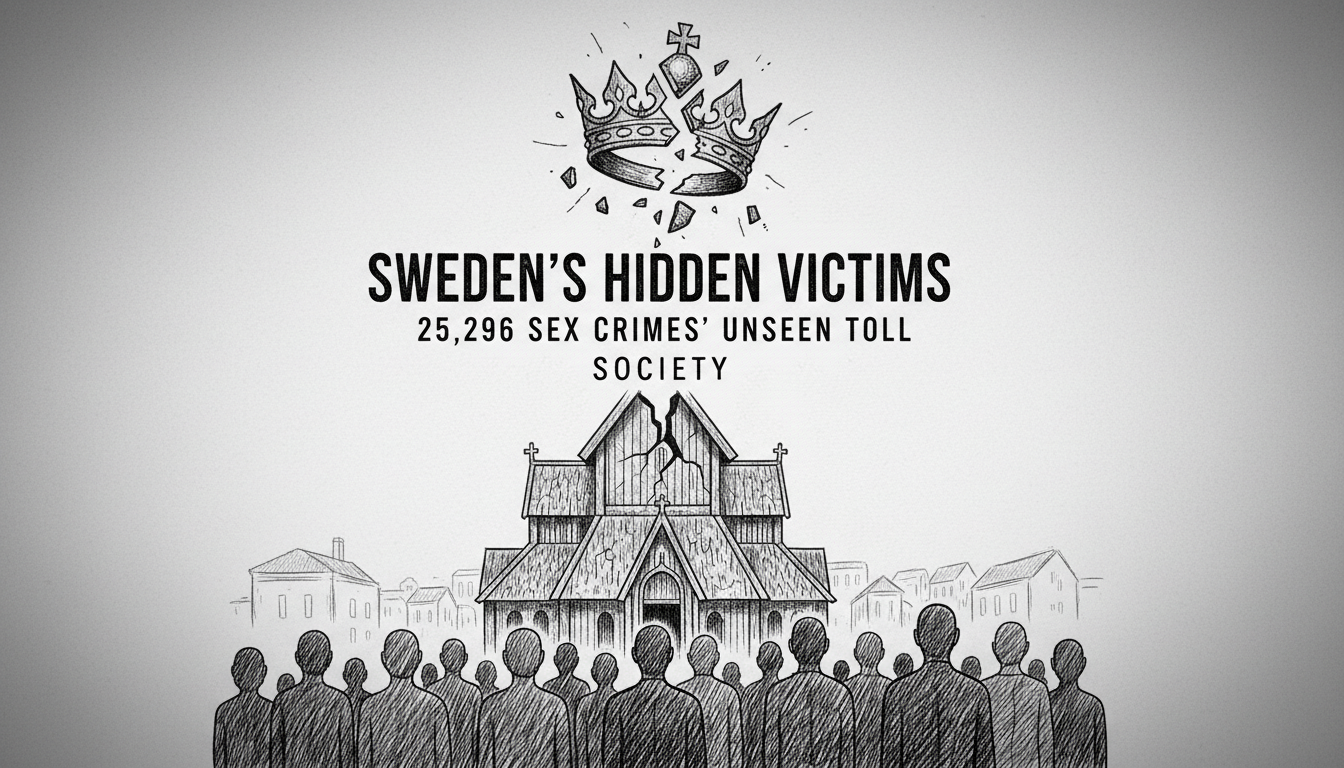
Sweden's 2024 reported sex crime statistics reveal a hidden crisis within the primary care system. The official numbers from the Swedish National Council for Crime Prevention outline a grim reality. A total of 25,296 sexual offenses were reported to police last year. Among them, 9,633 reports were for rape. A particularly distressing detail shows 2,876 reports involved children up to age 15. This represents nearly 30% of all rape reports. Behind each number is a shattered life. But behind many offenders is another group of wounded people, often forgotten. These are the relatives—parents, partners, siblings, and children—of the person accused.
A World Ripped Apart
Jenny's world fractured during a family trip abroad. Her adult daughter approached her with recovered memories from childhood. The revelations were specific and horrifying. Jenny's ex-husband, the girl's father, was accused of abuse. "What she said was so clear," Jenny recalls, her voice steady but heavy. "I saw in her eyes she wasn't making it up." The man, described by everyone as kind and thoughtful, had allegedly threatened their daughter's life to ensure her silence. The trip ended abruptly. A police report was filed in Sweden, though it ultimately did not lead to prosecution. For Jenny, the trauma was dual. She grappled with her daughter's pain and the devastating knowledge about the man she once loved. A crushing wave of shame and guilt washed over her. She blamed herself for not seeing signs, for choosing this man as a father. "I had no idea," she says, a statement echoing the confusion of many in her situation.
The Research Finding a Silent Suffering
This specific suffering is the focus of ongoing academic work. Roberth Adebahr, a medical doctor and psychologist at Anova at the Karolinska University Hospital, is researching the plight of these relatives. His work, based on interviews, paints a picture of profound isolation. "We have interviewed relatives of people under investigation for child pornography offenses," Adebahr explains. "We see how difficult it is for them to get support. They take on a huge burden of guilt, become isolated and alone. People don't understand how hard they are hit." The emotional toll is complex. Relatives experience grief for the victim, horror at the acts, and a shattered perception of their family member. They also face societal stigma and a fear of being judged as complicit. This unique psychological burden falls outside standard support frameworks for victims' families. There is no natural place for them to turn.
A Support System That Isn't Built for Them
In Sweden, the support structure for victims of crime is robust, with centers offering crisis counseling and legal aid. The conversation is firmly centered on the primary victim, as it should be. But this leaves a gaping hole for the offender's family. Jenny was fortunate to find some support, but she recognizes her experience is uncommon. "It needs to be easier to get help," she states simply. Anova operates the Preventell helpline, which is open to people with unwanted or risky sexual behaviors and their relatives. It is a rare resource. However, Adebahr stresses it is insufficient to meet the need. "Relatives can call our helpline... but it is not enough. More knowledge needs to reach both primary care and online psychologists." The Swedish primary care system, often the first point of contact for mental health struggles, is not equipped to handle the specific guilt and shame these relatives carry. General practitioners may lack the training to guide them, and online therapy platforms rarely categorize this specific trauma.
Navigating Stigma in a Progressive Society
Swedish society prides itself on openness and equality. The #MeToo movement found particularly strong resonance here. Public discourse strongly condemns sexual violence. This creates a particularly harsh environment for offenders' families. Where do you go when the person who committed an atrocity is your father, your son, or your spouse? The fear of social exile is real. Friends disappear. Community ties sever. The relative is often viewed with suspicion, as if the deviancy could be contagious. This forces many into a lonely silence, processing a catastrophic family event without the communal support typically afforded to those in mourning. They mourn the person they thought they knew, the future they imagined, and their own innocence, all while wrestling with moral responsibility for acts they did not commit.
Looking Ahead: Acknowledging the Ripple Effect
The path forward requires systemic acknowledgment. Experts like Adebahr argue for integrating this reality into Sweden's otherwise comprehensive approach to sexual crime. Training for healthcare professionals is a critical first step. A district nurse or a primary care psychologist should be able to recognize the symptoms and know where to refer someone in Jenny's position. Support groups, separate from those for victims, could provide a space for shared experience without judgment. Public awareness is another key. Understanding that crime creates concentric circles of victims can foster a more nuanced compassion. It does not diminish the suffering of the primary victim to also see the wreckage left in the wider family. For Jenny, moving forward is a daily process. It involves supporting her daughter while managing her own grief and guilt. Her story underscores that the impact of a single sex crime ripples outwards, touching lives in hidden ways. As Sweden continues to refine its legal and support responses to sexual offenses, the question remains: will its society find space to help these hidden victims pick up their own pieces?