
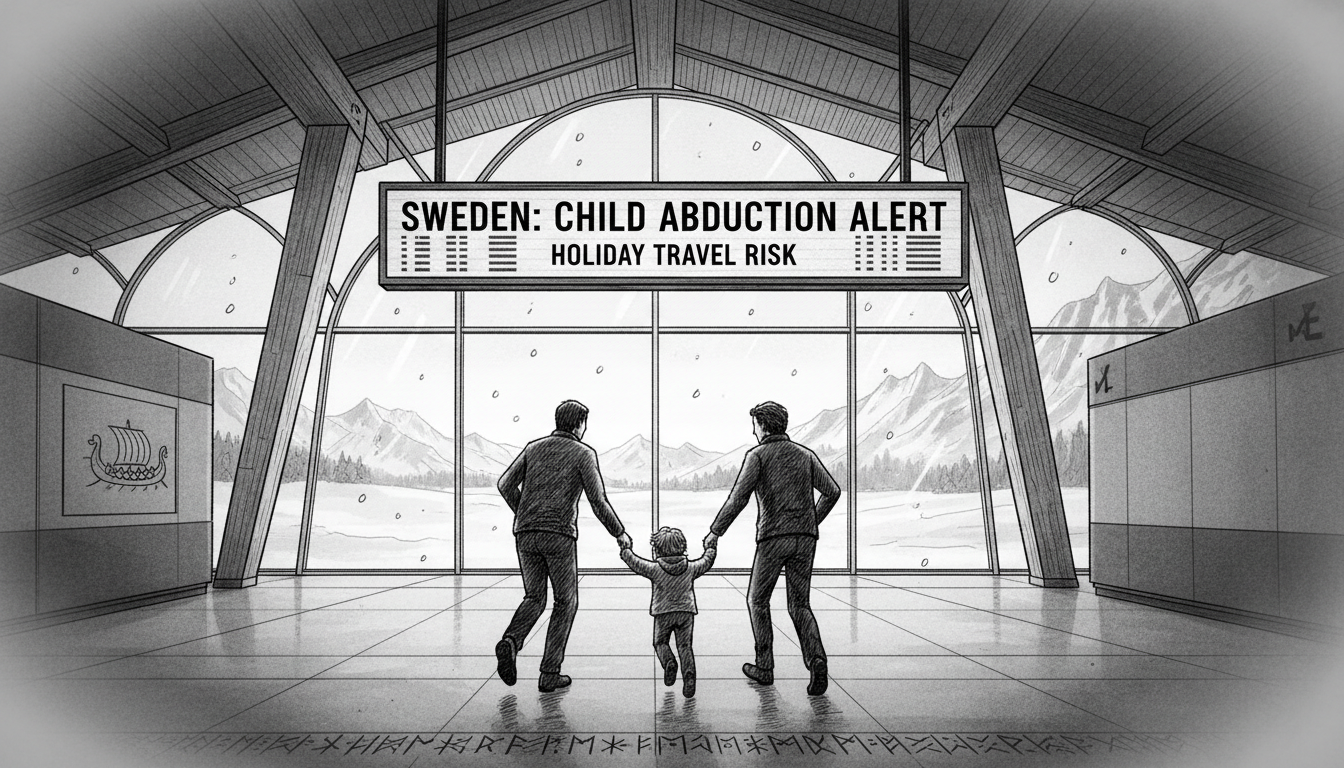
Sweden's second-largest airport became a frontline in the fight against honor-related crimes this Christmas. As the school holiday began, police and support organizations gathered at Gothenburg's Landvetter Airport. Their mission was clear: prevent children from being taken abroad for forced marriage, female genital mutilation, or so-called conversion attempts. "It's a preventive effort," said police officer Sofia Myrén. "We think that the more people who know this happens, the more can do something about it."
This scene-setting operation highlights a grim reality in Swedish society. While families across the country prepare for festive celebrations, some children face a very different threat. The winter break, particularly around Christmas, is considered a high-risk period. Families may travel to countries of origin where procedures like FGM are practiced or where a forced marriage can be arranged away from Swedish authorities' reach.
A Preventative Presence During Peak Travel
The initiative at Landvetter is not about random checks. It is about visibility, awareness, and creating a safety net. Officers and NGO workers were present to inform travelers, identify potential warning signs, and offer a point of contact for anyone concerned—be it a child, a relative, or even a vigilant fellow passenger. Landvetter, as a major international hub for western Sweden, is a critical transit point. The logic is straightforward: intervention at the airport can stop a tragedy before the plane takes off.
Swedish law is explicit. It is a criminal offense to take a child out of the country with the intent to subject them to forced marriage or female genital mutilation. The crime is classified as a form of child abduction, carrying severe penalties. Yet, enforcement is incredibly challenging. It requires proactive prevention, as once a child is abroad, Swedish jurisdiction and ability to intervene diminish drastically.
The Hidden Crisis Behind Closed Doors
Honor-related violence exists in the shadows. It is often perpetrated within families and communities where silence is enforced. The crimes police aim to prevent are not spontaneous. Forced marriage, FGM, and pressure to abandon one's identity are planned. School holidays provide the perfect cover—extended travel appears normal. "The Christmas holiday is long, and it's a common time to visit relatives in other countries," explains a social worker familiar with these cases, who asked not to be named. "That's what makes it so dangerous. The pretext is completely plausible."
Experts stress that these are not issues confined to any single culture or religion. They are forms of patriarchal control and violence that cross communities. The Swedish approach, part of a broader national strategy against honor-related oppression, focuses on the child's rights and safety above all else. Support systems include dedicated hotlines, shelters for young people at risk, and specialized units within social services.
Building a Network of Vigilance
The airport operation represents one node in a wider network. Success depends on collaboration. Police work with social services, schools, healthcare providers, and NGOs like Save the Children and the National Organization for Women's Shelters. Teachers and school nurses are often trained to spot signs of distress or fear of upcoming travel. A child suddenly withdrawing, expressing anxiety about a holiday trip, or mentioning an unexpected engagement can be red flags.
"Prevention is everything," says Katarina Lindström, a researcher specializing in honor-based violence. "We cannot wait for a crime to be completed. We need to build trust so that young people know where to turn, and we need to educate everyone around them—friends, teachers, neighbors—to recognize the signs. An airport campaign puts the issue in the public eye. It tells potential victims: 'We are here.' It tells perpetrators: 'We are watching.'"
The challenge is immense. Statistics on attempted abductions are scarce, as most prevention work is, by nature, unquantifiable—a crisis averted leaves no public data trail. Reports from the Swedish National Board of Health and Welfare focus on broader trends of honor-based violence, indicating it remains a persistent, though hidden, problem. Each airport intervention is a response to this ongoing threat.
A Societal Responsibility Beyond Borders
For Swedes accustomed to high levels of personal freedom and autonomy, these crimes can seem distant. Yet they occur in cities and towns across the country. The operation at Landvetter serves another purpose: it sparks public conversation. It forces a recognition that protecting children from honor-related abuse is a collective responsibility. It asks every traveler to be aware.
The strategy is nuanced. It avoids blanket stigmatization of communities while taking a firm, uncompromising stand against specific crimes. The message from authorities is consistent: in Sweden, a child's right to bodily integrity and self-determination is non-negotiable. This principle does not stop at the border. The work at Landvetter is an attempt to extend that protection to the airport gate and beyond.
As holiday travel peaks and families reunite, the contrast is stark. For most, airports are gateways to celebration. For a vulnerable few, they can be the last point of safety. The officers and support workers at Landvetter stand in that gap. Their presence is a small but vital signal—a reminder that vigilance is the price of safety, and that some children need society to be their guardian, especially when their own families cannot be.
Will increased awareness and visible policing be enough to stem this hidden flow of coercion? The answer is unclear. But as Sofia Myrén noted, the first step is making sure people know it happens. In the bustling departure hall of Landvetter, amidst the noise of rolling suitcases and holiday greetings, that quiet message of awareness may be the most important luggage a child carries.