
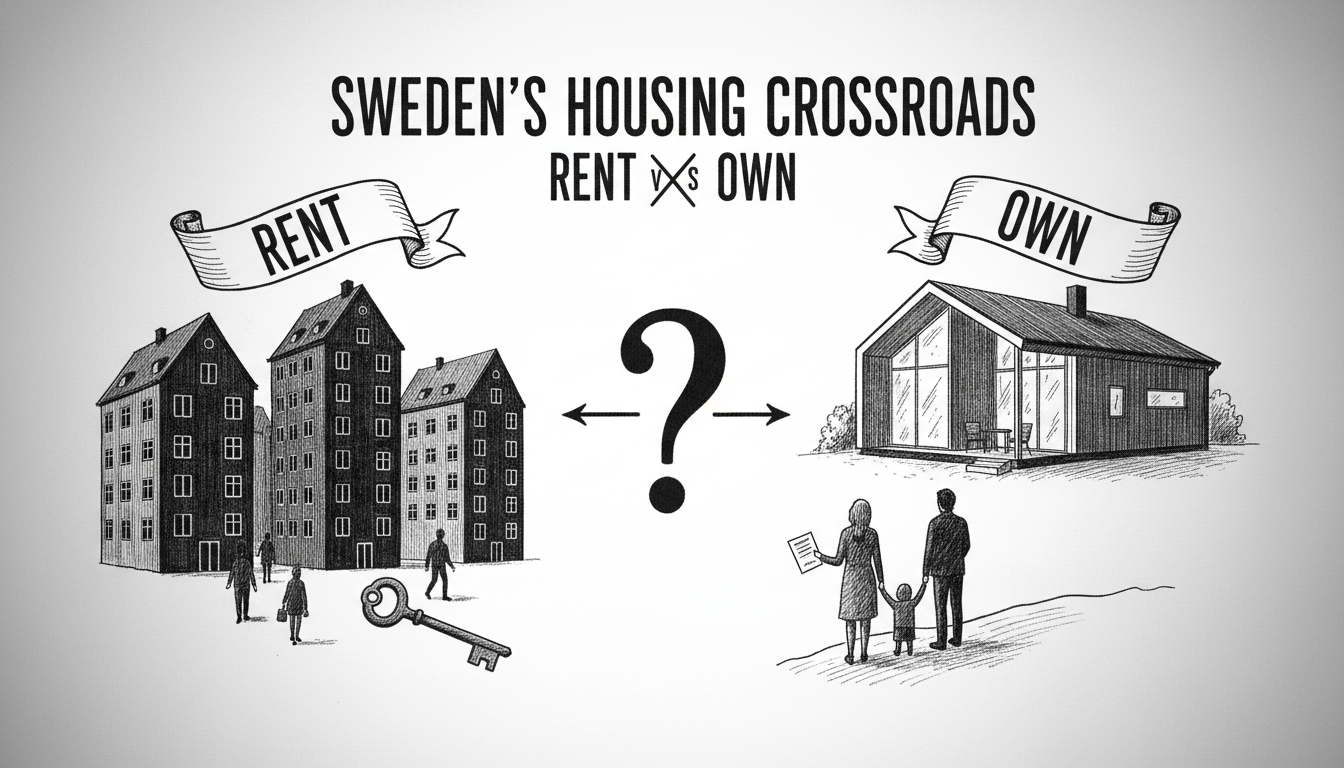
Sweden's housing market presents citizens with a foundational financial choice: the security of regulated renting or the potential wealth of tenant-ownership. This decision between hyresrätt and bostadsrätt shapes family budgets, dictates mobility, and influences generational wealth across the Nordic nation. The Swedish government and Riksdag decisions over decades have created this distinctive system, now facing pressure in major urban centers.
For young professionals and newly arrived families, the reality is often a stark trade-off. You can wait over a decade for a centrally located, rent-controlled apartment. Alternatively, you can commit to a substantial mortgage for a tenant-owned flat, accepting the associated risks and fees. This housing dichotomy is a defining feature of Swedish adult life, with profound implications for equality and economic planning.
Two Pillars of a System
The hyresrätt, or rental right, is a contract offering high tenure security under Sweden's tenancy law. Rents for apartments in older buildings are set through a collective bargaining model between tenant unions and landlord associations. This system, designed to ensure affordability, results in below-market rates for millions of Swedes. For newer constructions, market-rate rents apply, creating a two-tier rental landscape. Finding a first-hand contract in a desirable location, however, is the central challenge.
Queue systems managed by municipal housing companies like Stockholm's Bostadsförmedlingen are the traditional gatekeepers. While official statistics on current average wait times fluctuate, it is widely acknowledged that securing a first-hand contract for a central Stockholm hyresrätt requires many years of accrued queue days. This has spawned a secondary market for short-term, often more expensive, rentals through services that charge monthly fees.
The Tenant-Ownership Model
In contrast, bostadsrätt translates to 'tenant-ownership right.' Purchasers buy a share in a cooperative housing association (bostadsrättsförening) that owns the building. This share grants the right to occupy a specific apartment. The buyer needs a minimum down payment, typically 15%, with banks providing mortgages for the remainder. Monthly fees paid to the association cover building maintenance, administration, and any collective debt.
The model offers a path to building equity as property values, particularly in Stockholm, Gothenburg, and Malmö, have historically appreciated. However, it comes with constraints. Housing association boards enforce strict bylaws, often governing renovations, subletting, and even pet ownership. Owners are also liable for special fees levied for major renovations, which can amount to hundreds of thousands of kronor.
A Financial Balancing Act
The long-term financial implications of the choice are significant. Renting with a first-hand contract provides predictable, often subsidized, housing costs but builds no personal equity. Tenant-ownership involves higher initial costs and variable monthly fees but offers a stake in the property market. Over the past two decades, rising apartment prices in city centers have transformed bostadsrätt owners into a wealthier class, exacerbating socioeconomic divides.
Analysts note that the system creates a lock-in effect. Those fortunate to secure a good hyresrätt contract are often reluctant to give it up, reducing mobility within the rental sector. Conversely, bostadsrätt owners are directly exposed to interest rate fluctuations and housing market volatility. The Swedish Parliament's adjustments to amortization requirements for new mortgages are a direct policy tool aimed at cooling this market.
Policy at a Crossroads
Current Swedish government policy is caught between preserving the social democrat-inspired vision of affordable rental housing and responding to market realities. Ministers from the governing coalition regularly debate housing construction targets and regulatory reforms in the Riksdag building. The central dilemma is how to increase supply—both rental and owned—in high-demand areas without triggering unsustainable price growth or eroding tenant protections.
Housing market experts point to the chronic imbalance between supply and demand as the core issue. 'The queue times and high purchase prices are symptoms of the same disease: we have not built enough housing, of all types, where people want to live,' said one senior policy analyst, who requested anonymity to speak freely. They argue that Stockholm politics often becomes paralyzed by local zoning disputes, slowing construction.
The Human Dimension of a Structural Choice
Behind the statistics are personal calculations of risk, stability, and future planning. A family might choose a hyresrätt in a suburban municipality for its predictable costs and proximity to schools, accepting a long commute. A couple might pour their savings into a small central bostadsrätt, betting on future appreciation and banking on rising incomes to handle fee increases.
This choice is increasingly intergenerational. Parents with equity in their own homes often provide the necessary down payment for their children's first bostadsrätt, a practice that reinforces wealth concentration. Those without access to familial wealth face a much steeper path to ownership, relying solely on the fraught rental queue or the more expensive secondary rental market.
Looking Ahead: The Market's Future
The trajectory of Sweden's housing market will be determined by a mix of demographic trends, interest rate environments, and, crucially, government policy in Sweden. Proposals frequently circulate for reforming the queue system, incentivizing new construction of rental properties, and adjusting tax rules for homeowners. Each potential change is hotly contested, reflecting the high stakes for voters.
The enduring question for policymakers is whether the dual-model system can be sustained in its current form. Can the hyresrätt sector remain a broad, affordable pillar of the welfare state in the face of intense urban demand? Can the bostadsrätt sector be accessed without requiring immense upfront capital? The answers to these questions will define the landscape of Swedish cities and the financial security of its citizens for decades to come. For now, every Swede approaching adulthood must navigate this complex crossroads, making a choice that will resonate through their economic life.