
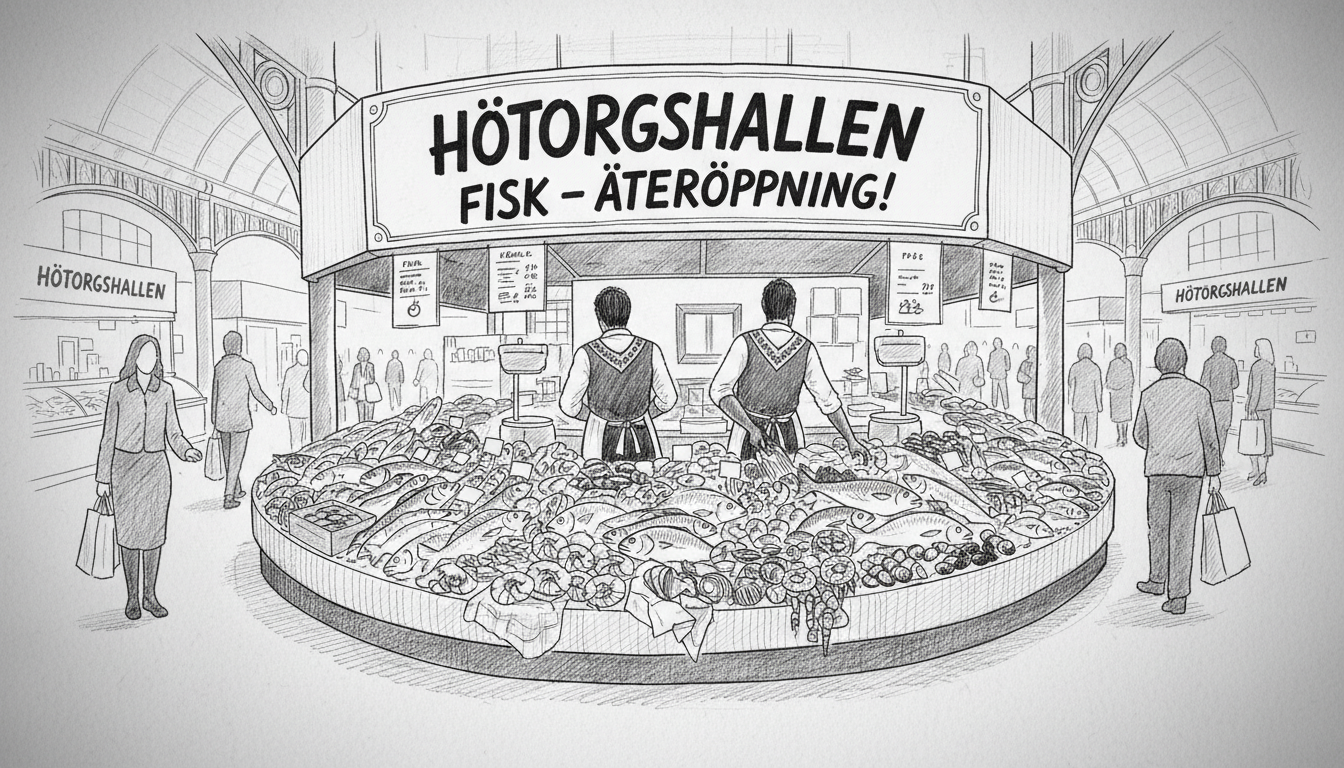
Swedish culture news often centers on tradition and community. In Stockholm, the return of fish to Hötorgshallen after a six-month absence is a story about both. The iconic market hall's two fishmonger stalls stood empty all summer. Their glass cases gathered dust. This week, the scent of the sea finally returned. 'Both customers and other vendors are super happy we're here,' says Joakim Jernberg. 'There hasn't been any fish for half a year.'
Jernberg and his business partner Magnus Olsson are the men behind the comeback. They met 15 years ago working at Melanders, a former fixture in the same hall. Today, they run 'Fisken' here and co-manage Lidingö saluhall. Their reopening is more than a business transaction. It's the restoration of a vital piece of Stockholm's daily fabric. Hötorgshallen, nestled between Sergels Torg and Hötorget, is a landmark. It's where Stockholmers shop for high-quality ingredients and tourists seek a genuine taste of Sweden. For six months, a core component was missing.
A Hall Without Its Heartbeat
Walking through Hötorgshallen without a fish counter feels incomplete. The hall, with its post-war architecture and bustling atmosphere, is a culinary microcosm. You find cheesemongers, butchers, greengrocers, and cafes. The empty fish stalls created a palpable gap in this ecosystem. Regulars who planned their weekly meals around fresh salmon or perch had to go elsewhere. The lunch crowds looking for a quick shrimp sandwich were disappointed. 'It affects the whole flow of the hall,' a neighboring cheesemonger told me, asking not to be named. 'People come for fish, then they buy bread, cheese, and vegetables. When the fish is gone, we all feel it.'
This interdependence is key to Swedish market hall culture. It's not just a collection of shops under one roof. It's a community with a shared customer base and a collective reputation. The return of 'Fisken' signals a return to normalcy for this small, vital economy. Jernberg and Olsson understand this role deeply. Their experience at Melanders gave them insight into the hall's unique rhythm and clientele.
More Than Just Salmon and Herring
The new offering at 'Fisken' reflects modern Swedish society trends. Yes, you will find the classics: gravlax, fresh Baltic herring (strömming), and plump Scandinavian shrimp. But Jernberg highlights their range. They promise ready-made dishes and various shellfish, including oysters and lobster. Two items stand out for their cultural significance. First is kabeljo, the Swedish name for bacalhau. This is salted, lightly dried cod, a cornerstone of Portuguese cuisine. Its presence speaks to Stockholm's sizable Portuguese community. It’s a taste of home for many, now available in a central Swedish market.
The second is carp. 'Alla som kommer från Öststaterna ska få fira jul ordentligt,' says Jernberg. ('Everyone from the Eastern states should be able to celebrate Christmas properly.') Carp is a traditional Christmas Eve dish in countries like the Czech Republic, Poland, and Slovakia. By stocking it, 'Fisken' is catering to Stockholm's diverse immigrant populations. It’s a smart business move and a thoughtful nod to Sweden's multicultural reality. This isn't just about selling fish. It's about enabling traditions and recognizing that Swedish food culture now includes these imported customs.
The Fragile Ecology of City Markets
The six-month vacancy raises questions. Why did the previous fishmongers leave? While the source material doesn't specify, it hints at the challenges facing small, specialized food vendors in expensive city centers. Rents in central Stockholm are notoriously high. The margins on fresh seafood are tight. It requires skilled staff, expensive refrigeration, and constant turnover to avoid waste. Running a fish counter in a market hall is a labor of love as much as a business. The hiatus may have been a search for the right operators—ones with the expertise, capital, and passion to make it work.
Jernberg and Olsson, with their existing operation at Lidingö saluhall, likely have the infrastructure to share costs and resources. This model of running multiple halls might be the future for preserving these institutions. It provides stability. For customers, the return is a relief. It safeguards a way of shopping that feels personal and authentic, counter to the anonymous experience of large supermarkets. In an age of online delivery, the market hall thrives on human interaction. You ask the fishmonger how to prepare the cod. You get a recipe tip. This is Swedish lifestyle at its most tangible.
Stockholm Events Today: A Culinary Destination Revived
For visitors and locals looking for 'Stockholm events today,' a trip to Hötorgshallen just got more compelling. The hall is an event in itself—a living exhibit of Swedish food culture. With the fishmongers back, the experience is complete. You can now construct an entire Swedish smorgasbord from one location. Pick up herring and crispbread, some sharp Västerbotten cheese, cured meats, and fresh berries. The reopening strengthens the hall's position as a must-visit destination. It’s not a museum piece. It’s a working, evolving marketplace that adapts to the city's changing tastes while holding onto its core identity.
The timing is also fortuitous. As autumn deepens in Stockholm, the culinary focus shifts towards heartier fare. It's the season for rich fish soups, baked salmon, and festive planning. The return of a full-service fish counter provides the central ingredient for these colder months. It invites home cooks back into the kitchen with premium, local seafood.
A Sign of Resilience and Adaptation
Ultimately, the story of the fish returning to Hötorgshallen is one of resilience. Market halls across Europe have faced pressures from modern retail and changing habits. Some have become purely tourist-focused. Hötorgshallen, by retaining its mix of practical vendors and gourmet stalls, walks a delicate line. The successful reintroduction of a fishmonger suggests there is still a strong, local demand for this model. It shows that when operated with knowledge and an eye for community—like stocking carp for Eastern European Christmas or bacalhau for Portuguese families—these traditional spaces can not only survive but thrive.
The empty counters are full again. The ice is piled high with glistening fish. The hum of activity around stall number five has returned. In a city constantly modernizing, some things are worth preserving. The simple act of buying fresh fish from a knowledgeable vendor, in the heart of Stockholm, is one of them. The hall's heartbeat is back. And for the regulars clutching their reusable bags, that’s the best Swedish culture news they’ve heard all season.