
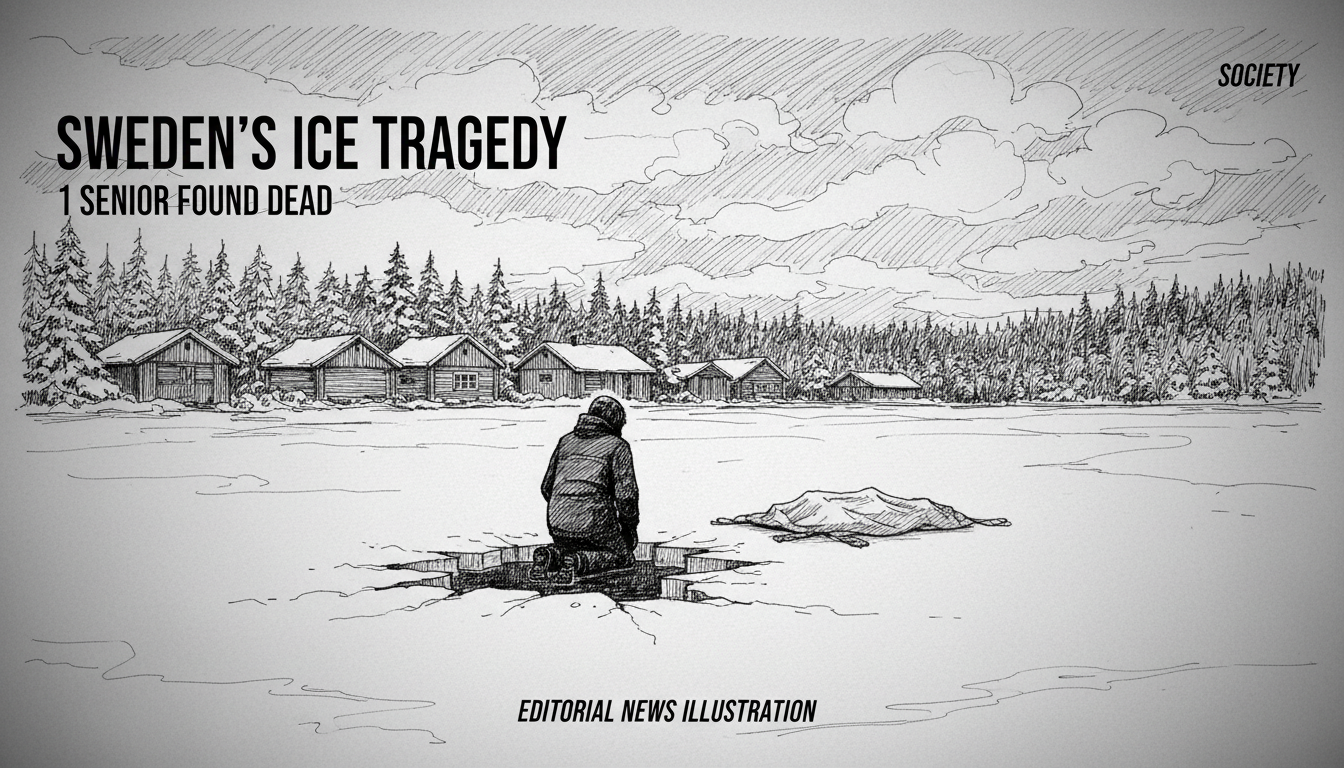
Sweden's beloved winter landscapes have claimed another life. An elderly man reported missing after a solo skiing trip in Leksand, Dalarna, was found dead in the water on Wednesday. Divers recovered his body days after tracks led rescuers to a hole in the ice. For his family and the tight-knit community of 6,500, it is a devastating loss that casts a pall over the region's winter idyll.
Police were alerted on January 2nd when the man failed to return home. A large-scale search operation immediately swung into action across the snowy terrain. Teams followed footprints that ended abruptly at an open patch of ice—a stark indicator of what likely occurred. "The man's relatives have been notified," police said in a brief statement, adhering to the Swedish principle of protecting personal privacy even in tragedy.
Leksand is more than just a dot on the map in central Sweden. It is the heart of Dalarna, a region synonymous with classic Swedish folklore, red wooden cottages, and a deep, year-round connection to nature. In winter, its forests and frozen lakes become a playground for cross-country skiing, a national pastime. This incident cuts to the core of that cultural relationship with the outdoors.
A Community's Winter Rhythm Shattered
The news has rippled quietly through Leksand. In a small municipality, a loss like this is deeply personal, even if not everyone knew the victim directly. "It's a reminder that our beautiful environment holds dangers, especially for those of us who are older and go out alone," said Karin Lindström, a longtime resident I met at a café near the Siljan lake. Her voice was heavy with the shared concern of a community where everyone knows the risks of the season. The local response reflects a somber Swedish resilience; people offer silent support rather than public outcry.
This tragedy is not an isolated event. Every Swedish winter brings headlines about ice accidents. Yet, each one feels uniquely painful because it conflicts with a cherished national identity of being competent and safe in nature. The Swedish term 'friluftsliv'—open-air living—is a cornerstone of lifestyle here. It promotes mental and physical well-being but is predicated on respect and knowledge of the elements. When the ice betrays that trust, the shock is profound.
The Unseen Danger Beneath the Snow
Why is natural ice so treacherous? Experts point to its unpredictable nature. "Ice is never uniformly safe," explains Mats Ekberg, a safety instructor with the Swedish Sea Rescue Society (SSRS). "Currents, underwater springs, shifting temperatures, and even decomposing plant matter can create weak spots invisible from the surface. A blanket of snow can insulate the ice, preventing it from thickening, and also hide cracks and openings."
Ekberg emphasizes that the commonly cited rule of needing 10 centimeters of clear ice for walking is just a starting point. For skiing or going out in a group, even more is required. In Dalarna, where many lakes are part of a vast, connected water system, conditions can change dramatically within a few meters. The search operation itself highlights the risks rescuers face, requiring specialized training and equipment to navigate the same hazardous environment.
Navigating the Thin Ice of Tradition
There is a cultural tension here. On one hand, authorities and experts rigorously promote safety. The Swedish Civil Contingencies Agency (MSB) and organizations like SSRS run constant campaigns. They advocate for ice claws (spikes worn around the neck to grip the ice for self-rescue), life jackets, and never venturing out alone. On the other hand, there exists a generations-old, almost intuitive, confidence among Swedes who have grown up walking and skating on frozen lakes.
This confidence can be fatal. For senior citizens, who may have decades of experience, the risks are compounded by the fact they often recreate alone and may not carry modern safety gear. Physical strength to pull oneself out of icy water also diminishes with age. This accident prompts difficult questions about how to better protect the most vulnerable while respecting their autonomy and lifelong connection to the outdoors.
The Long Wait for Answers
The days between the disappearance on January 2nd and the recovery on Wednesday were an agonizing limbo for the family. While police and volunteer search teams scoured the area, hope would have battled with dreadful anticipation. The discovery by divers, while providing closure, confirms the worst fear. The formal investigation will now work to piece together the final moments, though police have already indicated their strong belief the man fell through the ice.
The psychological impact on first responders and divers is also acknowledged in Sweden's pragmatic yet compassionate manner. Debriefings and support are standard, recognizing that recovering a body is a heavy task.
A Sobering Reminder as Winter Deepens
As Sweden moves into the coldest weeks of the year, this event in Leksand serves as a grim national bulletin. Safety campaigns will likely be amplified, and families will have conversations about checking in and gearing up. The tragedy underscores that the majestic, frozen landscape is a demanding partner. It offers profound peace and freedom but demands utmost respect and preparation.
The man's story ends in a way familiar to every Swede who reads the news each winter. It reinforces a sad, seasonal truth. Yet, it also touches on something deeper: the quiet courage of going into nature for solace, and the fragile line between a rejuvenating ski trip and disaster. In Leksand, the community will mourn, and on the lakes around Sweden, people will look at the ice just a little more carefully, weighing the timeless allure against the ever-present risk.