
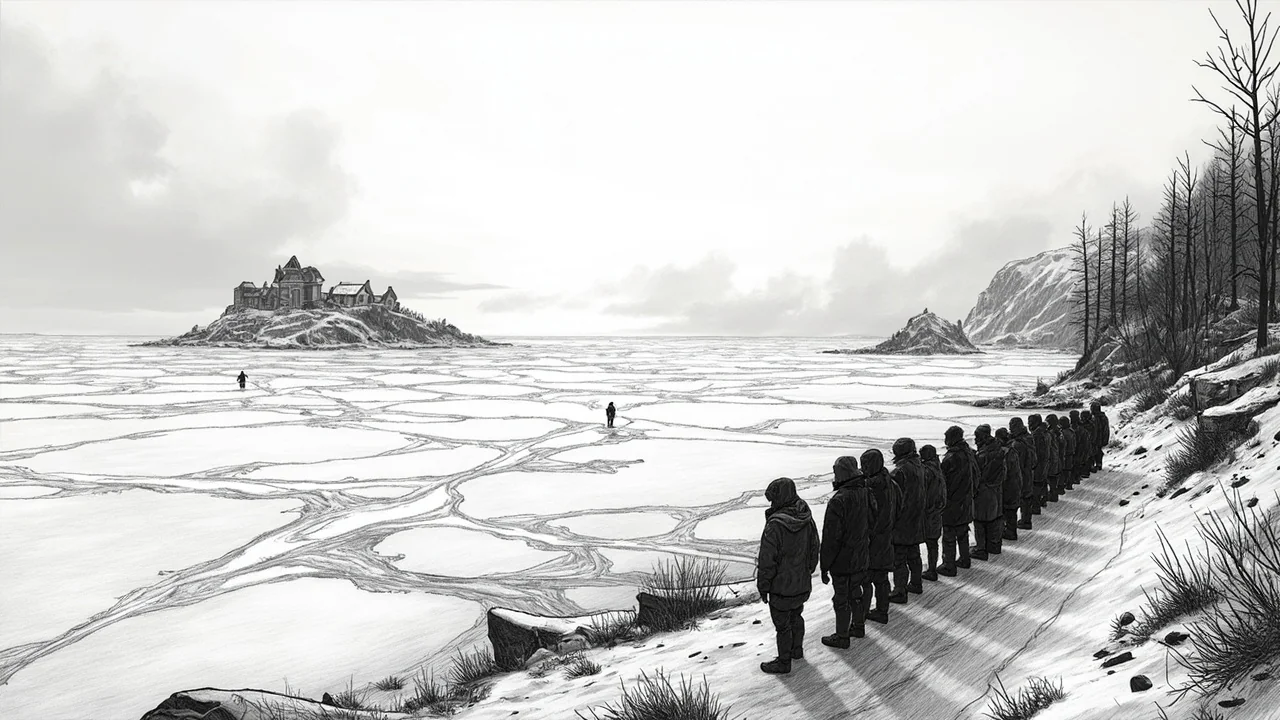
Sweden's ferry services to Holmön island near Umeå were cancelled Saturday due to dangerous ice conditions. The decision left approximately 60 year-round residents effectively marooned, unable to reach the mainland until at least Sunday when regular service might resume. For a nation built on connectivity and trust in public systems, this sudden isolation of a small community highlights the fragile balance between modern infrastructure and nature's raw power.
Mats Bergström, a retired teacher who has lived on Holmön for twenty years, heard the news on local radio. "You always have a plan B in the archipelago," he said, speaking by phone from his home overlooking the frozen channel. "But plan B usually involves the ferry running tomorrow. This feels different. The ice this year is thick, old, and moving in strange ways. It's not just an inconvenience; it's a barrier."
A Community Forced to Pause
The cancellation strands residents like Elin Forsberg, a nurse who works shifts at Umeå University Hospital. She was scheduled for a Sunday morning shift. "Now I'm calling colleagues, hoping someone can swap," she explained. "It's not just about work. My daughter has a football tournament on the mainland. She's heartbroken. These are the small threads of normal life that get cut."
Holmön, part of the Umeå archipelago in the Bay of Bothnia, is a popular summer destination. Its winter population shrinks to a tight-knit group. They are used to the rhythms of the ferry, a lifeline carrying groceries, post, and people. A cancelled trip is rare, and a full stoppage rarer still. The local municipal website cited "ice obstacles" as the cause, a simple term for a complex, dangerous natural phenomenon where wind and currents push massive sheets of sea ice into navigation lanes.
The Swedish Contract with Remote Living
This incident touches a core aspect of Swedish society: the promise of functional infrastructure regardless of location. The Swedish state has long invested in connecting its vast, sparsely populated regions. Reliable ferries, roads, and public transport are seen not as luxuries but as fundamental rights, enabling the allemansrätten—the right of public access—to be meaningful. When that system fails, even briefly, it feels like a broken contract.
"There's a deep-seated expectation in Swedish culture that society will function," says Dr. Lena Karlsson, a human geographer at Umeå University who studies northern communities. "This is especially true in the north. We accept the darkness and cold, but in return, we expect the plows to run, the buses to be on time, and the ferries to sail. An interruption like this is more than logistical. It creates a psychological ripple, a reminder of our vulnerability."
For the residents, the immediate concerns are practical. The island has a small shop with basic supplies, but fresh produce and specialist items come from the mainland. Medical appointments are cancelled. Planned visits with family are postponed. Yet, there is also a resilient, communal response. "We check on each other," says Bergström. "The person with a snowmobile might offer to fetch something if someone is low. We share what we have. It’s an old-fashioned way of living that modern life often forgets."
Winter's Grip on Swedish Life
This event is a stark example of how climate and weather actively shape Swedish lifestyle and news. While southern Sweden might grapple with rain, the north contends with a winter that is both majestic and demanding. Sea ice, once more predictable in its formation and melt, has become less stable. Warmer autumns can lead to later freezing, creating thinner, more chaotic ice that is hazardous for shipping.
"We're not talking about climate change in abstract terms here," Dr. Karlsson notes. "We're talking about a ferry captain looking at a channel blocked by unstable ice floes that shouldn't be there in that configuration. The decision to cancel is a safety-first calculation, but it's a calculation based on changing environmental conditions."
The isolation also underscores a demographic trend. Choosing to live year-round on a remote Swedish island is a conscious commitment to a slower, nature-centric lifestyle. These residents are often self-reliant. They stockpile wood for heating, have generators for backup power, and maintain deep freezers. The ferry is their link to the broader economy and society, not their sole source of survival.
Looking Beyond the Ice Floes
By Sunday, if winds shift and ice breakers can clear a path, the familiar rumble of the ferry will return to the Holmön dock. Life will reconnect. Mats Bergström will get his newspapers. Elin Forsberg's daughter will reschedule her football match. The incident will become a story told over fika—coffee and pastries—for weeks.
But the brief stranding leaves lingering questions. How will coastal communities adapt as winter sea conditions become more volatile? Is the infrastructure designed for the climate of the past? For a country celebrated for its innovation, the challenge is clear: maintaining the social contract of connectivity in the face of nature's increasing unpredictability.
The people of Holmön will wait, with characteristic Swedish patience and preparedness. They will look out their windows at the formidable, beautiful ice, a force that still, occasionally, reminds even one of the world's most connected nations that some barriers remain physical, immediate, and absolute.