
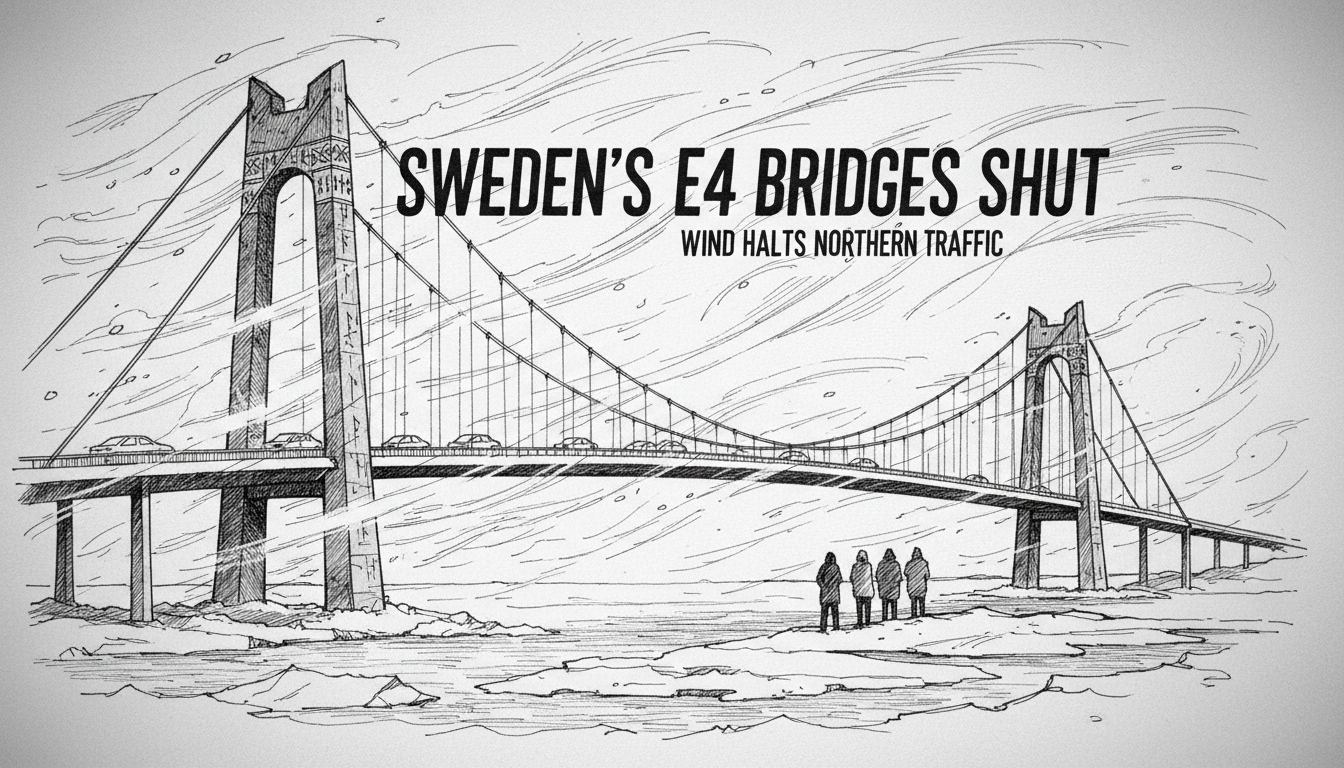
Sweden's vital E4 highway arteries, the Sundsvall Bridge and High Coast Bridge, are closed to all traffic due to dangerous wind conditions. The Swedish Transport Administration (Trafikverket) stated there is currently no forecast for when the bridges might reopen. Traffic is being diverted, with drivers urged to follow posted signage around the closures. This disruption isolates key regions and halts commercial and passenger movement along Sweden's primary north-south corridor.
A Strategic Chokepoint Paralyzed
The simultaneous closure of these two major bridges creates a significant transport chokepoint. The Sundsvall Bridge, a 2,109-meter cable-stayed structure completed in 2014, bypasses the city center. The High Coast Bridge, a 1,210-meter suspension bridge opened in 1997, soars 182 meters above the water. Together, they form an indispensable link for the regions of Västernorrland and Gävleborg. Their closure effectively severs the E4, Sweden's most important highway, forcing lengthy inland detours that can add hours to journey times. The economic impact on logistics, tourism, and daily commuting is immediate and severe.
Engineers from Trafikverket monitor wind speed and direction at multiple points on each structure. Closure protocols are not arbitrary but are based on precise structural engineering calculations. "The safety of road users is our absolute priority," a Trafikverket press officer said in a statement. "These thresholds are set to prevent vehicles, particularly high-sided trucks, from being blown off course or causing instability on the bridge deck." The agency confirmed that reopening will only be possible once wind speeds drop and remain consistently below the defined safety limits.
Engineering Protocols and Public Safety
Bridge closures during high winds are a standard, if disruptive, global safety practice for long-span bridges. The design of such structures allows for flexibility and movement, but specific wind conditions can create hazardous driving environments. The decision to close is a precautionary measure to prevent accidents before they occur. "It's a proactive safety culture," explains structural engineer Dr. Lena Falk, who has consulted on Nordic bridge projects. "You're managing risk for a structure exposed to the elements. The alternative—waiting for an incident to happen—is not an option from an engineering or ethical standpoint."
The public, while often frustrated by the delays, largely accepts the necessity. Social media channels from local police and transport agencies are filled with updates and reminders about the closures. The message is consistent: no estimated reopening time, plan for alternative routes, and avoid unnecessary travel. This incident highlights the vulnerability of modern, centralized transport networks to specific weather events, despite Sweden's generally robust infrastructure.
Economic and Logistical Ripple Effects
The closure's impact extends far beyond stranded motorists. The E4 corridor is a critical route for freight moving between northern Sweden's industrial and forestry hubs and southern ports and markets. Every hour of closure disrupts just-in-time supply chains and increases costs for haulage companies. Local businesses in Sundsvall and along the High Coast that rely on passing trade also face sudden drops in customer traffic.
Regional public transport authorities are scrambling to reorganize bus routes that typically use the bridges. Long-distance coach services are subject to major delays, affecting inter-city travel plans across a wide area. The isolation felt by communities on either side of these bridges becomes palpable during such events, underscoring their role as literal connectors of society and commerce in northern Sweden.
A Recurring Challenge for Northern Infrastructure
This is not an isolated event. Both bridges have been closed multiple times in recent years due to high winds, a pattern that raises questions about long-term resilience. While the closures are a correct safety response, they point to a broader infrastructure challenge. Sweden's climate is changing, with some studies suggesting potential shifts in wind patterns. Policymakers in Stockholm may need to consider whether current design standards for critical infrastructure are sufficient for future conditions.
Investment in alternative land routes or technological solutions to mitigate wind effects on bridges involves complex cost-benefit analyses. The Riksdag has previously debated infrastructure funding for northern Sweden, often focusing on rail. Incidents like today's dual closure strengthen arguments for building more redundancy into the national transport network, though such projects require significant political will and budgetary commitment from the Swedish government.
Looking Ahead: No Clear End in Sight
As the wind continues to batter the coast, Trafikverket's situation room remains the focal point. Meteorologists and engineers are working in tandem, but nature dictates the timeline. The lack of a reopening forecast is a frank admission of uncertainty that defines these situations. For now, the massive structures stand as silent, empty monuments to engineered progress, momentarily defeated by a force they were designed to withstand under normal operating conditions.
The closures serve as a stark reminder of the balance between human engineering and natural power. They demonstrate the effective functioning of safety protocols but also expose systemic vulnerabilities. When will the bridges reopen? Trafikverket's answer remains the only honest one: when it is safe to do so. Until then, northern Sweden's main artery is severed, and the region must wait for the wind to relent.