
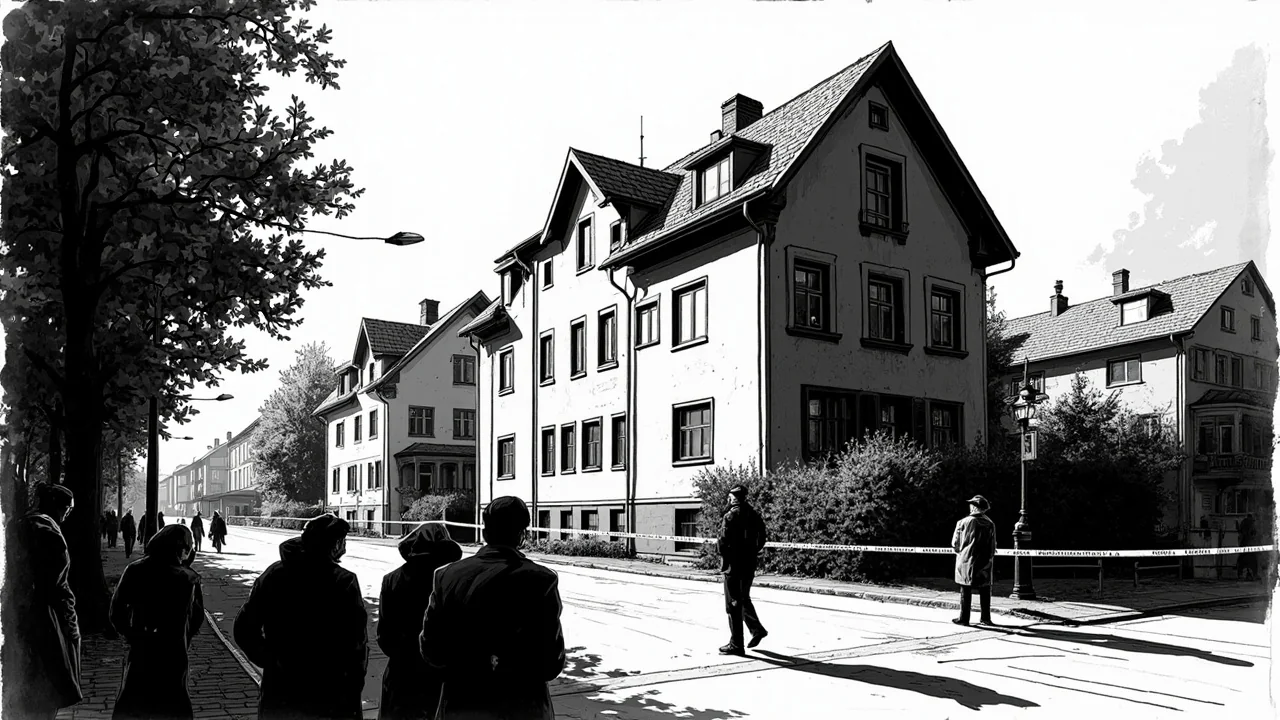
Swedish police received a report of suspected gunfire at a residence in northwest Stockholm on Friday afternoon, adding to a growing national debate on weapon violence. The alarm came in just after 1 p.m. for an incident in the Hässelby district, classified as aggravated unlawful threats and a serious weapons crime. No injuries were reported, but police spokesperson Mats Eriksson confirmed the event involved shots fired at a home and that there were 'plenty of witness accounts.' For residents of the quiet, family-oriented neighborhood, the sound of police sirens shattered the ordinary afternoon.
A Community's Sudden Disruption
Hässelby is not a name that typically makes national headlines. It's a classic Stockholm suburb, part of the larger Spånga-Tensta borough, known for its mix of row houses, apartments, and proximity to nature around Lake Mälaren. On a Friday, the area is usually alive with the routine of life: parents collecting children from school, people shopping at the local center, others enjoying the parklands. The report of shots targeting a home cuts directly against the grain of this perceived normalcy. It transforms a residential address from a place of safety into a potential focal point of conflict. While details are sparse, the police classification indicates a targeted act, not random violence. This distinction is small comfort to neighbors who hear a loud bang and see their street cordoned off by tape.
The immediate human impact is one of fear and disruption. 'You just don't expect it here,' a longtime resident might say, echoing a sentiment common in areas suddenly touched by gun crime. The psychological ripple effect is significant. Parents double-check their plans for letting children play outside. Elderly residents become more wary. The local pizza place or convenience store sees fewer casual evening visitors. This erosion of casual public life is a slow-burn consequence of acute incidents. The police presence, both reassuring and alarming, becomes the day's main event.
The Broader Canvas of Swedish Gun Violence
To understand this single event in Hässelby, one must place it on the broader canvas of Swedish society. Sweden has seen a noted increase in gun violence linked to criminal conflicts over the past decade. While the overall homicide rate remains moderate by international comparison, the frequency of shootings and explosions has risen sharply. Experts often point to gang rivalries over drug distribution networks as a primary driver. These conflicts increasingly play out in residential areas, moving beyond traditional underground hotspots. A shooting at a home is a severe escalation, a message that crosses the threshold from the public sphere into the private domain. It signifies a brazen disregard for the collateral damage of innocent neighbors and represents a profound challenge to law enforcement.
The weapons themselves are a key part of the story. Sweden has strict firearm laws for legal ownership. The guns used in crimes like these are typically illegal imports, often smuggled from other parts of Europe or converted from legally produced but deactivated weapons. The police's classification of this event as a 'serious weapons crime' underscores the priority placed on tracking these illicit networks. Every shell casing collected is a potential clue in a much larger puzzle.
Stockholm's Suburban Identity in Focus
Nordwest Stockholm, encompassing districts like Hässelby, Vällingby, and Rinkeby, holds a complex place in the city's identity. Built largely during the postwar 'Record Years' to house a growing population, these areas are monuments to the Swedish welfare state's ambition: functional, green, and communal. Over decades, demographic shifts and socioeconomic challenges have changed some neighborhoods. Media narratives often unfairly stigmatize entire suburbs. An incident like this risks reinforcing those broad stereotypes, which residents and local leaders consistently fight against. The vast majority of people in Hässelby are law-abiding citizens who want safe streets just like anyone in Östermalm or Södermalm.
The reality is that urban challenges, including organized crime, do not respect postal codes. Criminal networks operate across city lines. A targeted attack in a suburb can be connected to disputes originating in the city center or other regions. This interconnectedness makes policing exceptionally difficult. It also means the solution cannot be localized to a single district. It requires a coordinated national effort, combining police work, social interventions, and community partnerships.
The Cultural Reverb of Violence
How does Swedish culture process such events? There is a palpable tension between the national self-image of a peaceful, orderly society and the periodic violence that disrupts it. The concept of 'trygghet' – meaning security, safety, and a general sense of well-being – is a cornerstone of the social contract. Incidents that violate 'trygghet,' especially in residential settings, strike a deep nerve. They become topics of intense discussion not just in news reports, but in workplace fikas, family dinners, and social media debates. The conversation often splits between calls for tougher law-and-order measures and deeper investment in social prevention programs aimed at steering youth away from criminal paths.
Local festivals, like the upcoming summer events in nearby parks, or the everyday function of the community library and sports hall, are the antithesis of this violence. They represent the communal, open Sweden that most residents cherish. A shooting threatens that spirit, but the typical response in these communities is not retreat. It is often a renewed, if weary, determination to reclaim normalcy. Neighbors check on each other. Community watch groups may become more active. Local associations organize meetings with police. This is the grassroots resilience that rarely makes headlines.
Looking Ahead: Questions Without Easy Answers
As the police investigation in Hässelby continues, collecting forensic evidence and poring over witness statements, larger questions linger. Was this a targeted warning, a failed intimidation, or something else? The absence of injuries is fortunate, but it does not mean an absence of harm. The residents of that home now live with a trauma. Their neighbors live with heightened anxiety.
For Sweden, each such incident adds data points to a troubling trend. It fuels political debates about policing resources, border controls, and sentencing laws. The government has recently expanded police powers and toughened penalties for gun crimes. The effectiveness of these measures will be judged over years, not in the aftermath of a single afternoon's alarm.
The story from Hässelby is more than a police blotter entry. It is a snapshot of a modern European capital grappling with challenges that contradict its peaceful reputation. It highlights the vulnerability of everyday life and the resilience of suburban communities. As the sun sets over Lake Mälaren, life in the neighborhood will cautiously return to its rhythm. But beneath the surface, the questions—and the search for 'trygghet'—remain, as central to the Swedish experience as a midsummer feast or a fika in the afternoon sun. Can the model of a open, trusting society be preserved in an age where violence sometimes arrives at the front door? The answer is being written in neighborhoods just like this one.