
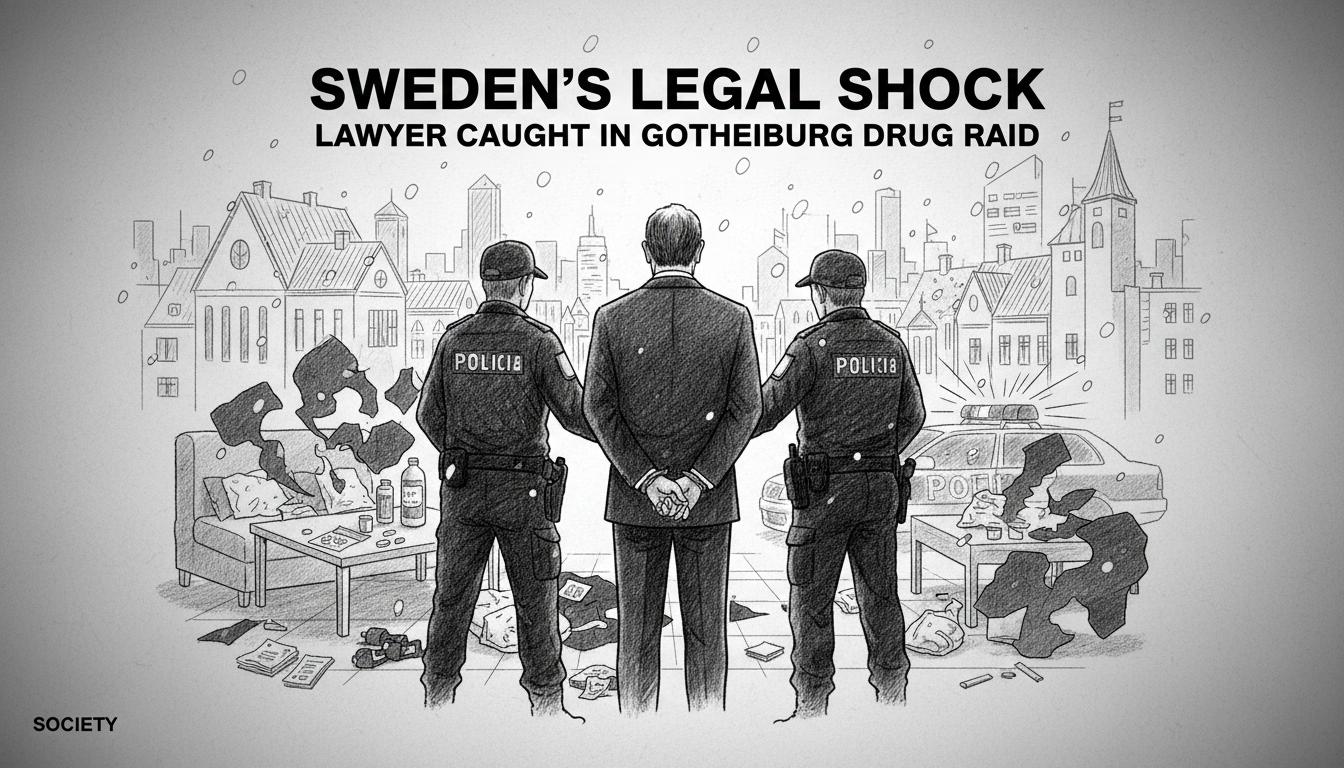
Sweden drug laws faced a stark test in a Gothenburg apartment this week. Police followed the distinct smell of cannabis up a stairwell. They stopped at one door. Inside, the evidence was clear. Officers found cocaine and narcotic-classified pills. In the living room sat a man, visibly under the influence. He was a former lawyer, recently involved in a high-profile criminal case. The arrest sent ripples through Sweden's legal community. It highlighted tensions between Sweden's zero-tolerance drug policy and the hidden struggles within professional circles.
From Courtroom to Living Room
The scene in the Gothenburg apartment block was a routine police operation. It became anything but routine. The suspect's identity transformed a simple drug bust into a cultural moment. Here was a man trained in the law, now apprehended for allegedly breaking it. Sweden maintains some of Europe's strictest narcotics laws. Possession for personal use is a crime. The discovery of multiple substances suggests more than casual use, experts say. "This is a profound fall from grace," said Lena Mårtensson, a legal ethics commentator based in Stockholm. "It challenges the image of the lawyer as the ultimate guardian of the rule of law. The public trust is fundamental." The case is under preliminary investigation. No charges have yet been filed.
The Weight of Sweden's Zero-Tolerance Policy
Swedish drug policy is not flexible. It is built on a principle of total prohibition. The aim is a drug-free society. Cannabis, cocaine, and unauthorized pills are all illegal. There is no distinction between "hard" and "soft" drugs. The penalty depends on the substance and quantity. It can range from a fine to imprisonment. In 2023, Swedish police registered approximately 120,000 drug-related crimes nationwide. This number underscores the scale of the challenge. Gothenburg, as a major port city, is a key frontline. Its docks and transport networks are constant targets for smuggling operations. Police resources are heavily focused on interception. This arrest, however, was about consumption, not trafficking. It reveals the policy's reach into private homes.
A Profession Under Scrutiny
The legal profession in Sweden binds its members to high conduct standards. The Swedish Bar Association enforces strict rules. A criminal conviction, especially for drugs, can end a legal career. Lawyers can be disbarred. It is unclear if the man in this case was still a practicing member of the Bar at the time of the arrest. Sources suggest he had recently left the association. The reasons for his departure are not public. This nuance matters. Was he already a former lawyer navigating personal crisis? Or was he a practicing attorney whose actions could undermine ongoing cases? The distinction shapes the narrative. "The system has safeguards," Mårtensson explained. "But it deals with consequences, not always prevention. The human story here is one of personal collapse, which can happen to anyone, in any profession."
Gothenburg's Complex Reality
Beyond the headlines, Gothenburg embodies Sweden's drug policy struggle. The city is vibrant and industrial. It is also a logistical hub. This brings economic vitality and criminal opportunity. Local police work is a mix of major interdiction and community intervention. Arrests like this one occur alongside larger busts of organized networks. "We see all facets," said a former police officer from the Västra Götaland region, who asked not to be named. "The port traffic, the street-level dealing, and the isolated cases in apartments. The goal is always reduction—of supply and of demand." The city's approach mirrors the national one: law enforcement is the primary tool. Debate exists over whether this approach adequately addresses addiction as a health issue. This case, involving a privileged professional, may fuel that discussion.
The Human Cost Behind the Headline
While the story is sensational, it is ultimately human. A career is likely over. A personal life is in public view. The zero-tolerance framework offers little room for public redemption narratives. The conversation in Swedish media has been sober. There is shock, but also a recognition of addiction's indiscriminate nature. Commentators on social media have expressed both harsh judgment and sympathy. This mix reflects a societal conflict. Sweden values both strict order and a strong welfare safety net. Where does a fallen professional fit? He is not a victim, in the legal sense. But his story may be a catalyst for quieter conversations about pressure, mental health, and support within high-stakes professions. Sweden's famous work-life balance culture sometimes cracks under unspoken stresses.
What This Means for Sweden's Drug Debate
This incident is unlikely to change Swedish drug policy. The political consensus for zero-tolerance remains strong. Yet, it puts a face to the statistics. Most drug crimes do not involve former lawyers. They involve young people and marginalized groups. This case breaks that pattern. It may prompt legal firms to look inward. Do they have support systems? Is there a culture where problems can be admitted before they escalate? For the public, it reinforces the law's reach. It also shows that no social tier is immune. Sweden's model is often held up as unique in Europe. Its success is measured in relatively low consumption rates. But its critics ask at what cost? Each arrest, particularly one so symbolic, tests the model's human dimensions.
The story ends with unanswered questions. What happens next to the man in the apartment? How will the legal community reconcile this event? The police have done their job. The courts will next. Swedish society, with its deep belief in law and order, will wrestle with the complexity. A principle remains clear: the law applies to everyone. Even to those who once mastered its language in court. This is Sweden's social contract in action, both rigid and revealing, as a life unravels in a Gothenburg stairwell.