
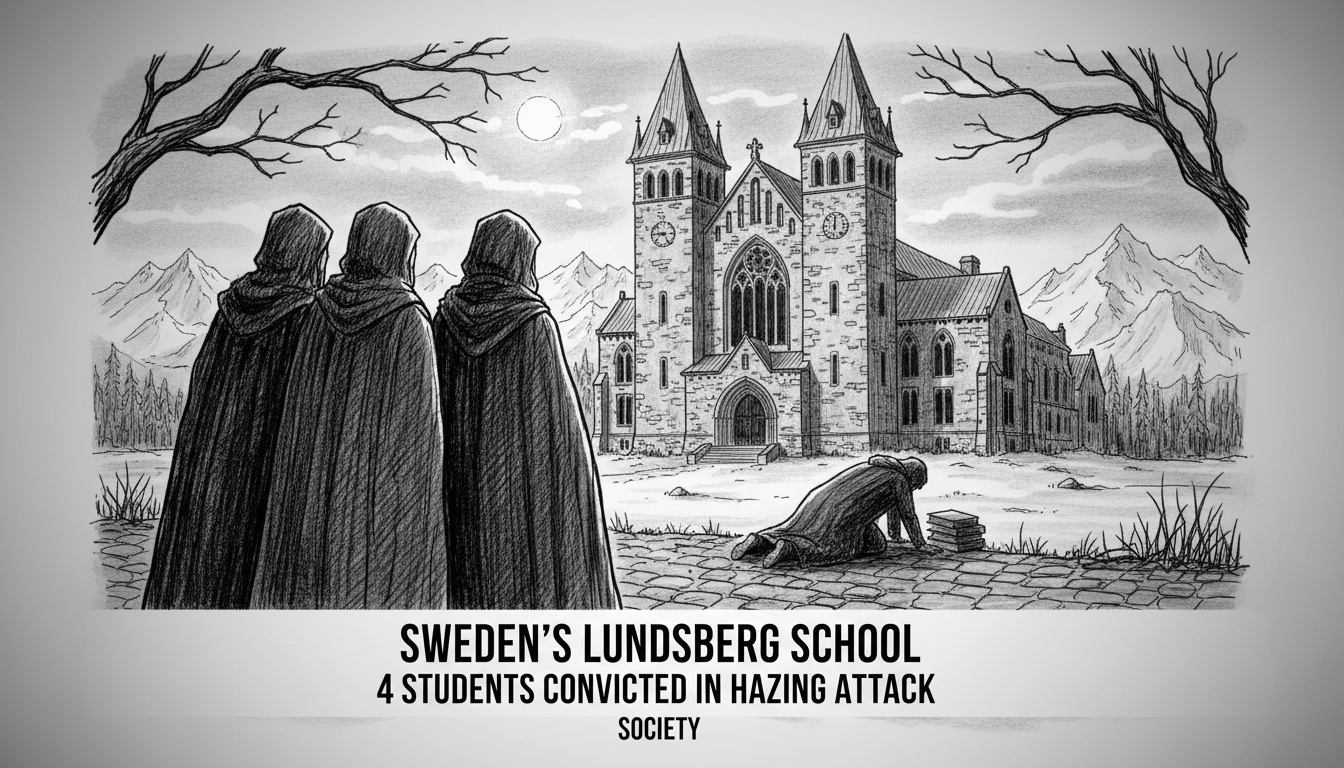
Sweden's elite Lundsberg boarding school faces renewed scandal after four students were convicted for a violent hazing attack. Masked and armed with leather belts, the older students forced their way into younger pupils' rooms one January night. The assault was reportedly retaliation after a verbal dispute, described as a 'rap battle,' between student groups. This latest conviction adds to a long history of controversy for the 128-year-old institution, raising urgent questions about safety and tradition in Sweden's private schools.
A Violent Night and a Damning Verdict
The district court in Karlstad delivered its verdict this week. It found four students, all minors, guilty of assault. The incident occurred in the school's boarding houses. Prosecutors detailed how the attackers wore masks to hide their identities. They carried leather belts which they used to strike the younger victims. The court heard that the assault was planned as collective punishment following a conflict between student factions. This premeditated nature contributed to the guilty verdicts. The specific sentences for the convicted minors were not detailed in public reports, in line with Swedish law protecting young offenders' identities.
A Troubled History of Tradition and Abuse
Lundsbergs skola, founded in 1896, is one of Sweden's few remaining full-boarding schools. It has long been associated with the country's economic and aristocratic elite. Its history is also marked by periodic scandals. For decades, rumors and reports of harsh initiation rituals and systemic bullying have surfaced. In 2011, a television documentary exposed widespread physical and psychological abuse. This led to a major police investigation. The Swedish Schools Inspectorate, Skolinspektionen, launched a review. In 2013, a 14-year-old student was severely beaten. That case led to convictions and the temporary suspension of the school's state funding. Despite promises of reform, similar incidents have continued to emerge.
Experts Point to a Toxic Culture
Child psychologists and school safety experts see the latest attack as symptomatic of a deeper problem. 'Isolated incidents can happen anywhere,' said Dr. Lena Möller, a researcher specializing in school violence at Uppsala University. 'But repeated, ritualized violence over decades points to a cultural issue within the institution itself. It suggests traditions that normalize abuse and a hierarchy where older students wield inappropriate power.' Möller emphasizes that hazing is not harmless tradition. It causes lasting psychological trauma for victims. It also distorts the moral development of the perpetrators, teaching them that power justifies cruelty. The school's isolated, closed-campus environment can sometimes allow such cultures to flourish without external oversight.
The School's Response and Systemic Failures
Following the verdict, Lundsberg's headmaster issued a statement. He condemned the violence and stated the convicted students were no longer enrolled at the school. He reiterated the school's commitment to providing a safe environment. Critics argue such statements have followed every major incident for years. The Swedish Schools Inspectorate has the power to investigate and sanction schools. After the 2013 beating, they imposed strict supervision orders on Lundsberg. The question now is whether that oversight failed or if the school's culture proved resistant to change. Parents pay substantial fees for Lundsberg's education and its network. Some observers believe this economic relationship can make the institution prioritize its reputation over radical, necessary cultural change.
A National Reckoning on Privilege and Safety
The case transcends a single school fight. It touches a nerve in Sweden, a country with a strong ethos of equality. Lundsberg represents a rare bastion of exclusive, private education. Its repeated scandals fuel a public debate about privilege, accountability, and whether such institutions operate outside societal norms. 'There's a perception that these are ‘just boys being boys’ in a high-status setting,' said political commentator Erik Fichtelius. 'But the law is clear. Violence is a crime. The conviction proves that. The challenge is whether the social systems around these students—parents, alumni, school leadership—truly internalize that, or if they cling to a romanticized view of tough traditions.'
The Path Forward: Dismantling Harmful Traditions
Real change, experts say, requires more than new policies on paper. It demands a conscious, sustained effort to dismantle hidden hierarchies and rituals. This involves training staff to recognize non-physical coercion and psychological bullying. It means creating clear, confidential reporting channels for students. Most importantly, it requires leadership willing to challenge the nostalgia of alumni who may defend old practices as 'character-building.' Other Swedish boarding schools have undergone similar transformations. They actively promote a culture of mentorship instead of hazing, where older students are trained to support, not intimidate, newcomers. Lundsberg's future may depend on choosing this model over its troubled past.
The convictions close a legal chapter, but the broader story continues. The Swedish Schools Inspectorate is likely to review the school's license and safety protocols again. For the victims, the psychological impact remains. For Sweden, the case is a reminder that wealth and tradition do not grant immunity. A safe learning environment is a fundamental right, one that must be enforced in every corridor, even those in Sweden's most historic boarding schools.