
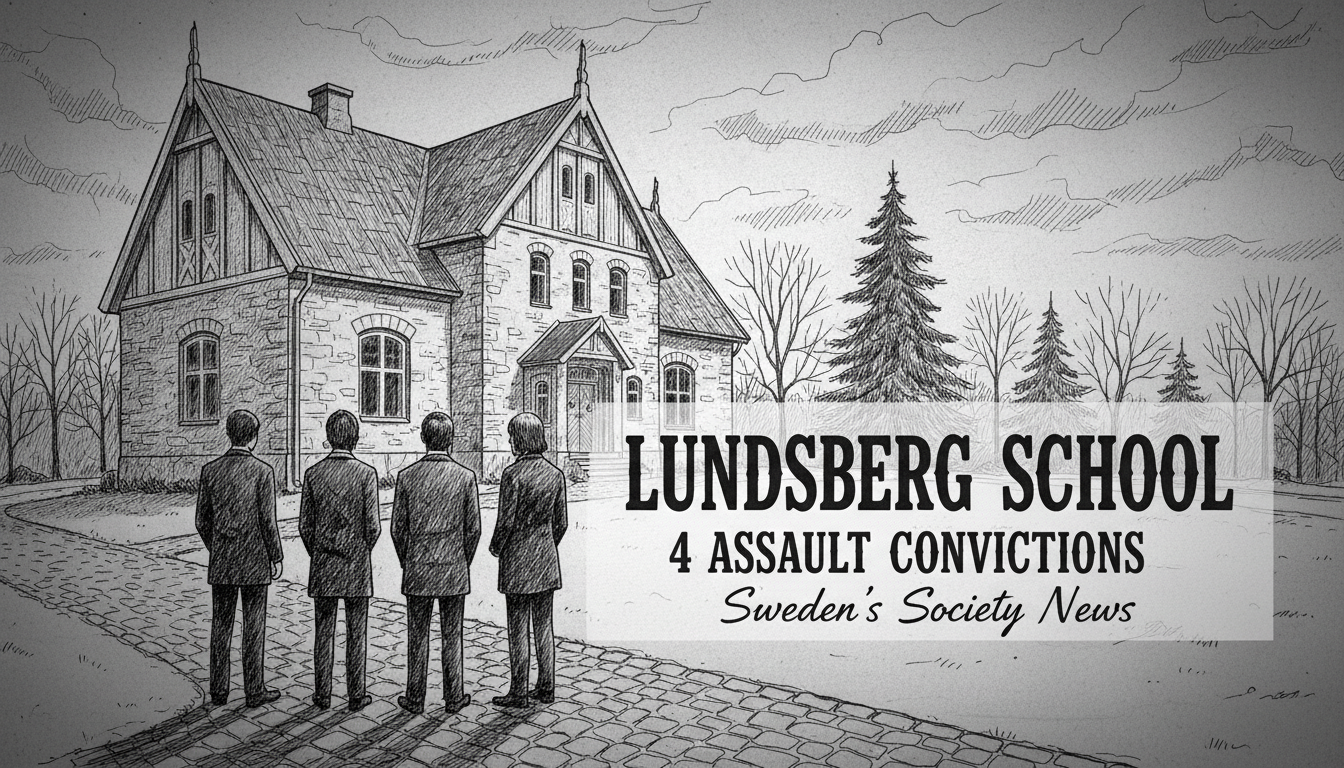
Sweden's Lundsberg boarding school has been rocked by four student assault convictions from attacks this winter. The Värmlands District Court sentenced the convicted pupils to youth service on Wednesday. One other accused student was acquitted. The verdict casts a harsh new light on the elite institution's long-troubled culture of ritualized bullying and violence.
A Verdict That Reopens Old Wounds
For the victims and their families, the court's decision brings a measure of legal closure. Yet it also forces a painful national conversation. The case centers on a series of physical assaults against several schoolmates during the winter term. Youth service, known as ungdomstjänst, is a common sentencing framework for offenders aged 15-17 in Sweden, focusing on rehabilitation through supervised community work. The specific conditions and hours mandated for the four convicted students were not detailed in the initial court announcement. This legal outcome, however, is just the latest chapter in Lundsberg's fraught history with systemic abuse.
The Shadow of Tradition at an Elite Institution
Founded in 1896, Lundsberg is one of a handful of traditional Swedish boarding schools. It has long been a destination for children from affluent and influential families. Its reputation, however, is dual-edged. Alongside academic prestige lies a persistent undercurrent of hazardous tradition. The school has faced repeated scandals and official investigations over decades, often related to violent initiation rites and hazing rituals passed down through generations of students. Critics argue these practices are perpetuated by a culture of silence and institutional reluctance to enact deep, lasting change. Past incidents have led to temporary closures of certain student activities and promises of reform. The recent convictions suggest those reforms have been incomplete.
Experts Point to a Toxic Ecosystem
Child psychologists and school culture experts see the Lundsberg case as a symptom of a specific, high-risk environment. "Boarding schools create a unique social ecosystem," explained Karin Edström, a researcher specializing in adolescent social dynamics. "Students live where they study, often far from home. Peer relationships become all-consuming, and hierarchies can become dangerously rigid. When you combine that isolation with entrenched traditions that normalize humiliation or violence, it creates a perfect storm." She notes that the pressure to belong and the fear of ostracization can prevent victims from reporting abuse and motivate others to participate in it. The court's focus on individual perpetrators, while necessary, does little to dismantle these broader systemic forces, she argues.
A Community Grapples with Accountability
The verdict places Lundsberg's leadership in a difficult position. The school administration issued a brief statement acknowledging the court's ruling and reiterating its commitment to student safety. It did not comment on whether the convicted students remain enrolled or face internal disciplinary action. Parents of current and prospective students are now left questioning the school's ability to protect their children. For local authorities in Värmland County, the case is a reminder of the challenges in regulating such closed, private environments. The Swedish Schools Inspectorate has intervened at Lundsberg before. This new conviction will likely trigger fresh scrutiny of the school's policies, oversight mechanisms, and the actual implementation of past reform pledges.
The case also raises questions about the effectiveness of ungdomstjänst as a response to serious group assaults. While designed to educate rather than purely punish, some victim advocates question whether it delivers a strong enough message about consequences, particularly in a setting where power and impunity are central themes.
Can an Institution Change Its Core Culture?
The fundamental issue for Lundsberg is whether a school can truly shed a culture woven into its identity over 125 years. Traditions, even destructive ones, create a powerful sense of continuity and belonging for alumni and current students. Changing them requires more than new rules on paper; it demands a wholesale shift in social norms, backed by unwavering enforcement and leadership. Past scandals have led to episodic crackdowns, only for reports of abuse to resurface years later. This pattern suggests a deep-rooted resistance to change.
The latest convictions provide a clear legal demarcation: the actions of these students were criminal, not merely youthful mischief. This unambiguous framing may empower stricter internal responses moving forward. However, real reform depends on breaking the cycles of secrecy and peer pressure that allow such behavior to flourish unseen by adults. It may require actively recruiting a different student culture, one that views the old rituals not as sacred tradition but as reprehensible and outdated.
As Lundsberg navigates the aftermath of this verdict, it stands at a familiar crossroads. It can treat this as another isolated incident to be managed, or it can finally undertake the profound and difficult work of cultural transformation. The wellbeing of its students, and the school's own future legitimacy, hinge on this choice. For now, a Swedish court has delivered its judgment on four individuals. The judgment on the school itself remains an open question, answered only by what happens next.