
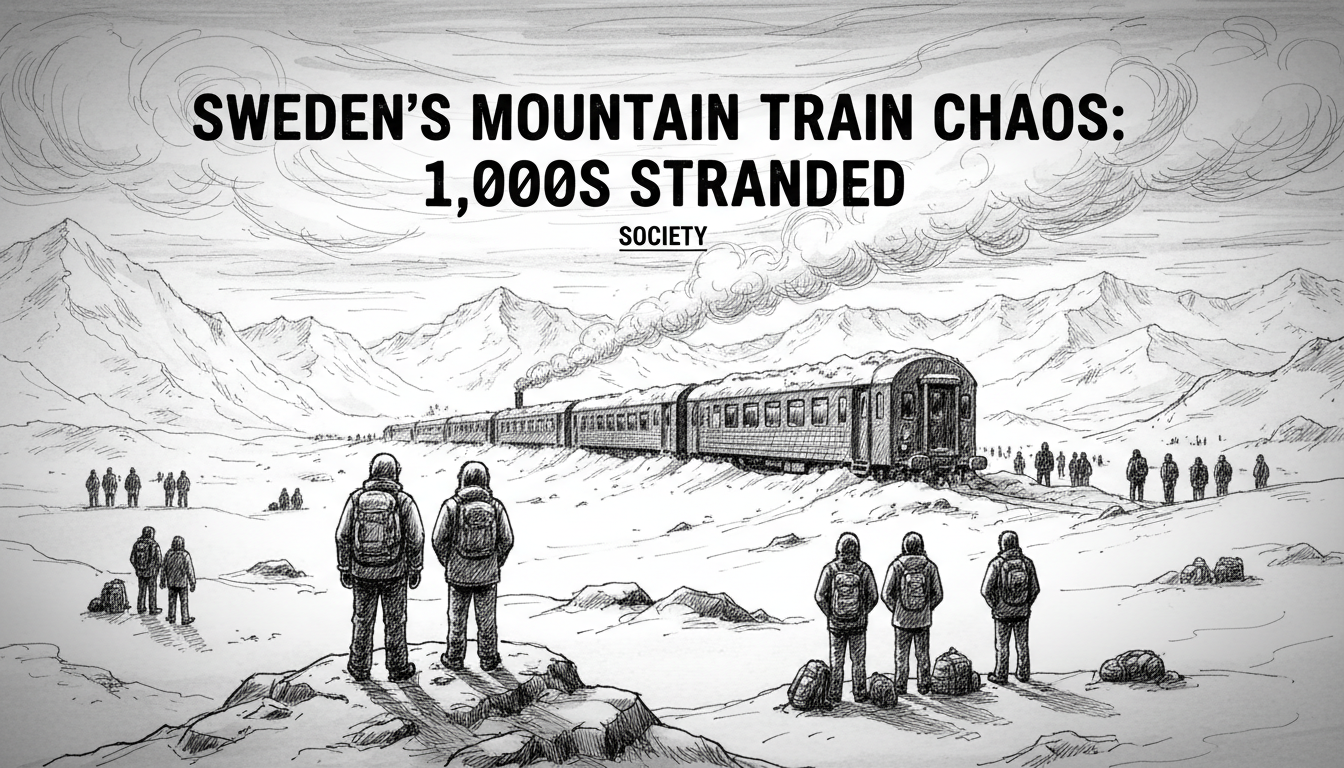
Sweden's winter travel plans have been thrown into chaos by severe weather. Powerful winds and heavy snowfall have forced the cancellation of fully booked 'fjälltåg' mountain trains during one of the busiest holiday weekends of the season. For thousands of Swedes heading north for skiing and winter adventures, there are few alternatives.
"It's terribly unfortunate," said Leila Fogelholm, press communicator at state-owned operator SJ. "But unfortunately, no one has power over the forces of nature." The cancellations affect services from Stockholm and Gothenburg to popular destinations like Åre, Sälen, and Vemdalen. These trains are the lifeblood of Sweden's winter tourism, often booked solid weeks in advance.
A Weekend of Disruption and Disappointment
The timing could not be worse. This weekend marks a major school break in many regions, a traditional period for families to head to the mountains. Stockholm Central Station, usually a hub of orderly travel, was filled with confusion. Groups in colorful ski jackets huddled around information boards, their large duffel bags packed with gear sitting idle.
"We saved for this trip all year," said Erik Lundström, standing with his two children. He had planned a week in Åre. "The train was our only realistic option. Driving in this weather is not safe, and flights are too expensive for a family of four. Now, we're just stuck." His story echoes through the station. The lack of viable alternatives—limited flight capacity and dangerous road conditions—leaves many with nowhere to go.
This disruption highlights a critical vulnerability in Sweden's transport network. The country's extensive 13,000 km railway is a point of pride, but its northern reaches are exposed. When storms hit the regions of Jämtland, Härjedalen, and Dalarna, the mainline connections can falter. Trafikverket, the Swedish Transport Administration, often must close lines for safety when high winds risk blowing debris onto tracks or causing snow drifts.
The Economic Ripple Effect
The impact extends far beyond frustrated travelers. Mountain resorts and local businesses in northern Sweden rely heavily on this seasonal influx. A lost weekend means empty hotel rooms, quiet restaurants, and unused ski lift passes. For small businesses in these communities, such disruptions can have a lasting financial effect.
"We see it immediately," said Anna-Karin Berg, who runs a rental cabin service in Funäsdalen. "When the trains stop, our phones start ringing with cancellations. The entire local economy is connected to those railway tracks. It's not just about tourism; it's about groceries being delivered, staff getting to work. The train is our main artery."
Experts point to a growing challenge. While winter storms are not new, their patterns may be shifting. Climate scientists suggest that a warming Arctic can contribute to more volatile and intense winter weather events in Scandinavia. This puts increased pressure on infrastructure built for a different climate norm.
Building Resilience for a New Climate
Dr. Henrik Malm, a transportation researcher at Lund University, argues for a dual approach. "We must adapt our existing infrastructure for more extreme weather," he explains. "This includes better snow fencing, more robust power systems for signaling, and improved forecasting integration with transport operators. But we also need to be honest about the limits of adaptation. We must invest in creating more flexible travel systems with better backup options."
Some suggest exploring solutions like reinforced, weather-protected sections of track in the most vulnerable corridors. Others emphasize the need for coordinated crisis management between SJ, Trafikverket, regional bus companies, and the tourism industry to create emergency travel plans. Currently, the burden falls heavily on the traveler to find a solution when services are canceled.
For SJ, the cancellations are a public relations and logistical headache. The company faces criticism every winter, yet its hands are often tied by safety regulations and the sheer power of Nordic storms. Their communication strategy is crucial. Providing timely, clear information and, where possible, alternative travel vouchers or refunds is essential to maintaining public trust.
A Cultural Tradition on Hold
Beyond the logistics and economics, there is a cultural dimension. The annual pilgrimage to the Swedish mountains is a cherished ritual for many families. It's a time for disconnecting, for embracing 'friluftsliv' (open-air life), and for passing on skiing traditions to the next generation. The disruption of this ritual feels like a personal loss.
In Stockholm's southern suburb of Årsta, the Persson family's living room is filled with packed bags and disappointment. "This is our week to be together, away from screens and schedules," says mother Lisa Persson. "The mountains are our recharge. Seeing my kids' faces when they heard the trip was off... that's the real cost of this storm."
This shared experience of weather-induced disruption is a unifying, if frustrating, aspect of life in Sweden. It sparks conversations about preparedness, national infrastructure investment, and the country's relationship with its formidable and beautiful natural environment.
Looking Down the Track
The immediate forecast suggests more snow and wind. Trafikverket and SJ are advising against all non-essential travel to the affected northern regions. For those already stranded, the advice is to contact their accommodation and travel insurer. The hope is for a swift improvement in conditions to allow services to resume for the remainder of the holiday week.
This weekend's chaos serves as a stark reminder. Sweden's efficient society operates in a delicate balance with nature. As climate patterns evolve, the nation's famous transportation system faces a continuous test. The question moving forward is not if storms will disrupt travel, but how Sweden will adapt its systems—and its expectations—to ensure that the journey to the winter wonderland remains a reliable part of Swedish life. The solution will require investment, innovation, and a recognition that in the Nordic region, nature always has the final say.