
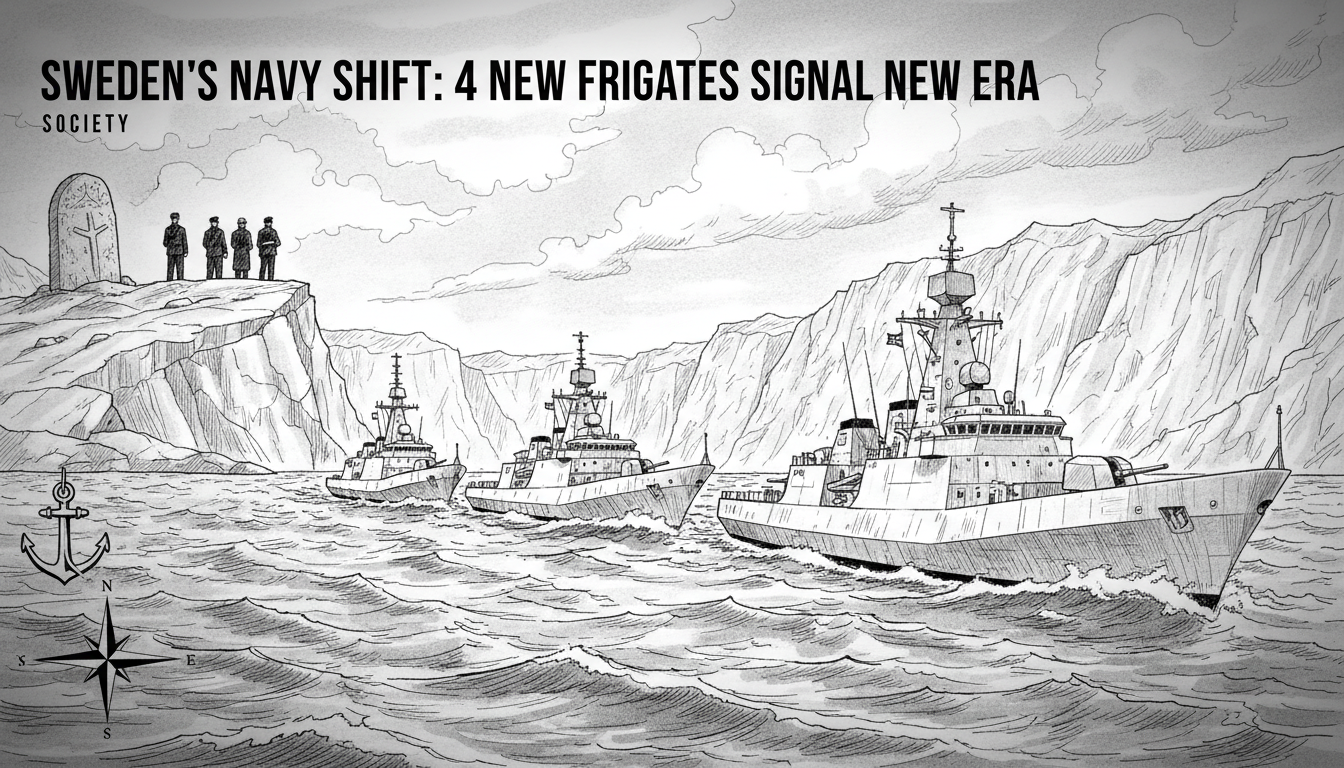
Sweden's military spending is funding a historic naval shift. For the first time in half a century, the nation is investing billions in large, modern warships. The Swedish Defence Materiel Administration (FMV) aims to sign a contract for four new frigates in the first half of next year. This move marks a dramatic departure from decades of coastal defense strategy. It signals Sweden's readiness to project power far beyond its archipelago.
"We are moving away from an earlier light fleet," says Linus Fast, a researcher at the Swedish Defence Research Agency (FOI). "Its sole main purpose was to stop a so-called invasion force expected to come against Swedish waters." The new frigates, measuring around 120 meters, are a different beast entirely. They will replace the Visby-class corvettes, which at 72 meters are Sweden's current largest warships. This is not just an upgrade in size. It is a fundamental change in national posture.
From Coastal Guardians to Open-Water Protectors
The Baltic Sea is no longer a placid backyard. Increased Russian naval and submarine activity has transformed Sweden's strategic calculus. The sleek, stealthy Visby corvettes were designed for a specific Cold War-era task. They were masters of the archipelago, using their low radar signature to ambush invaders in familiar coastal waters. The new frigates have a broader, more demanding mission. They are built for endurance and open-ocean operations. Their roles include anti-submarine warfare, acting as floating air defense platforms, and securing vital sea lanes. This capability is crucial for a nation dependent on maritime trade.
Sweden has not operated vessels this large since its last destroyers were decommissioned in the 1980s. The return to a blue-water capable navy reflects a Europe-wide trend. Nations are reassessing their security in the face of a more assertive Russia. "It's a paradigm shift for the Swedish navy," Fast notes. The frigates can be deployed on NATO missions far from Swedish territory. This interoperability is key for Sweden's new role within the alliance.
The Strategic Calculus Behind the Billions
The multi-billion kronor price tag for four frigates is a significant line item. It comes as Sweden works to raise its defense spending toward the NATO target of 2% of GDP. This investment is about more than just ships. It is about buying strategic flexibility. A frigate is a versatile command center. It can hunt submarines threatening critical infrastructure like seabed cables. It can provide a protective umbrella for other vessels. It can also serve as a visible symbol of commitment during international crises.
Defense analysts see this acquisition as moving Sweden toward an expeditionary naval capability. For decades, the focus was on territorial defense. The new frigates allow Sweden to protect its interests where they are challenged. This could mean ensuring freedom of navigation in the Baltic. It could also mean contributing to allied task forces in the Atlantic or the Mediterranean. The ships transform Sweden from a security consumer into a more capable security provider within NATO. This strengthens its political and military standing.
The Human Element: A New Generation of Sailors
Behind the steel and technology lies a human challenge. Operating a 120-meter frigate is complex. It requires a larger crew with different skills than a Visby corvette. The Swedish Navy must now recruit and train a new generation of sailors for this expanded mission. They will need expertise in areas like long-range air defense systems and advanced anti-submarine warfare. This represents a cultural shift within the navy itself. Sailors who trained for quick, stealthy strikes in home waters must now master sustained operations on the high seas.
The ships will also become floating pieces of Swedish territory. Their deployment far from home for months at a time tests morale and logistics. Life onboard a frigate on a NATO patrol in the North Atlantic is different from exercises in the Baltic. This new reality requires robust support systems. Families must adjust to longer deployments. Bases like Karlskrona and Muskö will need to adapt to service these larger vessels. The investment is not just in hardware, but in people and infrastructure.
What This Means for the Baltic Balance
The arrival of Swedish frigates will alter the naval dynamics of the Baltic Sea region. Alongside Germany's new frigates and the growing Polish navy, it contributes to a strengthened NATO presence. This collective capability acts as a deterrent. It complicates the calculations of any potential adversary. Sweden's frigates can work seamlessly with allied forces, sharing data and coordinating patrols. This network of allied navies makes the Baltic a more transparent and secure environment.
However, the procurement is not without its critics. Some question the opportunity cost. Could billions be better spent on air defense, cyber capabilities, or bolstering the army? Others worry about project delays and cost overruns, common in complex defense projects. The FMV faces pressure to deliver the ships on time and on budget. Their success is critical for Sweden's defense credibility. The strategic environment will not wait.
Sailing into an Uncertain Future
Sweden's decision to build large warships ends a 50-year chapter. It closes the book on a post-Cold War period of minimal naval ambition. The frigates are a physical manifestation of a more serious, engaged Sweden. They are tools for a world where security is no longer taken for granted. As these ships slide into the water in the coming years, they will carry a heavy responsibility. They must protect Sweden's shores, secure its trade, and uphold its alliances.
The sight of a Swedish frigate on the horizon will once again become familiar. But this time, its mission is global. It sails not just for Sweden, but as part of a broader defense of a rules-based order. The question is no longer if Sweden can defend its coast. It is how far it is willing to go to help defend the peace.