
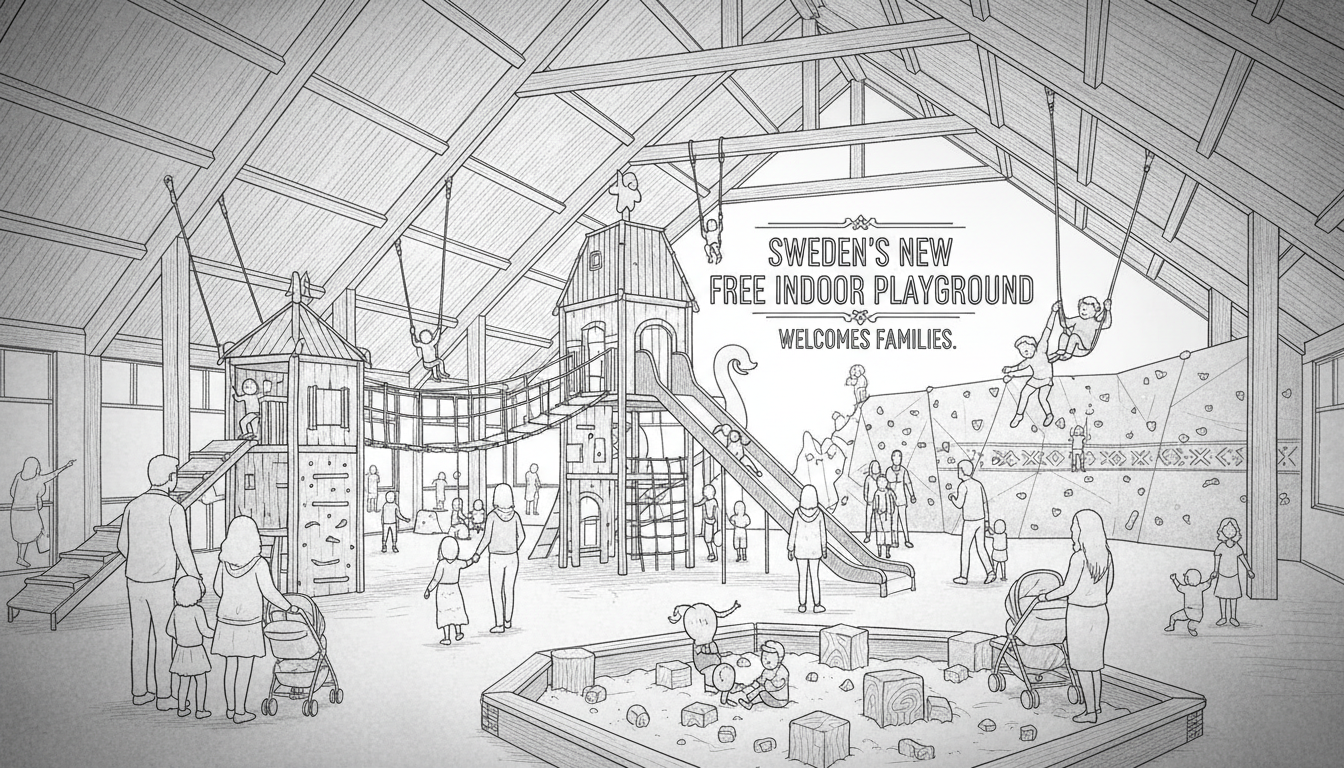
Stockholm families are embracing a new free indoor playground in the Bredden district, a welcome refuge from the city's long, dark winters. On a grey afternoon, the buzz inside Bredoria is a stark contrast to the quiet streets outside. Friends Alexandra Hill and Jannike Rivelsrud have brought their combined brood, seeking an escape from the dreary weather. Their youngest, just 11 months old, watch wide-eyed from their mothers' arms while the older children dive into the 300-square-meter fantasy world.
"I like everything. It's fun to go down the slide and pretend to travel in time," says four-year-old Eleonora Hill, her sentiment echoing the simple joy the space is designed to provide. Layna Sparri, market area manager for real estate firm Alecta Fastigheter, which is behind the project, notes the immediate demand. "Interest from families with children has been huge. It feels really great," Sparri says, observing the steady stream of visitors just weeks after opening.
A Winter Lifeline for Urban Families
This opening is more than just a new play space; it's a modern response to a classic Swedish challenge. For over half the year, the climate in Stockholm can be unforgiving for outdoor play. Free, accessible indoor playgrounds like Bredoria have become critical infrastructure for family well-being. They provide a vital space for physical activity, social development, and parental sanity when parks are wet, cold, or dark by mid-afternoon. In neighborhoods across the city, from Södermalm to Solna, similar facilities—often run by municipalities or, increasingly, through public-private partnerships—serve as community hubs.
"Play is not a luxury; it's a fundamental part of a child's development," explains Anna Lundgren, a child development researcher based in Uppsala. "It builds motor skills, teaches social negotiation and problem-solving, and fosters creativity. In an urban environment, where private garden space is limited and winters are long, spaces like this are essential. Making them free removes a significant barrier, ensuring all children, regardless of family income, have a safe, stimulating place to be active."
The Bredoria Model: Community as a Core Value
The launch of Bredoria reflects a growing trend where real estate developers and property owners are thinking beyond bricks and mortar. By investing in community amenities, they aim to add value for residents and create more attractive, livable districts. Alecta Fastigheter's involvement in Bredden fits this pattern. The playground is not an isolated attraction but part of creating a complete neighborhood where daily life is easier and more enjoyable for families.
This approach aligns with a broader Swedish societal value: that supporting families and children is a shared responsibility. It's seen in the widespread availability of subsidized preschools and generous parental leave. A free indoor playground is a logical extension of that support system, recognizing that the physical environment plays a key role in quality of life. For parents like Alexandra Hill, the value is immediate and practical. "It's a lifesaver on days like this," she says, gesturing to the gloomy weather outside the windows on Kanalvägen. "You get the children out of the apartment, they burn off energy, and they meet other kids. It's good for everyone."
Designing for Imagination and Inclusivity
Walking into Bredoria, the focus on imaginative play is clear. The design steers away from branded characters or overly prescriptive equipment. Instead, it offers open-ended structures—slides, climbing nets, soft play areas—that become whatever a child's mind decides. One moment a structure is a spaceship, the next it's a castle or a mountain to conquer. This design philosophy is intentional, encouraging cognitive development and self-directed play.
Accessibility is another key consideration. The free admission model is the most obvious form, but physical and sensory accessibility is increasingly part of the conversation in Swedish play spaces. While details on Bredoria's specific accessibility features are not outlined in the opening report, the trend nationally is toward more inclusive design. This means considering children with different mobility needs or sensory processing differences, ensuring communal spaces truly serve the entire community.
The Social Fabric of Shared Spaces
The significance of such a playground extends beyond the children. It creates a casual, neutral ground for parents and caregivers. In a city that can sometimes feel socially reserved, these spaces facilitate informal connections. Parents strike up conversations over coffee while watching their kids play, building local networks that can lead to playdates, shared babysitting, and a stronger sense of belonging. This social function is invaluable, particularly for new parents or families who have recently moved to the area.
"These are the places where communities are built, one slide and one coffee at a time," observes Markus Öberg, an urban planner specializing in family-friendly city design. "When we plan neighborhoods, we must plan for spontaneity and interaction. A free, warm, welcoming indoor space in the winter months does more for social cohesion than many formal initiatives. It supports the mental well-being of parents as much as the physical development of children."
Looking Ahead: A Template for Other Neighborhoods?
The enthusiastic early response to Bredoria raises a question: could this model be replicated in other Stockholm districts and across Sweden? With housing pressures high in urban areas, ensuring family-friendly amenities keep pace with new construction is a constant challenge. The partnership model demonstrated here—where a property owner funds and manages the amenity for public benefit—offers a potential blueprint.
The success will depend on sustained engagement and maintenance. Will the space remain inviting and safe? Will it adapt to the needs of the families who use it? For now, the sound of laughter and play is the best indicator. As Jannike Rivelsrud watches her children explore, she summarizes the simple, powerful appeal. "It's just easy. No planning, no tickets, no big cost. We saw the clouds and decided to come here. Every neighborhood should have a place like this." As another Swedish winter looms on the horizon, Bredoria stands ready, a 300-square-meter testament to the idea that supporting families is one of the smartest investments a community can make.