
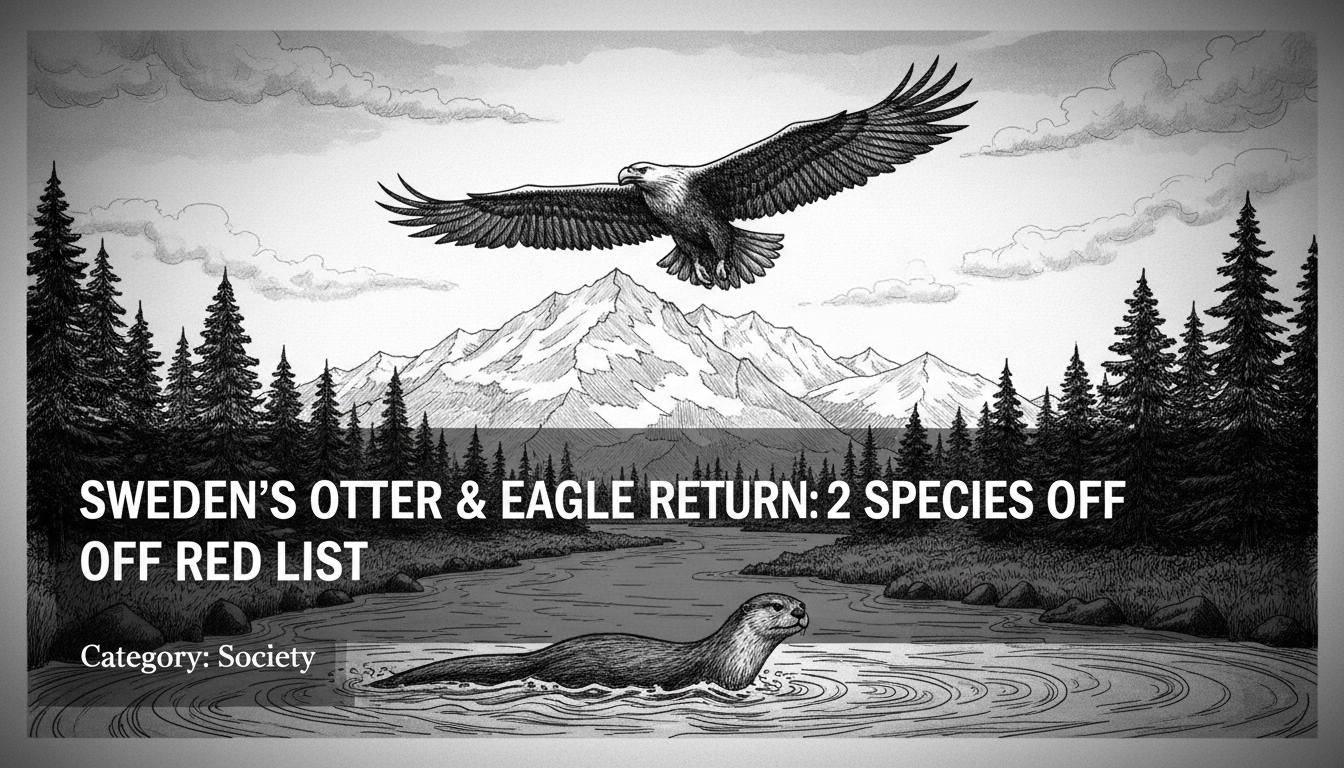
Sweden's endangered species list has delivered rare good news. The elusive otter and the majestic white-tailed eagle have officially recovered, moving off the national Red List after decades of conservation work. This success story, announced by the Swedish University of Agricultural Sciences (SLU), highlights a significant environmental win, yet it arrives with a cautionary note about persistent threats to other native wildlife.
For the first time in generations, the otter (uttern) is classified as 'Least Concern' or 'livskraftig' in Swedish. The white-tailed eagle (havsörnen) shares this triumphant status. Their removal from the list is the direct result of protective measures that began in the 1960s and 70s. "Actions initiated in the sixties and seventies have now finally led to the otter being classified as viable," said Henrik Thurfjell from SLU's Swedish Species Information Centre in a statement.
A Long Road Back from the Brink
The comeback was neither quick nor guaranteed. Both species were pushed to the edge of extinction in Sweden last century. Otters faced relentless hunting for their fur, loss of wetland habitats, and poisoning from industrial pollutants like PCBs that accumulated in their food chain. Their numbers plummeted. The white-tailed eagle suffered a similar fate, targeted by persecution and devastated by the insecticide DDT, which caused catastrophic eggshell thinning and reproductive failure.
Their recovery is a testament to long-term, science-based policy. Bans on harmful chemicals, strict hunting protections, and habitat restoration created the conditions for a slow return. Wildlife experts have tracked the otter's gradual recolonization of Swedish coastlines and waterways. The eagle's powerful silhouette is now a common sight soaring over archipelagos and lakes from Skåne to Norrland, a symbol of wilderness regained.
Success Shadows by New Concerns
Yet, the celebration is tempered. The official report notes lingering uncertainties, particularly for the otter. "High levels of environmental toxins have been measured in otters, and we still don't know what that means for the species' development," the assessment warns. Modern contaminants, including flame retardants and other persistent organic pollutants, continue to seep into ecosystems. Scientists are watching closely to see if these toxins will impact the otter's long-term health and reproduction, posing a silent threat to its hard-won recovery.
The updated Red List also sounds alarms for other species. The European eel remains 'Critically Endangered' in Swedish waters, its mysterious life cycle and migration routes disrupted by dams, pollution, and overfishing. In a worrying development, several fish species fundamental to Swedish culture and cuisine—Atlantic herring (sill), Atlantic salmon (lax), and brown trout (öring)—are new entries on the list, all assessed as 'Near Threatened.' Their decline points to broader issues in marine and freshwater health.
What the Red List Really Means
Compiled by SLU Artdabanken with around a hundred expert biologists, ecologists, and botanists, the Swedish Red List is more than a register of names. It is a critical health check for the nation's biodiversity. The list assesses the risk of extinction for individual species within Sweden's borders, using rigorous, internationally recognized criteria. It does not measure total population size, but the specific probability of a species disappearing from Swedish woods, waters, and mountains.
This makes it an essential tool for conservation priorities and policy. A listing triggers attention, funding, and legal protection. The delisting of the otter and eagle proves that the system can work, that concerted action can reverse decline. "It shows that when we identify a problem and implement consistent measures over a long period, we can actually save species," says a conservation biologist familiar with the process. "It's a powerful message against environmental despair."
The Human Role in Wildlife's Future
The twin stories of the otter and the eagle reflect a broader narrative in Swedish environmentalism: a capacity for course correction. Swedes have a deep-seated cultural connection to nature, encapsulated in the concept of 'allemansrätten'—the right of public access. The return of these iconic animals resonates on a personal level for many who fish, hike, or simply cherish the Scandinavian landscape.
However, this success demands vigilance, not complacency. The new threats to common fish like herring and salmon are perhaps more insidious because they affect species woven into the daily fabric of Swedish life. Their potential decline is a stark reminder that conservation is not just about saving rare creatures in remote places. It is about safeguarding the entire ecosystem that supports both wildlife and human society.
The updated Red List presents a clear, two-sided reality. It offers proof that environmental degradation can be halted. Yet, it simultaneously issues a new set of challenges. The question for Sweden now is whether the same determination that saved the otter and eagle can be mobilized to protect the foundations of its marine life and address the invisible threat of next-generation toxins. The list is a report card, and the grades are mixed. The work, it seems, is never truly finished.