
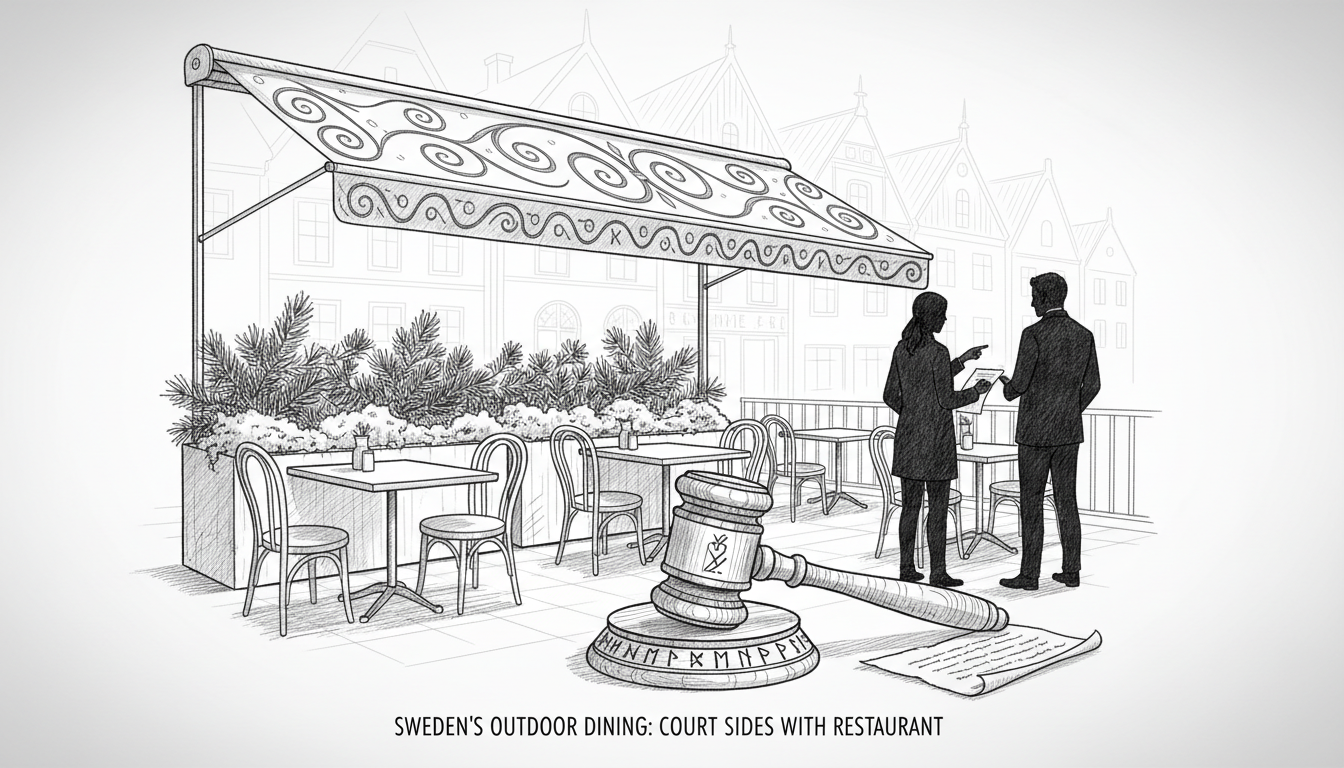
Sweden's strict alcohol regulations impact over 10,000 licensed venues, yet a Stockholm court just handed a surprising win to three Södermalm restaurateurs. Andreas Bergman, Simon Åhnberg, and Joel Söderbäck, owners of the popular spot Liebling im Park, can finally serve Aperol spritzes in their outdoor seating area. Their victory came after a year-long legal battle against the city's denial of their alcohol permit.
Last summer, the trio faced a now-infamous bureaucratic hurdle. A legal precedent required a permanent indoor serving area to obtain a permit for outdoor alcohol service. Their solution was ingenious: they built a small, cozy booth with seating for four people, attached to their main building. "We thought we’d found a smart way to follow both the letter and the spirit of the law," Bergman told me over a coffee in their now-vindicated park-side space. "It had a roof, walls, a door. To us, and to our guests, it was a room."
Stockholm City said no. Officials argued the 4-person booth was not a proper 'indoor local' and rejected the permit application. The decision threatened a crucial revenue stream for the restaurant, where the outdoor seating in Vita bergen park is a major draw during Stockholm's fleeting warm months. "The outdoor season is everything here," said co-owner Joel Söderbäck. "It’s not a luxury; for many restaurants, it's survival."
A Legal Battle Over Four Seats
The owners took the city to court. The case landed at the Kammarrätten in Stockholm, an administrative court of appeal. The central question was simple yet consequential: What legally defines an indoor space? The court's ruling was clear. The constructed booth, despite its modest size, qualified. It overturned the city's decision, granting Liebling im Park the right to serve alcohol in their outdoor area.
This ruling is more than a win for one restaurant. It clarifies a grey area in Swedish alcohol policy that has frustrated many bar and restaurant owners. For decades, Sweden has maintained some of Europe's strictest alcohol laws through the state monopoly Systembolaget and complex serving permits. These rules aim to reduce public health problems, but restaurateurs often argue they stifle hospitality culture and business innovation.
The Heart of Swedish Alcohol Law
To understand this fight, you need to understand Swedish society's unique relationship with alcohol. Permits (serveringstillstånd) are granted by municipalities and are highly specific. They dictate where, when, and how alcohol can be served. The distinction between indoor and outdoor spaces is critical because outdoor service is seen as having a higher risk of public disturbance.
"The law is designed for control," explains Karl Lallerstedt, a veteran Swedish restaurant industry consultant. "Historically, there's a deep-seated fear of unregulated public drinking. The question courts are now facing is whether that control should extend to a four-person booth in a park. This ruling suggests a shift towards pragmatism."
Lallerstedt notes that the pandemic accelerated outdoor dining culture in Stockholm. Cities like Copenhagen and Berlin have more liberal attitudes. This ruling might push Swedish cities to modernize their approach. "It's a signal," he says. "Municipalities need to support vibrant city life, not just regulate it into the ground."
A Victory for Södermalm's Vibe
The impact is immediately felt in the lively streets of Södermalm. Liebling im Park is a neighborhood staple, embodying the area's relaxed, creative spirit. Its victory is celebrated by regulars who enjoy its sun-dappled tables. "It’s about fairness and common sense," said a local artist enjoying a Wednesday fika. "This isn't a noisy pub. It's people having a glass of wine in the park. It's what makes Stockholm livable in summer."
The ruling could set a precedent. Other restaurants with similar setups—perhaps a covered terrace or a semi-permanent garden pavilion—may now reference this case. It offers a blueprint for how to navigate the permit system creatively and legally. However, it’s not a blanket approval. Each application is still judged individually by local officials.
What’s Next for Stockholm's Dining Scene?
The court's decision arrives as Stockholm's restaurant scene continues its post-pandemic recovery. Outdoor dining is no longer a seasonal bonus but an economic essential. This ruling may encourage more investment in creative, year-round outdoor spaces. Think heated verandas and enclosed garden rooms, all designed to meet the legal definition of ‘indoor’ while providing fresh air.
For the team at Liebling, the fight was worth it. "We believed in our idea," Simon Åhnberg said, looking out at the now-bustling tables. "We want to contribute to the city's culture, to create a meeting place. That’s hard to do if you’re constantly battling interpretations of a rulebook."
As the Swedish summer approaches, the sounds of clinking glasses will once again fill the air around Vita bergen. The story of the little booth that could is a reminder of the constant negotiation between Swedish regulation and the desire for a spontaneous, joyful urban life. It begs a larger question: In a society known for its rules, how much space is there for individual interpretation and simple joy? For now, at least, there's space for four people in a booth, and a whole terrace of guests celebrating outside.