
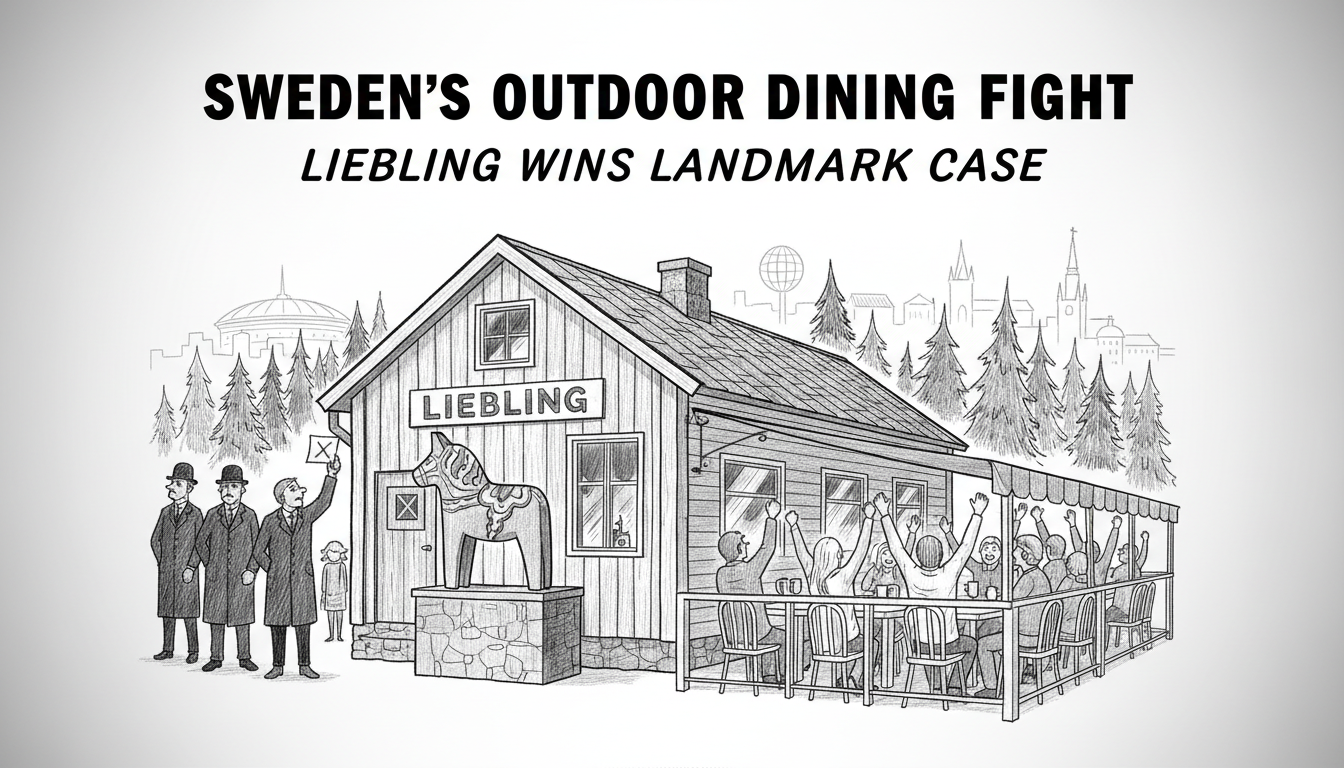
Sweden's strict alcohol licensing laws have been challenged by a small Stockholm restaurant in a landmark court decision. Liebling im Park, a popular spot in the trendy Södermalm district, has won its legal battle against the city after being denied a permit to serve alcohol at its outdoor seating. The Administrative Court of Appeal in Stockholm ruled in favor of the restaurant, overturning a municipal decision that threatened a common summer tradition across the country.
For owners Andreas Bergman, Simon Åhnberg, and Joel Söderbäck, the fight began last summer. A new legal interpretation from a court in Gothenburg had set a precedent, stating that alcohol serving permits could not be granted for areas with only outdoor seating. This created immediate problems for countless bars and restaurants preparing for the crucial summer season. "We were faced with a choice: give up or get creative," Bergman told me over a coffee in their small booth. "For us, and for our community here, giving up wasn't an option."
Their creative solution was to build a small, four-person booth adjacent to their outdoor tables. The idea was simple—this structure would technically qualify as an indoor premises, thus meeting the legal requirement for a serving permit. They applied to the city, hopeful their pragmatic fix would pass muster. The city's response was a firm no. Officials argued the booth, essentially a wooden structure with open sides, did not constitute a true indoor space under the law. The rejection left the owners with one path forward: the courts.
A Victory for Summer in the City
The ruling from Kammarrätten i Stockholm is more than a win for one restaurant. It's a signal about how Sweden's famous—and often infamous—regulations are interpreted. The court found that Liebling's constructed booth, in connection with the outdoor seating, satisfied the legal requirements. This decision allows the restaurant to finally serve beer and wine to guests enjoying the sun in Tantolunden park. "It's about the right to a normal hospitality business," said Simon Åhnberg. "People want to sit outside when the sun is shining. That shouldn't be an impossible bureaucratic hurdle."
Walking through Södermalm on a mild afternoon, the importance of outdoor seating is obvious. From the cobblestone streets of SoFo to the park views in Hornstull, chairs and tables spill onto sidewalks. This al fresco culture is a core part of Stockholm's social fabric, especially during the fleeting summer months. The legal uncertainty had cast a shadow over this tradition, leaving many business owners anxious. "Everyone was watching our case," Joel Söderbäck noted. "We weren't just fighting for Liebling. We were fighting for the idea of a vibrant, living city."
The High Stakes of Swedish Alcohol Laws
Sweden's relationship with alcohol is governed by the principle of harm reduction. The state monopoly Systembolaget controls retail sales, and restaurant serving permits (serveringstillstånd) are issued cautiously by municipalities. These rules aim to control consumption and prevent social problems. However, critics argue the system can be rigid, stifling small businesses and creating absurd situations. The question of what defines an "indoor" space versus an "outdoor" seating area had become one such gray zone.
Legal experts point to the potential for inconsistent application. "The law needs clarity," says Emma Lindgren, a Stockholm-based lawyer specializing in hospitality law. "One court says a patio requires a permanent roof and walls, another accepts a temporary structure. This inconsistency is difficult for businesses. The Liebling ruling provides some welcome guidance, but the underlying regulation could benefit from review." She explains that the economic impact is significant. For many restaurants, summer revenue from outdoor seating can determine their survival for the entire year.
The Human Cost of Bureaucracy
Behind the legal language are real people and community spaces. Liebling im Park is not a large corporate chain. It's a local gathering spot where neighbors meet for a drink after work, where families might share a pizza on a weekend. The owners invested their own time and money into building the booth, a tangible symbol of their commitment. "We built it ourselves," Andreas Bergman said, pointing to the sturdy wooden structure. "Every nail represented our hope to keep this place alive."
The conflict highlights a tension in modern Swedish society: the balance between regulation and practicality. Swedes deeply value an orderly society, but they also cherish personal freedom and the simple joy of a beer in the sunshine. The court's decision seems to lean toward the latter, acknowledging the spirit of the law rather than an overly strict interpretation. This is a relief for the entire restaurant sector, which operates on thin margins and faces constant challenges.
What the Ruling Means for Stockholm's Future
The immediate effect is clear: Liebling im Park can now operate its outdoor seating as intended. Patrons can enjoy a glass of wine while watching life unfold in the park. But the broader implications are still unfolding. Will other municipalities follow this interpretation? Will the city of Stockholm appeal the decision to a higher court? For now, a sense of celebration prevails in Södermalm.
This story is fundamentally about adaptation. It's about how small businesses navigate complex systems to serve their communities. The owners of Liebling didn't set out to challenge the state. They just wanted to run their restaurant. Their persistence, however, may have eased the path for others. As the Swedish summer finally arrives, with its long, light evenings, the sound of clinking glasses in outdoor courtyards will carry a little more freely. The fight for a seat in the sun, it seems, is one worth having.
Will this case lead to a wider reform of Sweden's outdoor seating rules, or is it just a temporary fix in a single neighborhood? As Stockholm's terraces fill up, the conversation about common sense and community continues, one small booth at a time.