
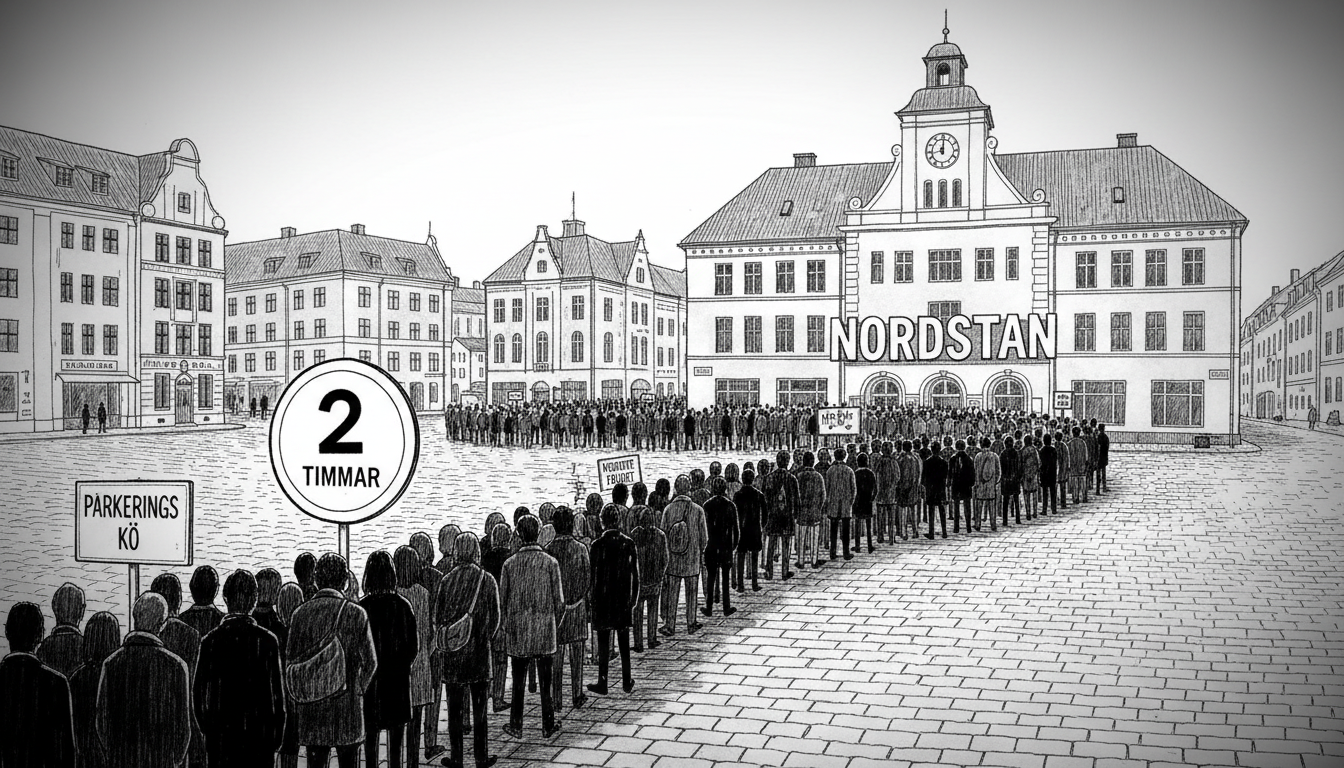
Sweden's second city, Gothenburg, faced major traffic gridlock this week. A sudden storm collided with peak shopping hours at the massive Nordstan center, creating a perfect storm of its own. David Pilar, 33, found himself trapped in a parking queue for over two hours, his car holding both his children and the family dog. His frustration highlights a growing tension in Swedish urban life between convenience, climate, and infrastructure.
"I have both children and the dog in the car," David said, describing the stressful Monday ordeal. His planned quick trip turned into a lengthy confinement. This wasn't just bad luck. It was a predictable crunch at one of Scandinavia's largest indoor malls, where approximately 8,000 parking spaces often prove insufficient. For Gothenburg's over 600,000 residents, such scenes are becoming a familiar, if unwelcome, feature of city life.
The Anatomy of a Gridlock
The chaos at Nordstan is a recurring story with a simple plot. A major weather event, like Monday's storm, disrupts the usual flow. People who might walk, cycle, or take the city's excellent trams opt for the perceived shelter of their cars. They all converge on the same central parking facilities. With 180 shops and 40 restaurants, Nordstan is a powerful magnet. The result is a bottleneck that can stretch for blocks, turning a shopping trip into a test of patience.
Traffic analysts point to this as a systemic issue, not a one-off. "It's a classic case of concentrated demand meeting limited supply, exacerbated by external factors," explains Lars Friman, a transport researcher based in Gothenburg. "Nordstan is a hub, but its access points are constrained by the city's historic layout and the surrounding canals. When everyone has the same idea at the same time—especially during bad weather—the system simply overloads."
A City Built for a Different Era
Gothenburg's charm is also its challenge. Its network of canals and cobbled streets in the city center was designed centuries before the automobile. While the city has invested heavily in public transport, including a renowned tram network, car culture remains strong. For families like David's, doing a large weekly shop or managing errands with young children and pets, the car often feels like the only viable option. The promise of convenient, undercover parking at Nordstan is a powerful lure.
This creates a paradox at the heart of modern Swedish urban planning. Cities are actively encouraging denser living and reduced car use for environmental reasons. Yet, major commercial centers like Nordstan, which serve a huge regional population, are designed around car access. The 8,000 parking spaces are a necessity for its economic model, but they also guarantee congestion at peak times. It's a difficult circle to square.
Beyond the Parking Garage: The Human Cost
The impact goes beyond mere inconvenience. Sitting in a motionless queue for two hours has real consequences. For parents with restless children, it's a stressful ordeal. For workers trying to get home, it's lost time. For the environment, it's idling engines pumping out unnecessary emissions in the very city center Sweden wants to make greener. The event also tests the famous Swedish social contract of lagom—moderation and fairness. The orderly queue dissolves into a tense competition for the next available space.
Local residents have learned to adapt, but not always happily. "I avoid Nordstan's garage after 3 pm or if there's a cloud in the sky," says Malin Berg, a mother of two who lives in the nearby Haga district. "I'll take the tram, even with the stroller, or use a smaller local supermarket. It's not worth the stress." Her strategy is one many adopt, but it requires planning and flexibility that visiting shoppers from the suburbs may not have.
Seeking Solutions in a Rain-Soaked City
What are the alternatives? Experts consistently point to improved public transport integration and better information for drivers. "Real-time data on parking availability, communicated via apps and road signs before drivers enter the congested zone, is crucial," says Friman. "We need to guide people to alternative parking or encourage them to switch modes before they get stuck."
There is also a push for more "park and ride" facilities on the city's outskirts, linked by frequent, reliable tram or bus services. The goal is to make the alternative more attractive than the stressful crawl into the center. For Nordstan itself, management has experimented with dynamic pricing—higher fees during peak hours—to spread demand, with mixed results. Some shoppers simply accept the higher cost as the price of convenience.
The Bigger Picture: Sweden's Urban Growing Pains
This parking chaos is a microcosm of a national conversation. Swedish cities are growing, and their infrastructure is straining. The debate touches on climate goals, quality of life, and commercial needs. Can a city successfully discourage car use while hosting mega-malls that rely on car traffic? How do you balance the needs of a young family doing a big shop with the city's environmental ambitions?
For now, the answer, on a rainy Monday at least, is a long, frustrating wait. David's two-hour queue is a symptom of these broader tensions. It's a very first-world problem, but one that resonates deeply in a society built on efficiency and consensus. The storm passed, and the traffic eventually cleared. But the questions it raised for Gothenburg, and for Sweden's vision of sustainable urban living, are still very much present. The next time the clouds gather over the city, will drivers be any better off, or are we destined to repeat the same stressful cycle?