
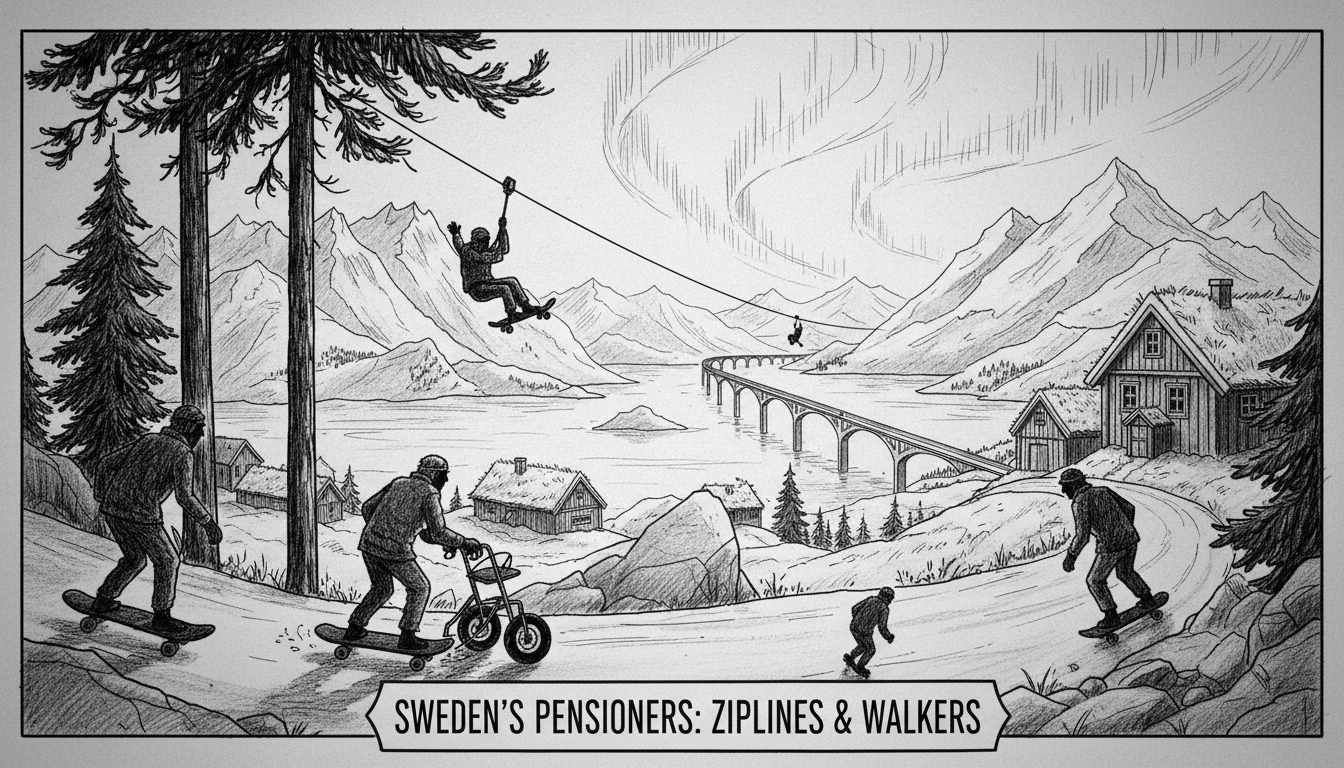
Sweden's innovative approach to active aging is taking a radical turn in Borlänge. Pensioners are grabbing skateboards, aided by ziplines and walkers, in a groundbreaking initiative to fight loneliness and stay fit. Maja Eriksson, 78, is the oldest participant on the day we visit. 'It's fun and exciting,' she says with a grin, standing confidently in the indoor skatepark.
This isn't a one-off stunt. It's part of a growing movement. Last summer, skateboarding was featured in a project in Säter where retirees tried different sports to make friends and get moving. The skateboarding element proved so popular it has now moved indoors for the winter, finding a home at the skate hall in Borlänge. Here, a special zipline helps beginners, and other assistive devices are on hand to ensure safety and build confidence.
'There is a great interest, they are curious,' says Niklas Persson from Sweden's Skateboard Federation, which is supporting the project. He watches as the group of seniors, some in their 60s and 70s, tentatively push off, their expressions shifting from concentration to pure joy. This scene in central Sweden represents a bold new chapter in Nordic elder care, where the goal is vitality, not just care.
A Nation Grays, and Adapts
Sweden is getting older. In 2023, about one in five Swedes was 65 or older. With one of the world's highest life expectancies, this demographic shift is profound. Municipalities and organizations are under pressure to rethink what later life can look like. The traditional model of elderly care is being supplemented—and sometimes challenged—by a focus on 'active aging.' This philosophy prioritizes social connection and physical activity as keys to health.
The Borlänge skateboarding project fits perfectly into this new paradigm. It directly tackles two major issues for seniors: social isolation and sedentary lifestyles. By choosing an activity typically associated with youth and rebellion, it also cleverly dismantles ageist stereotypes. It sends a powerful message that curiosity and a willingness to try new things don't have an expiration date.
More Than Just a Thrill
So, what's the actual benefit of putting a pensioner on a skateboard? Experts in gerontology and public health point to a powerful combination of physical and mental gains. 'Novel physical activities that are also socially engaging are incredibly valuable,' explains a Stockholm-based gerontologist we spoke to. 'They promote balance, coordination, and strength, which are crucial for fall prevention. Perhaps more importantly, they stimulate the brain, build community, and foster a sense of playful achievement.'
The social component is intentional. The sessions are group activities. Participants cheer each other on, share nervous laughs, and celebrate small victories together. For many, the primary draw might not be the skateboard itself, but the chance to be part of a group trying something extraordinary. In a country where loneliness among the elderly is a recognized public health concern, creating these bonds is as important as the physical exercise.
The Practicalities of Pensioner Skateboarding
How does it work logistically? Safety is the foremost concern. The indoor location in Borlänge provides a controlled, weather-proof environment. The specially installed zipline is a game-changer. It allows participants to hold on to a moving handle, providing stability and speed control as they roll gently down a mild incline. It removes the fear of pushing off and balancing unaided from a complete standstill.
Other adaptations are simpler but equally effective. Some participants use their own rollators (walkers) for initial support. Helmets and pads are, of course, mandatory. The instructors from the Skateboard Federation focus on foundational skills: finding a comfortable stance, learning to foot-brake, and most crucially, how to fall safely. The goal isn't to perform tricks, but to experience the glide and build confidence.
Maja Eriksson's participation is a testament to the program's accessibility. At 78, she embodies the spirit of the initiative. Her willingness to step so far outside a conventional comfort zone is inspiring. It challenges the very notion of what activities are 'age-appropriate' and suggests that with the right support, horizons can keep expanding.
A Nordic Model for the Future?
This initiative in Dalarna is part of a broader Swedish and Nordic trend of reimagining senior life. From senior-friendly tech startups in Stockholm's Södermalm district to intergenerational housing projects in Malmö, the region is experimenting. The underlying principle is respect for individual autonomy and a commitment to lifelong engagement.
Could pensioner skateboarding become a common sight? Niklas Persson from the Skateboard Federation sees potential. 'The curiosity is there,' he reiterates. The success of the pilot in Säter and its continuation in Borlänge suggests a real appetite for unconventional activities. The key to scaling it up will be ensuring accessible facilities and trained instructors who can bridge the gap between skate culture and senior needs.
Other municipalities in Sweden and across the Nordics will be watching. In a time of strained public budgets, cost-effective interventions that promote health and happiness are gold dust. An activity that combines physical therapy, social therapy, and pure fun in one session is a compelling proposition.
The Ripple Effect of Trying Something New
The impact of this project likely extends beyond the skatepark walls. Participants carry the experience home. The story of 'the day I went skateboarding' becomes a point of pride with family and friends. It can shift self-perception, replacing narratives of limitation with ones of capability and adventure.
It also changes how younger generations view aging. When grandchildren see their grandparents helmeted and rolling, it breaks down barriers. It fosters a shared language of experience, even if the grandkids are doing kickflips while grandma masters the zipline descent. This cultural shift—seeing old age as a phase of continued growth and experimentation—is perhaps the most significant outcome.
Sweden's pensioner skateboarders are more than a novelty. They are pioneers on the front lines of demographic change. They are testing the boundaries of active aging with courage and a smile. Their wheels rolling across the skate hall floor in Borlänge make a quiet but powerful statement: life doesn't narrow as you age unless you let it. With a little support, a zipline, and an open mind, it can roll on in wonderfully unexpected directions.
As Maja and her peers pack up their gear, the buzz in the hall is palpable. It's the sound of accomplishment and shared laughter. They came as individuals, perhaps feeling their age. They leave as skateboarders, part of a unique community, feeling decidedly young at heart. In the end, that feeling might be the most powerful health intervention of all.