
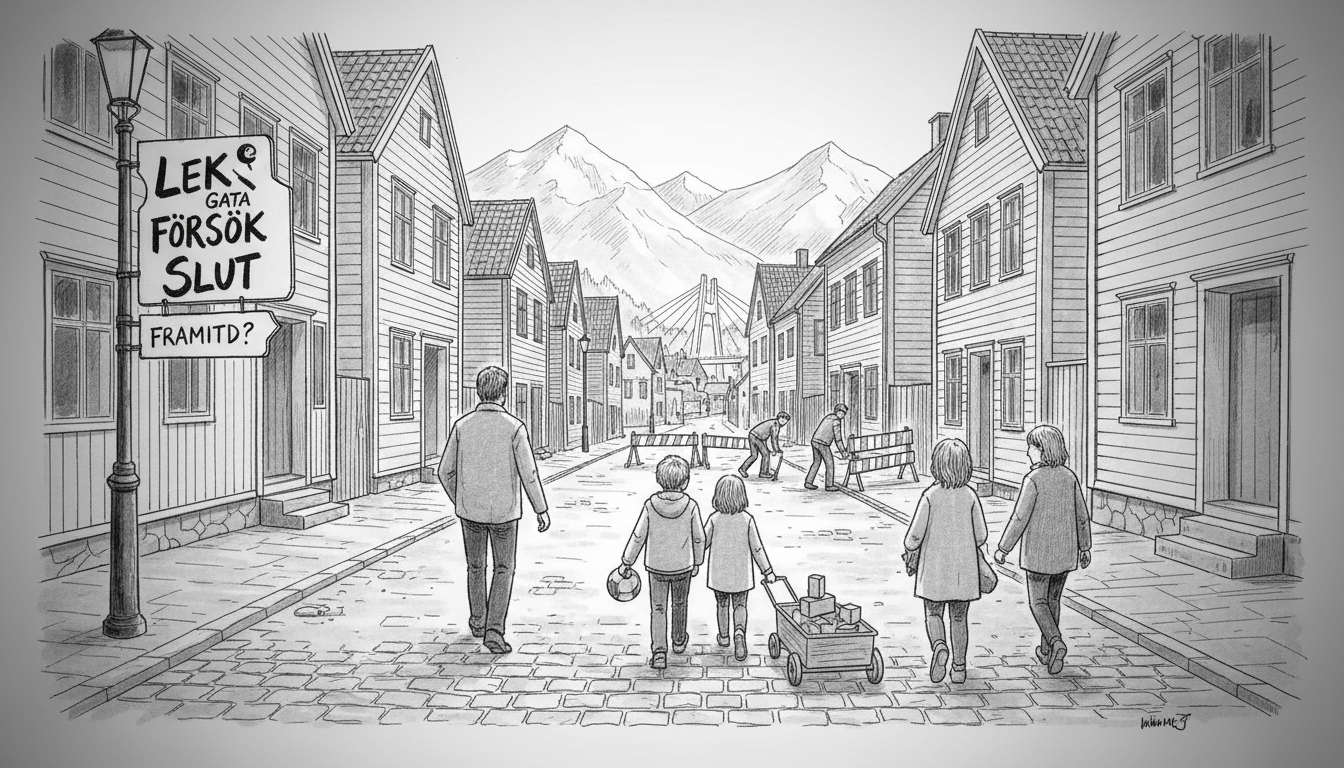
Sweden's latest traffic safety experiment has quietly packed up. The temporary 'lekgata' or play street on Vackra vägen in Stockholm is now gone. Its removal this week marks the end of a planned three-month trial. The initiative aimed to make the route safer for children walking to Ängskolan school. Local Green Party politician Edit Holmqvist confirmed the closure was always part of the plan. 'The semester is almost over and we must take the chance before the snow comes,' Holmqvist said in a statement. The disappearance of the colorful street markings and traffic barriers leaves residents wondering. Was it a success? Will it return? The story of this small street reflects a bigger Swedish debate. How do we balance urban mobility with creating child-friendly cities?
A Temporary Haven for Play
For one autumn, Vackra vägen transformed. It became a calmer, safer corridor during key hours. The concept of a 'lekgata' is not new in Sweden. It is a traffic-calming tool used in various municipalities. The goal is simple: reclaim street space from cars for people, especially children. On Vackra vägen, this meant physical changes to slow or restrict traffic. The aim was to protect students from Ängskolan. It also offered a space for informal play and socializing on the way to and from school. For three months, parents watched their children navigate the street with less anxiety. The experiment created a small pocket of urban life where kids had priority. Now, with the onset of winter, that pocket has closed.
The Delicate Politics of Street Space
The Vackra vägen project was far from universally loved. Such initiatives rarely are. Redistributing precious street space in a busy city always creates friction. 'Lekgator can be controversial,' says Lars Bengtsson, a Stockholm-based urban planner I spoke with. 'Drivers see them as an inconvenience. Residents on adjacent streets might fear displaced traffic. But parents and schools often champion them.' This tension played out in local discussions. Supporters argued the safety of children is paramount. Critics questioned the efficacy and pointed to potential congestion elsewhere. The Green Party-led push for this trial was a political statement. It placed children's welfare and active transportation at the heart of urban policy, if only temporarily. The controlled, time-limited nature of the experiment was likely a political compromise. It allowed testing without permanent change.
Measuring Success Beyond Traffic Counts
So, did it work? According to Edit Holmqvist, the street became safer. But safety is a complex measure. It's not just about accident statistics, which may not shift dramatically in a short trial. It's about perceived safety. 'A successful lekgata changes behavior,' explains Karin Ahlström, a researcher in urban childhood studies. 'You see more children walking or cycling alone. You see them stopping to chat or play. That indicates they feel the environment belongs to them.' On Vackra vägen, the true test may come next spring. If parents who grew accustomed to the calmer street now hesitate to let their children walk, it will signal a loss. The experiment's legacy will be measured in community feeling, not just traffic data.
The Swedish Model of Urban Experimentation
This story is classic Stockholm. The city frequently pilots small-scale urban interventions. Think of summer street closures, pop-up parks, or temporary bicycle lanes. The approach is pragmatic. Test an idea, gather data, listen to feedback, then decide on permanence. The Vackra vägen lekgata fits this pattern perfectly. It was a low-cost, high-visibility test of a policy idea. The coming months will involve evaluation by the district council. Officials will assess feedback from schools, residents, and traffic monitoring. This evidence-based, trial-oriented approach is a hallmark of Swedish urban planning. It avoids large, irreversible commitments based solely on theory.
A Look to the Future: Snow and Beyond
Holmqvist's mention of the snow is practical. Winter maintenance is a major factor in Stockholm. Plowing schedules and salt spreading need clear, consistent street layouts. A temporary lekgata with barriers becomes a liability in a snowstorm. Its removal now is logical from a municipal operations standpoint. But the question hangs in the cold air: what happens after the snow melts? Will the colorful markings reappear? The answer depends on the political winds and the evaluated success. The experiment has planted a seed. Parents have experienced an alternative. Children have tasted a bit more freedom. This creates a constituency for change. The debate won't end with the storage of the traffic barriers.
The Bigger Picture for Swedish Cities
The fate of one small play street in Stockholm speaks to a national conversation. Cities across Sweden are grappling with similar issues. How do we design neighborhoods for people of all ages? The trend is moving away from car-centric planning. Concepts like 'livable streets' and the 'one-minute city' are gaining traction. In this context, lekgator are one tool among many. They sit alongside expanded sidewalks, lower speed limits, and better cycling infrastructure. The challenge is integration. A single play street can feel like an island. For a real shift, these safe zones need to connect into a network. They must link homes, schools, parks, and libraries. The experiment on Vackra vägen was a single node. Its true value may be as a learning case for building a larger, safer web for Sweden's children.
The barriers are gone. The street has returned to its previous state. But the memory of a safer autumn remains. For the students of Ängskolan, the route to school now feels different. Perhaps a little less theirs. The final report on this experiment will be written not just in council documents, but in the habits of families. Will more children return to being driven? Or will the community's appetite for a permanent change have grown? In Swedish urban planning, winter is often a pause for reflection. Come spring, we'll see what ideas have taken root.