
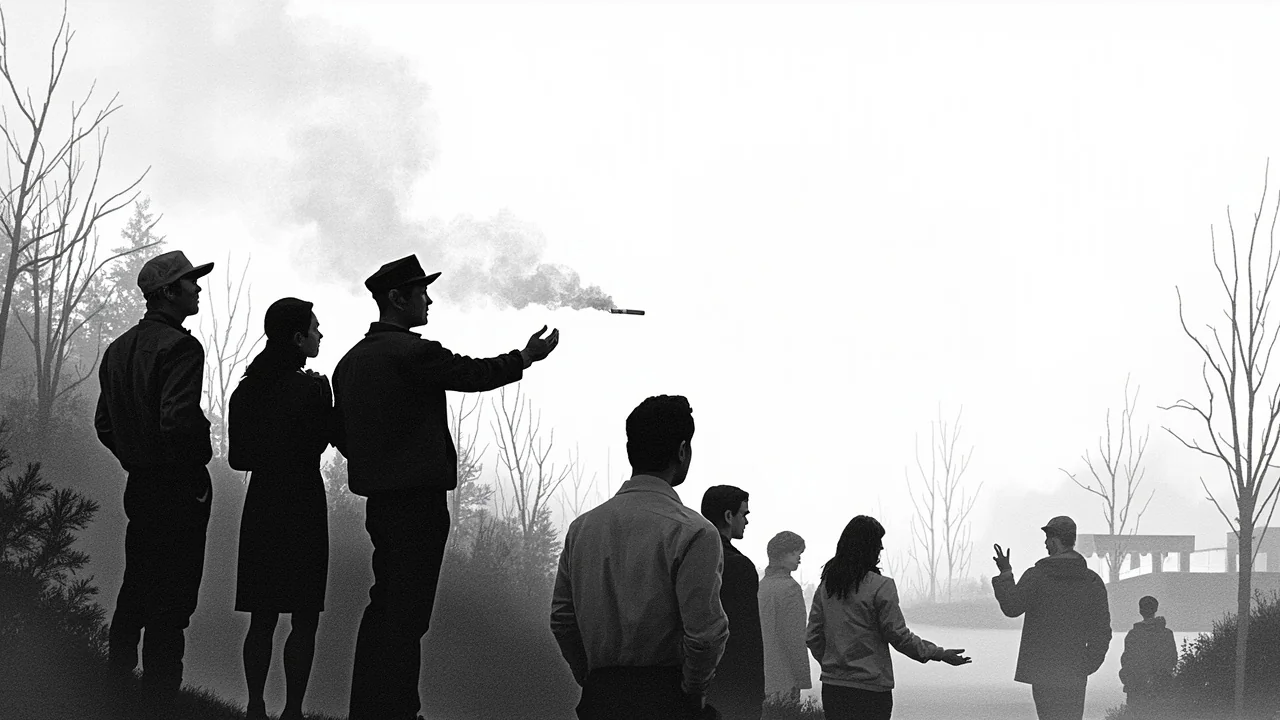
Swedish nicotine replacement sales surged 21% in January, only to plummet 15% by February. This annual cycle reveals a national struggle with New Year's resolutions. In Luleå, a city where winter darkness lasts for months, the battle to quit tobacco is both personal and cultural. Bengt Sahlin, a taxi driver, exemplifies the challenge. He starts his day with a cigarette. 'Then that has to be enough. You drive a taxi, so you can't smoke in the car,' he says. His story is a common one across Sweden, where the ritual of 'fika'—a coffee break—often pairs with a smoke or a 'snus' portion. The data from pharmacy chain Kronans Apotek paints a clear, cyclical picture. Every January, Swedes stock up on patches, gum, and lozenges. Their intentions are strong, fueled by holiday reflections and the 'nyårslöfte'—the New Year's promise. But by February, reality sets in. The resolve weakens. The old habits, deeply woven into social routines and work breaks, creep back. This isn't just about willpower. It's about culture, environment, and the very Swedish relationship with nicotine.
The January Promise and February Reality
The pattern is almost predictable. As Christmas glitter is packed away and the deep cold of January settles over cities like Stockholm and Luleå, Swedes turn their minds to self-improvement. Quitting smoking or 'snusing' tops many lists. Pharmacies see a significant rush. 'It's our busiest period for these products,' says a Stockholm-based pharmacist. 'People are motivated. They've spent time with family, maybe felt the health effects of the season, and want a fresh start.' The 21% sales jump is a testament to that collective hope. But February in Sweden is a tough month. The holidays are a distant memory. The weather is often at its worst—dark, icy, and grim. The psychological slump, sometimes called 'vinterkräksjukan' or winter blues, hits hard. This is when the 15% drop occurs. The initial enthusiasm fades against the daily grind. For many, like Bengt, tobacco is a structured part of their day—a reward, a pause, a moment of solace in a demanding job.
Beyond Willpower: Snus, Society, and Stress
To understand this cycle, you must understand Sweden's unique nicotine landscape. Sweden has one of the lowest smoking rates in Europe, but one of the highest usages of 'snus'—a moist tobacco pouch placed under the lip. Snus is a cultural institution, used by construction workers in Östermalm and executives in Kungsgatan alike. It's discreet, doesn't produce smoke, and is often seen as a 'healthier' alternative to cigarettes, though it carries its own risks. This creates a complex quitting dynamic. Many aim to quit snus, not cigarettes. The rituals are different, but the addiction is the same. Social pressure differs too; smoking is increasingly marginalized, while snus use remains widely accepted in many circles. Stress is another major factor. The Swedish model of efficiency and high productivity can be intense. The tobacco break, whether for a smoke or a snus, is a sanctioned mental escape. 'It's my five minutes of peace,' says Karin, a nurse in Luleå who has tried to quit snus three times. 'When I try to stop, I don't know what to do with my hands or that little break in my mind. I just feel more stressed.'
Local Voices from a Northern City
Luleå, in the far north, provides a poignant microcosm. Winters here are extreme, with only a few hours of dim light. Outdoor activities are limited, and social life often moves indoors. Tobacco use can feel like a companion against the isolation. 'There's not much to do but work and go home in the dark,' says Mikael, a local IT worker. 'The 'snus' can is always there.' Bengt the taxi driver's experience is telling. His job is solitary and sedentary. The cigarette at the start of his shift is a ritual that marks the beginning of work. The prohibition of smoking in the car acts as an external control, but it doesn't address the craving itself. It merely postpones it. These local stories highlight that quitting is not a single decision but a daily re-negotiation with one's environment, habits, and coping mechanisms. The national sales data is the aggregate of thousands of these personal battles, many of which are temporarily won in January and lost by February.
What Does Success Really Look Like?
Public health experts in Sweden view the data with a mix of concern and understanding. 'The January spike shows people want to change,' says a behavioral researcher at Stockholm University. 'The February drop shows our systems for supporting that change are inadequate. We sell them the patch, but not the plan.' Success may need to be redefined. The 'quit or fail' binary might be part of the problem. Reducing consumption, switching to less harmful alternatives as a step, or even just extending the time between uses could be framed as victories. The Swedish approach to harm reduction for other substances is progressive; some argue it should be applied more thoughtfully to nicotine. Furthermore, the cultural aspect is critical. If the 'fika' break is synonymous with a smoke, could there be a conscious movement to decouple them? Some Stockholm cafes are already promoting 'nikotinfri fika' zones. The goal is to make the healthy choice the easy, and socially reinforced, choice.
A Look Ahead: Breaking the Cycle
As next January approaches, the cycle will likely repeat. But awareness of the pattern is the first step to breaking it. For the individual Swede, it might mean setting a quit date in March or April, not January. It might mean seeking group support through apps or local 'hälsocentral' clinics, which often offer quitting programs. For society, it means looking beyond the pharmacy counter. It involves creating supportive environments in workplaces and social settings. It means acknowledging the role of mental health and seasonal affective disorder in this struggle. The story of Sweden's nicotine sales is more than a retail statistic. It's an annual snapshot of national resolve and human vulnerability. It's about Bengt in his taxi in Luleå, trying to make it through his shift without that second cigarette. It's about the powerful, pervasive hold of ritual in our daily lives. The question remains: can understanding this rhythm help Swedes, and others, finally change the tune? The hope is that with greater cultural and personal insight, the February decline will one year become less steep, until the line finally flattens for good.