
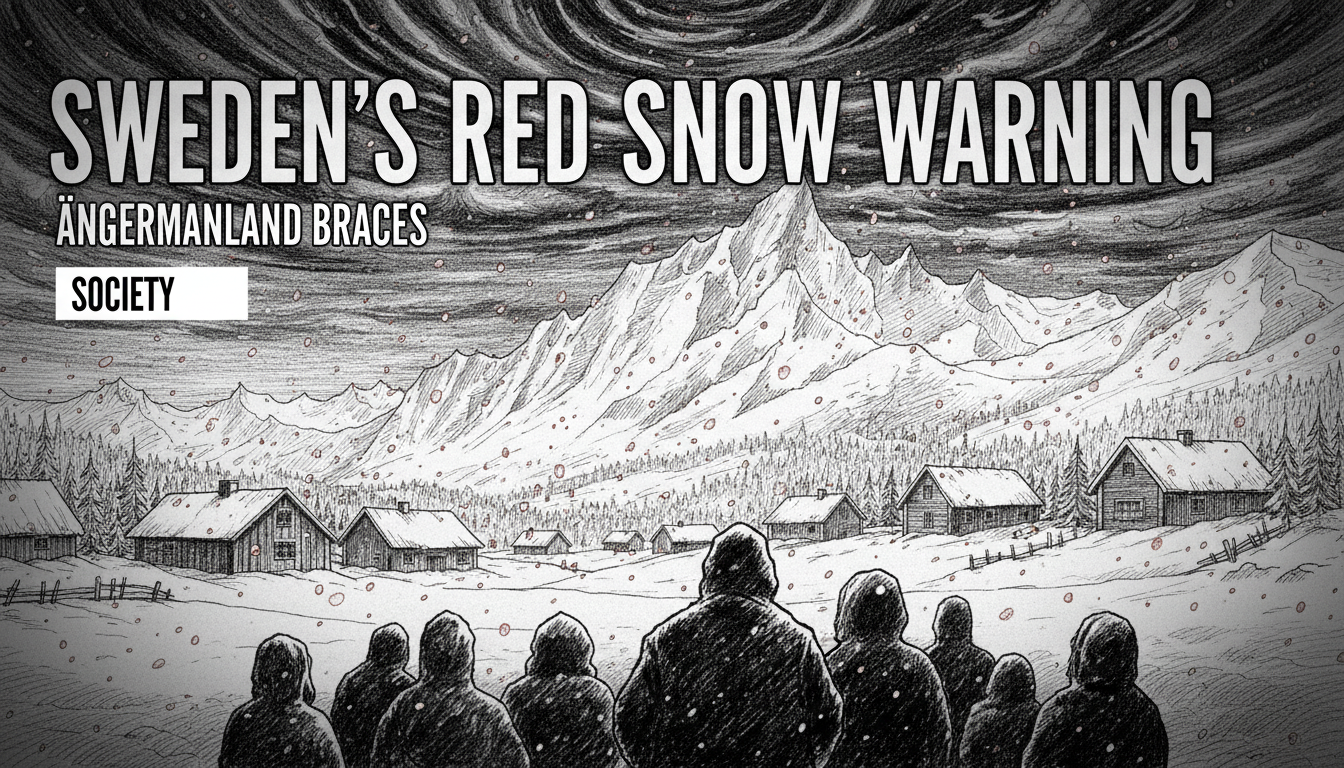
Swedish authorities have issued a rare red-level snow warning for the northern region of Ångermanland, signaling extreme danger and potential chaos. The alert, the highest possible for snowfall, warns of intense blizzards, zero visibility, and accumulations that could paralyze communities. For residents of towns like Örnsköldsvik and Sollefteå, this isn't just a weather forecast—it’s a directive to batten down the hatches and prepare for isolation. The warning highlights the raw power of Nordic winters and tests the resilience of societies built in some of Europe's most demanding climates.
A Region on High Alert
Ångermanland, stretching along the Gulf of Bothnia, is no stranger to heavy snow. Its forests and coastal villages are accustomed to long, dark winters. But a red warning changes everything. It means expected snowfall of over 50 centimeters within 24 hours, coupled with hurricane-force winds. Roads become impassable. Power lines falter under the weight of snow and ice. Emergency services shift to crisis mode, prioritizing only the most critical calls. Local municipalities have activated their severe weather plans, urging people to stock up on essentials, check on elderly neighbors, and avoid all non-essential travel. Schools and many public services are preemptively closed. The sense of community, so vital in Swedish culture, becomes the first line of defense.
The Human Stories Behind the Headlines
In a small village outside Kramfors, Anna Lundström is filling her pantry. "We learned from the storm of 2012," she says, referring to a historic snowfall that cut off her farm for days. "Now we always have extra food, fuel for the generator, and books to read. It’s a strange feeling—knowing the storm is coming, preparing for the silence it brings." Her experience echoes across the region. For older Swedes, it’s a reminder of winters past, before reliable plows and digital connectivity. For newer immigrants, particularly those from warmer climates, it can be a terrifying introduction to Swedish society's seasonal rhythms. Community Facebook groups are buzzing with offers to share supplies and check-in codes. This collective preparedness, the Swedish concept of ‘beredskap’, is a cultural cornerstone being put to the ultimate test.
Infrastructure Under Siege
The warning places immense strain on Sweden's infrastructure. The main coastal E4 highway, a vital artery for freight and travel, risks closure. Railway operator Trafikverket has crews on standby, but preemptive cancellations are likely. The region's dependency on this infrastructure reveals its vulnerability. Remote villages can be cut off for days if a single road is blocked. Power companies are bracing for widespread outages as heavy, wet snow brings down lines. While Swedish homes are generally well-insulated, prolonged power loss in sub-zero temperatures becomes dangerous quickly. This event is a stark case study in the challenges of maintaining modern society in an extreme environment. It forces a conversation about investment in resilient infrastructure, a topic gaining urgency amid climate change, which scientists say may make such extreme precipitation events more frequent.
Cultural Context: Living with Nature's Extremes
This crisis is more than a weather report; it’s a window into the Swedish relationship with nature. The concept of ‘allemansrätten’—the right of public access—emphasizes freedom and responsibility in the outdoors. But a red warning temporarily suspends that freedom. It’s a societal agreement to retreat, respect the danger, and prioritize safety. Seasonal affective disorder is a common topic in Swedish lifestyle discussions, and a storm of this magnitude amplifies those mental health challenges. The darkness, the isolation, the constant shoveling—it weighs on people. Yet, there’s also a shared, almost stoic acceptance. As Stockholm enjoys a milder winter, events in Ångermanland remind the nation of its geographic and climatic diversity. The cozy ‘mys’ culture of candles and warm drinks is a direct response to the harshness outside.
Analysis: What a Red Warning Really Means
A red warning is not issued lightly. Sweden’s meteorological institute bases it on a combination of volume, wind speed, and predicted impact. The decision carries significant economic weight, triggering business closures and mobilizing costly emergency resources. From an expert perspective, this event fits a pattern of increasingly volatile winter weather. While colder regions may see more intense snowfall, southern Sweden increasingly experiences winter rain and ice. This divergence creates complex national challenges. The warning also tests Sweden’s famed digital governance. Authorities rely on apps and websites to disseminate information, potentially leaving behind those less digitally fluent. The response in Ångermanland will be studied for how well coordination works between national agencies, county administrations, and local volunteers—a key aspect of Swedish societal trust.
Looking Beyond the Storm
As the clouds gather over the Ångerman River valley, the region holds its breath. The coming days will measure more than snow depth; they will measure community strength, system preparedness, and individual fortitude. When the plows finally clear the roads, the story won’t end. Discussions will turn to climate adaptation, rural sustainability, and the social contract in isolated areas. For international observers, it’s a lesson in how a highly developed nation confronts a primal force of nature. The people of Ångermanland will endure, as they always have. But each red warning asks a pressing question: As the climate shifts, how much more can these northern communities be expected to bear? The silence after the storm is when the most important conversations begin.