
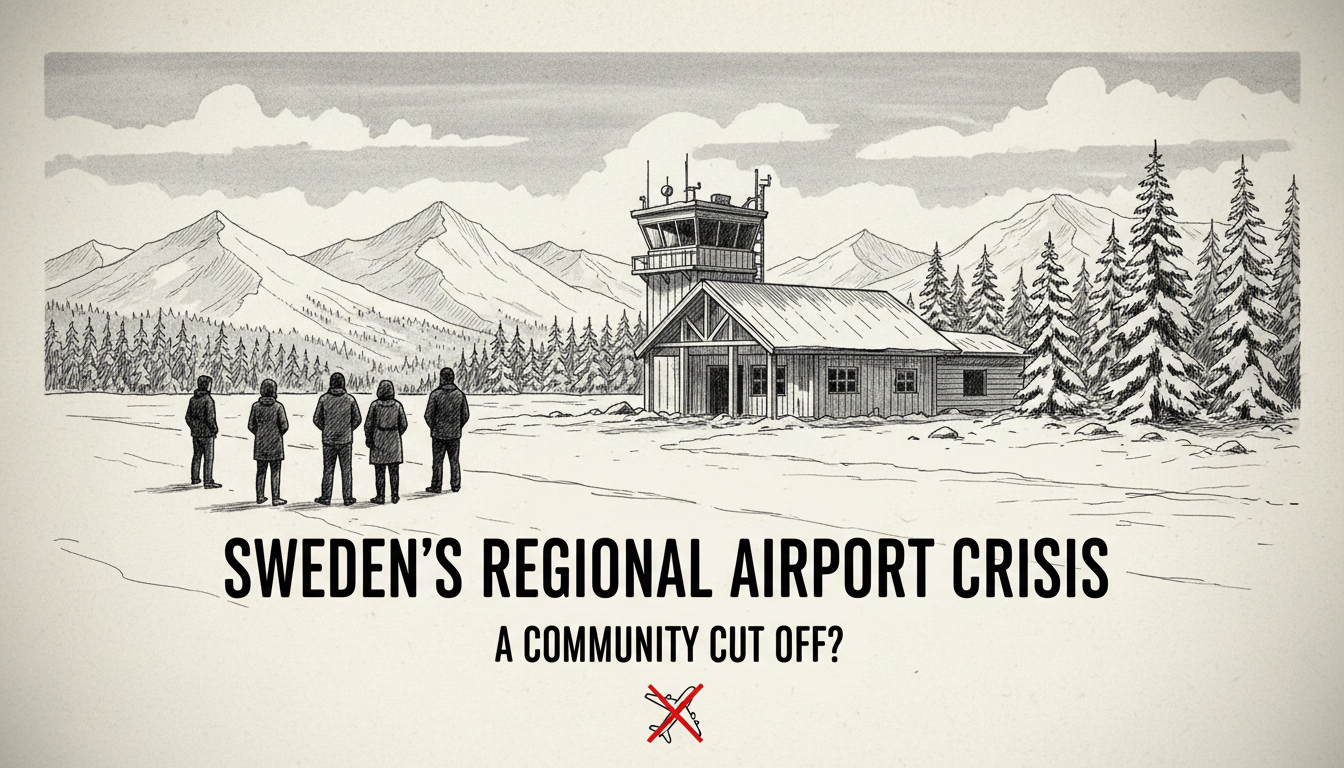
Sweden's network of regional airports faces a deepening crisis, threatening the vital connections that bind the country's vast northern landscapes to its urban heart. The reported indefinite closure of Örnsköldsvik Airport over critical equipment failures is not an isolated incident but a stark symbol of a wider struggle. For residents in towns like Örnsköldsvik, these airfields are not just travel hubs but lifelines for healthcare, business, and family ties. This situation forces a difficult national conversation about infrastructure, equity, and what it means to live in a sparsely populated region.
The Lifeline That Flickered Out
Imagine needing urgent specialized medical care. For someone in Örnsköldsvik, a city on Sweden's scenic High Coast, the quickest route might have been a direct air ambulance flight. That option is now reportedly severed, according to local reports citing airport management. The closure, attributed to broken essential equipment, demonstrates how fragile these connections can be. Airport manager Leif Johansson was quoted describing the situation as "absolutely not good," a sentiment likely echoed in many small communities watching their links to the wider world grow tenuous. This isn't just about missed vacation flights; it's about delayed cancer treatments, hampered emergency response, and a tangible sense of isolation creeping into daily life.
The impact ripples through the local economy and culture. These airports facilitate the flow of skilled workers, tourists seeking the unique Archipelago, and businesses that rely on face-to-face meetings in Stockholm or Gothenburg. Without them, the already challenging demographics of northern Sweden—where young people often move south for education and jobs—could worsen. The social fabric of these regions, built on a mix of tradition and modern connectivity, risks unraveling.
A Financial Tug-of-War in the North
Why do these airports struggle so profoundly? The core issue is a brutal numbers game. Sweden's regional airports, often located dozens of kilometers from town centers like the approximately 24 km trek from Örnsköldsvik to its airport, operate with low passenger volumes. They cannot generate the revenue needed to cover soaring maintenance costs for runways, navigation systems, and safety equipment. A single major repair, like the one believed to have idled Örnsköldsvik, can obliterate an annual budget.
This creates a vicious cycle. Reduced reliability leads to fewer scheduled flights. Fewer flights mean less revenue and declining public confidence in the service. Municipalities, which often own these airports, face impossible choices between funding schools, elderly care, or keeping the runway lights on. The Swedish state's role in subsidizing regional connectivity is a constant source of political debate. Should taxpayers in Malmö fund the airport in Örnsköldsvik? Proponents argue it's a matter of national cohesion and equal access to public services, a cornerstone of the Swedish welfare model.
Beyond the Runway: Seeking Solutions
The crisis at Örnsköldsvik forces a search for alternatives. One discussion point is a greater integration of air ambulance services with regional hospital networks, potentially using more helicopters or centralized airborne ICU units. Another is investing heavily in digital infrastructure to enable telemedicine and remote work, reducing some travel needs. However, pixels cannot replace physical presence for all critical care or the complex machinery of certain industries.
Transportation experts point to models in other Nordic countries. Norway, with its similar geography, provides extensive state subsidies for essential air routes to remote communities, viewing them as a public service akin to a road. Finland has experimented with smaller, more cost-effective aircraft and simplified airport designs for low-volume routes. The solution for Sweden likely lies in a hybrid approach: clear national criteria for which connections are deemed "essential," targeted subsidies for those routes, and honest conversations with communities about other links transitioning to improved rail and road networks.
The Human Cost of Disconnection
Behind the policy debates are real people. The local entrepreneur whose export business hinges on easy access to Arlanda. The elderly retiree whose children live in Stockholm and relied on a direct flight for visits. The young sports team with a national championship final down south. Swedish culture deeply values Allemansrätten—the right to roam—and access to nature. But there is also an unspoken rätt to connectedness, to not being left behind because of your postal code. The anxiety in regions facing air service loss is palpable, feeding into broader grievances about a centralizing economy and political neglect.
This moment could be a catalyst. It might push Sweden to define a modern, sustainable model for regional connectivity that blends smart technology, diversified transport, and a firm commitment to territorial equality. Or, it could signal a retreat, a quiet acceptance that some regions will simply have to manage with less. The silence over the runway at Örnsköldsvik is a question directed at the entire nation: What kind of country does Sweden want to be? One where geography dictates destiny, or one that strives to bridge the distances? The answer will define the future of its northern communities for decades to come.