
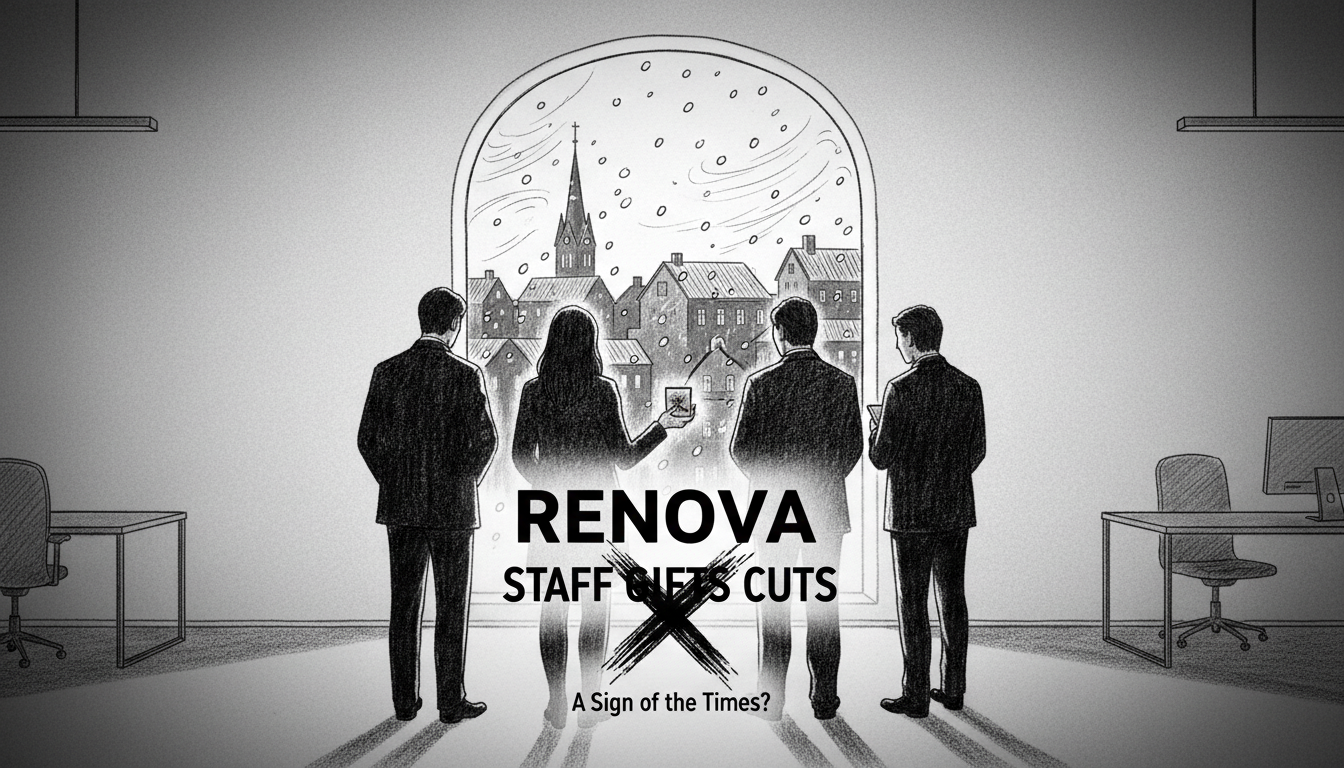
Sweden's municipal waste management company Renova has cut employee benefits like free fruit and Christmas gifts. The move is part of a sweeping cost review at the Gothenburg-region firm. For the staff, it’s a small but symbolic loss. For the public, it raises questions about priorities in Sweden's taxpayer-funded services.
CEO Anders Åström confirmed the cuts in a brief statement. "We are currently conducting a comprehensive review of all our costs in the operation," he said. The statement offered no further details. It did not specify the savings target or mention potential layoffs. The removed perks—a weekly fruit basket and an annual holiday gift—were modest. Yet their absence is felt on the shop floor and in the offices.
"It’s not about the value of the gift itself," said one Renova employee, who asked not to be named. We spoke near the company's headquarters in Sävenäs, Gothenburg. "It was a token, a 'thank you' from the employer. A bit of fruit, a Christmas hamper. It showed appreciation. Now that’s gone, and the message is clear: every single krona counts."
The Squeeze on Sweden's Municipal Services
Renova is not a private corporation chasing shareholder dividends. It is a wholly municipal-owned company. Its owners are the local councils of Gothenburg and seven surrounding municipalities. Its mission is public service: collecting and processing household waste for over one million residents. Every decision, including cutting staff fruit, is ultimately funded by taxpayer money and overseen by elected politicians.
This context makes the benefit cuts particularly interesting. It reflects a broader trend in Swedish society. Municipalities across the country are facing severe budget pressures. Rising costs for elderly care, schools, and energy are squeezing other areas. "Efficiency reviews" have become a constant refrain in city halls from Malmö to Umeå.
"What we are seeing is a trickle-down effect of macroeconomic pressures," explained Karin Moberg, a researcher in public administration at the University of Gothenburg. "Inflation, higher interest rates on municipal debt, and mandated increases in welfare spending create a perfect storm. Non-essential spending, even on small morale-boosters for staff, is often the first to be scrutinized and cut."
Moberg notes this creates a delicate balance. "On one hand, publicly owned companies have a profound responsibility to use resources wisely. On the other, employee satisfaction and a sense of being valued are crucial for any organization, especially in demanding physical jobs like waste collection."
A Cultural Shift in Swedish Workplaces?
The traditional Swedish workplace has long included certain förmåner—benefits. These range from the statutory fika (coffee break) to subsidized lunches, wellness allowances, and yes, Christmas gifts. They are part of a social contract that extends beyond the salary. For many, these perks embody the Swedish model of good working conditions and a humane work environment.
Are these small traditions now under threat? The Renova case might be an isolated cost-cutting measure. But it arrives amid a national conversation about the rising cost of living in Sweden. Many workers feel their purchasing power is shrinking. In this climate, the loss of any benefit, however small, is magnified.
"It feels like a slow erosion," said Lars Bengtsson, a union representative for municipal workers in Västra Götaland. "First, they freeze hiring. Then they cut back on overtime. Then the small perks disappear. Each step is justified by 'efficiency' or 'budget alignment.' But collectively, they change the texture of the job. It becomes more transactional, less communal."
Bengtsson emphasizes that his members understand the need for fiscal responsibility. "But there is a right way and a wrong way to do it. Consultation, transparency, and shared sacrifice are key. When decisions like this come down from management without dialogue, it breeds resentment."
The View from Gothenburg's Streets
To understand the practical impact, you have to look at the daily operation. Renova's bright green trucks are a familiar sight in every neighborhood, from the historic Haga district to the modern high-rises of Lindholmen. The drivers and loaders perform an essential, tough, and often thankless job in all weather.
At a recycling station in Majorna, a veteran driver shared his thoughts during a short break. "The fruit was nice, a healthy snack. The Christmas gift, maybe a box of chocolates or a voucher, was a nice gesture before the holidays. Do I need it to do my job? No. But did it make me feel like the company gave a little something back? Yes."
He pointed to his truck. "We are the face of the city for many people. We keep it clean. This job has gotten harder with new sorting rules, heavier bins. A little recognition goes a long way. Now it feels like we're just a line item on a budget sheet."
This sentiment touches on a core issue in Swedish society trends: the valuation of public sector work. As municipalities seek savings, the human element of their services can be overshadowed by spreadsheets and performance metrics.
Balancing the Books and Morale
So, was Renova's decision necessary or short-sighted? From a pure accounting perspective, eliminating non-salary benefits is a straightforward way to reduce operational costs. The savings from cutting fruit and gifts across hundreds of employees likely amount to several hundred thousand kronor annually. In a multi-billion kronor municipal budget, it's a drop in the ocean. But for a single company's balance sheet, it contributes to the bottom line.
Anders Åström, the CEO, has not publicly detailed what other costs are under review. Possibilities include vehicle fleet maintenance, logistics optimization, or administrative overhead. The benefit cuts may simply be the most visible and immediate action.
"The danger," warns public administration expert Karin Moberg, "is in death by a thousand cuts. If employee morale drops, it can lead to higher absenteeism, lower productivity, and difficulty retaining staff. That ultimately costs the organization more money. Smart cost-cutting invests in the workforce, even while trimming elsewhere."
She suggests alternatives that were perhaps not explored. "Could they have asked employees for cost-saving ideas? Could they have replaced the purchased gift with a company-made donation to a charity chosen by staff? There are ways to maintain goodwill while being fiscally prudent."
What This Means for Sweden's Public Sector
The story of Renova's missing Christmas gifts is a microcosm of a larger Swedish reality. It's a story about the constant pressure on public finances. It's about the changing relationship between employers and employees in the municipal sphere. And it's about the small symbols that define our work culture.
As Sweden navigates economic uncertainty, more publicly owned companies may face similar choices. The question is how they make them. Will the drive for efficiency come at the cost of workplace cohesion and the small kindnesses that define Swedish working life? Or can a new model emerge that balances fiscal responsibility with genuine employee engagement?
For now, at Renova, the fruit baskets are gone. The Christmas gift budget is zero. The message to employees is about austerity. The message to the public is that even the most basic services are feeling the pinch. As one Renova worker put it, "Next time you see the waste truck, remember: we're cutting costs, too." It’s a small detail, but in the intricate system of Swedish municipal services, every detail matters.